
Welcome to another exciting adventure of The GO Mechanism with your host, Phast Phreddie. The GO Mechanism is an audio odyssey scientifically engineered and programed in the secret laboratory of Boogaloo Omnibus Productions incorporating ultra-phonic techniques not available to other broadcast entities. The G stands for GROOVE, and there is always plenty of GROOVE in each GO Mechanism. The O stands for O’ROONY, an intricate and complex attitude that is incomprehensible to those who possess standard-issue precepts. Listen and you will hear.
The GO Mechanism is first aired on the Luxuria Music web streaming hustle as a Saturday Night Special. It will then be available as a podcast on the Luxuria Music web site for a few weeks, then it will sit in that limbo called the Mixclouds. This one will air on July 6 at 10:00 PM East Coast time and 7:00 PM for our California friends.
In order to achieve total comprehension of this GO Mechanism, it is strongly suggested that the listener follow along with this blog post. Here you will find a complete track list of the songs played on the show, information regarding some of the songs, hyper links to other boss trash and some groovy graphics.
An hour into the GO there will be a Science Corner—a segment of the trip where we discuss a topic of musical importance. This Science Corner we will listen to three songs originally written and recorded by The Beach Boys, but performed by other artists.
In the early sixties, The Beach Boys were one of the biggest musical acts in America. So big, that when the group’s record company Capitol Records was asked by its associated record company, EMI in England, if it wanted to release records by this new group called The Beatles, Capitol felt they didn’t need another rock group. Thus, early U.S. releases by The Beatles were issued on several other labels before Capitol smartened up.
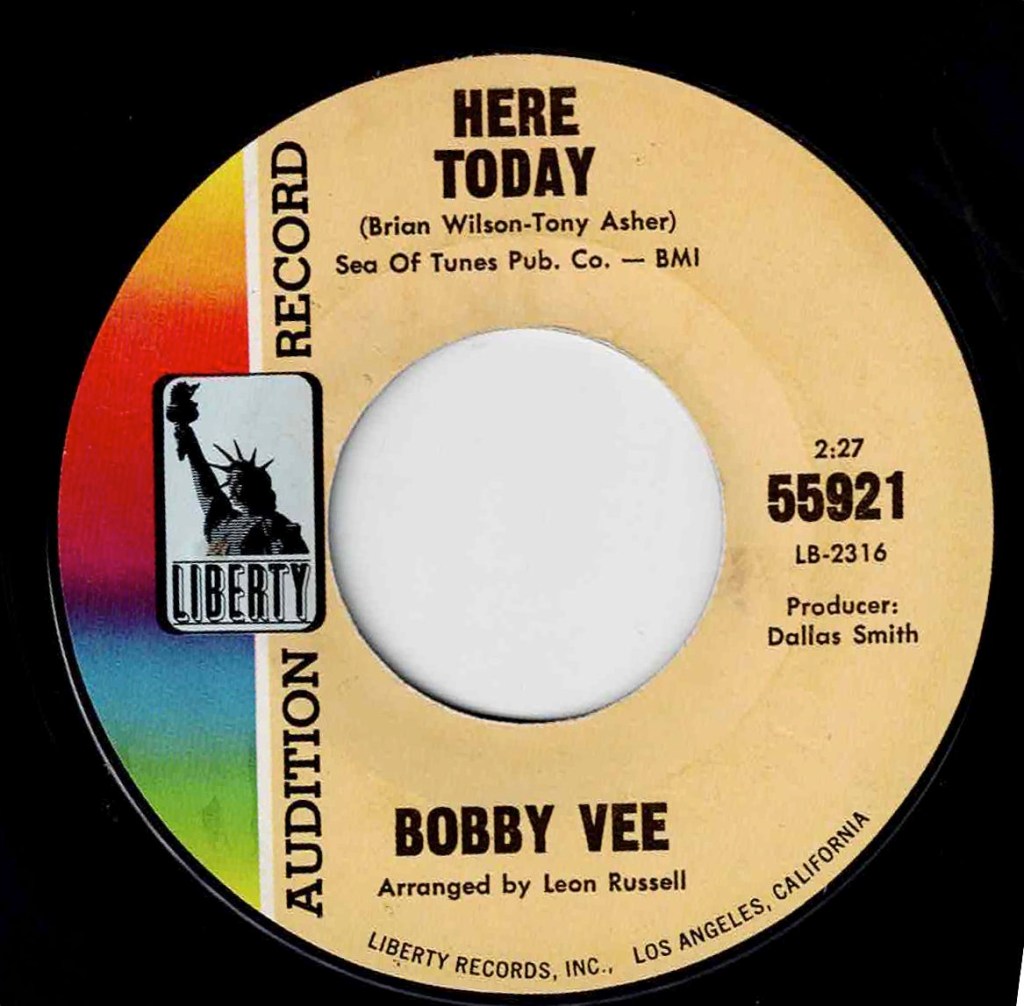
First up is a version of “Here Today” by Bobby Vee. Vee was a teen idol of the sixties. He had a bunch of hits on the radio, including “Devil or Angel,” “Rubber Ball,” “Take Good Care of My Baby” and “The Night Has a Thousand Eyes.” The arrangement of his version of “Here Today” is by Leon Russell and it doesn’t stray far from the original—it’s mostly sped up with a subtle new horn arrangement. It’s very possible that many of the Los Angeles session musicians who played on the original track played on this one as well. Vee’s version was probably recorded soon after the release of Pet Sounds, The Beach Boys album on which the song originally appeared. If any of the musicians on that version worked on the Vee version, they were probably able to ace it in the recording studio pretty quickly. As good as this version is, the single flopped entirely, not making the Top 100 at all. However, Vee’s next single, “Come Back When You Grow Up Girl,” was one of his biggest hits. Go figure!
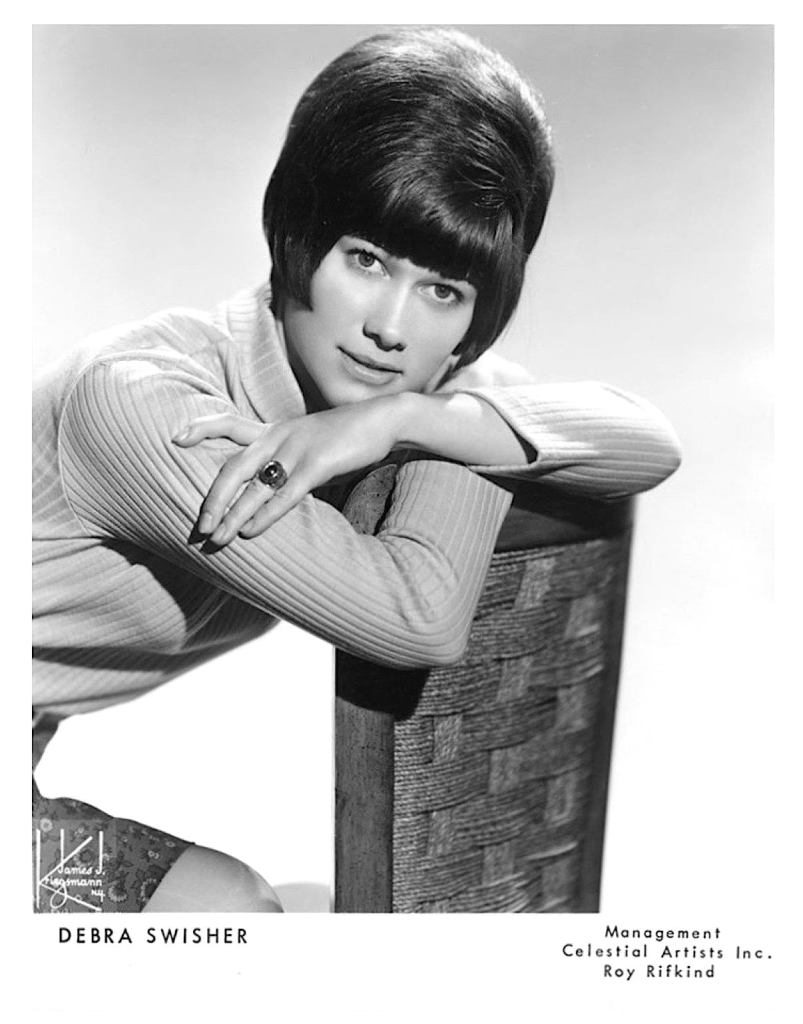
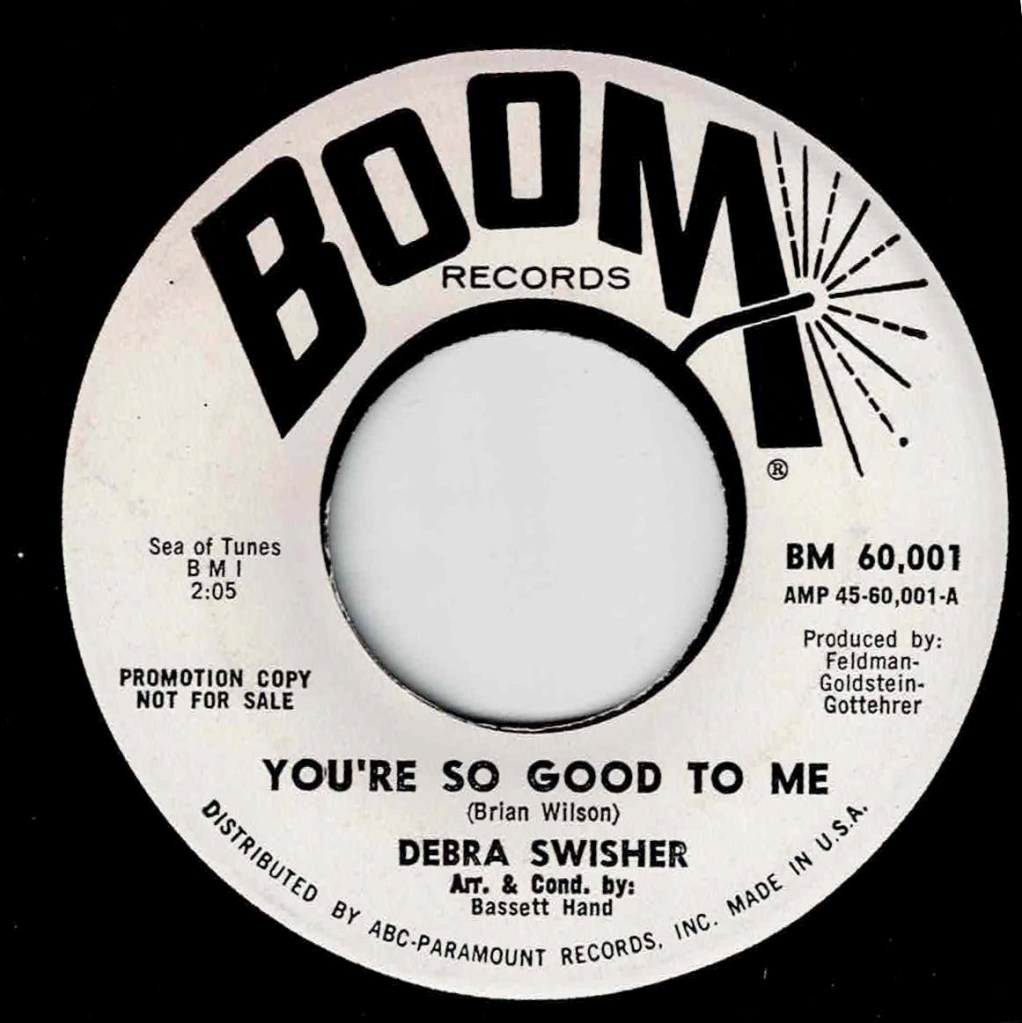
Debra Swisher was one of The Pixies Three, a teen pop girl group from Hanover, Pennsylvania—a sleepy town more than two hours west of Philadelphia. They had a few minor hits in 1963. When the group graduated from high school, only Debbie Swisher continued with music. Around 1966, she came to the attention of Bob Feldman, Jerry Goldstein and Richard Gotteher, a trio of songwriters/producers who recorded as The Strangeloves, and who liked to make records with a big, booming drum sound. Swisher’s version of “You’re So Good to Me” is no exception. Once again, the tempo is accelerated and the production is just a step or two below a Phil Spector-styled wall of sound. It’s a really boss record. Most likely it is The Strangeloves connection that facilitated Swisher becoming one of The Angels around 1967 when that girl group recorded for RCA.
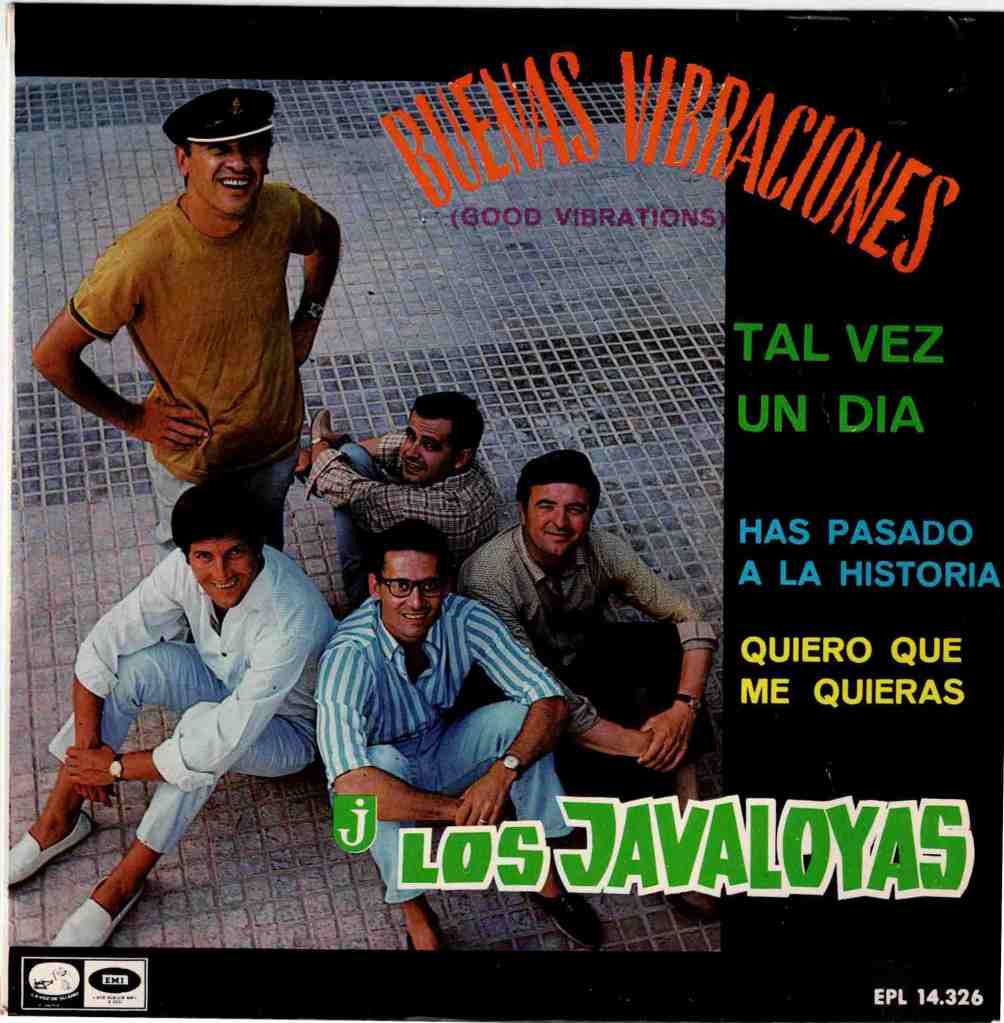
Our third Science Corner selection is by a group from Spain called Los Javaloyas. The group recorded “Good Vibrations” and sung it in Spanish as “Buenas Vibraciones.” Los Javaloyas was formed in the early fifties in Valencia, but soon moved to the island of Mallorca. The band was very popular and cut a lot of records—especially during the sixties. The repertoire consisted of mostly pop material, but the group would occasionally tackle a rocker—its version of The Spencer Davis Group’s “Gimme Some Lovin’” is also on the EP where we found “Buenas Vibraciones.” We like this Spanish version of The Beach Boys hit because of the sparse production. It is very likely that Los Javaloyas did not spend about six months in the studio recording it, as The Beach Boys did on the original.

GO Mechanism Number 23 starts out with five wailin’ instrumentals: two bebops and three R&Bs, though the last one is a sort of combination of both. In the jazz world, James Moody and Charlie Parker are quiet well known as bebop giants. Red Prysock, Bill Doggett and Joe Houston are all major R&B players. “The Eagle Speaks” appeared on Doggett’s On Tour album, but we pulled it off of a seven-inch stereo single that plays at 33 1/3 RPM. The song is named for Calvin “Eagle Eye” Shields, Doggett’s drummer who openly displays his talent on this track. Shields co-wrote the track with tenor saxophonist Clifford Scott. The fifth track is a clear example of bebop meeting R&B head-on: Joe Houston’s take on “Lester Leaps In.” Houston made his money with a string of honkin’ and jumpin’ R&B stompers, but here he swings with a jam the boppers liked to play. “Lester Leaps In” was originally recorded by Count Basie’s Kansas City Seven in 1939. It was written by and featured saxophonist Lester Young, who was a hero to the bebop crew. Houston’s version was not issued until it was discovered in the nineties and issued on a compilation of mostly unreleased Joe Houston recordings compiled by Billy Vera.

During the sixties many pop acts were employed to sing commercials— The Turtles sang for Pepsi, The Who power-chorded for Great Shakes, Jefferson Airplane crooned about White Levis and The Rolling Stones did a bit for Rice Krispies! Coca Cola was especially aggressive about getting the latest teen pop stars to swing for them and often made the recordings available. In The GO Mechanism Archives we have Coke jingles by The Supremes, Ray Charles, Petula Clark, The Golden Earrings, The Everly Brothers, Jan & Dean and more. GO #23 presents one of our favorites—Los Bravos. Los Bravos were truly a European band: it was based in Spain, the lead singer was from Germany, many of its recordings were made in England and the bulk of their repertoire is sung in English. In the U.S., Los Bravos is chiefly remembered for “Black Is Black” and maybe “Bring a Little Lovin’”—both had spectacular bass riffs. That bass action is dominant in the Coke commercial.

In 1965, the Turkish newspaper Hürriyet, in order to advance culture in its country, initiated a music competition called Altin Mikrofon (Golden Microphone) and offered to record the entries. A 1967 entry was an instrumental by Haramiler called “Adanli.” The group didn’t win that year, but it came in second in 1968 with a different song. As far as we can tell, Haramiler didn’t make very many records, but it must have been influential in some way; during the nineties a group of young Turkish musicians took up the name with the approval of original members of the sixties group.

In this GO we present the single version of “My Guitar” by The Mothers of Invention. It is completely different from the track that appeared on the LP Weasels Ripped My Flesh.
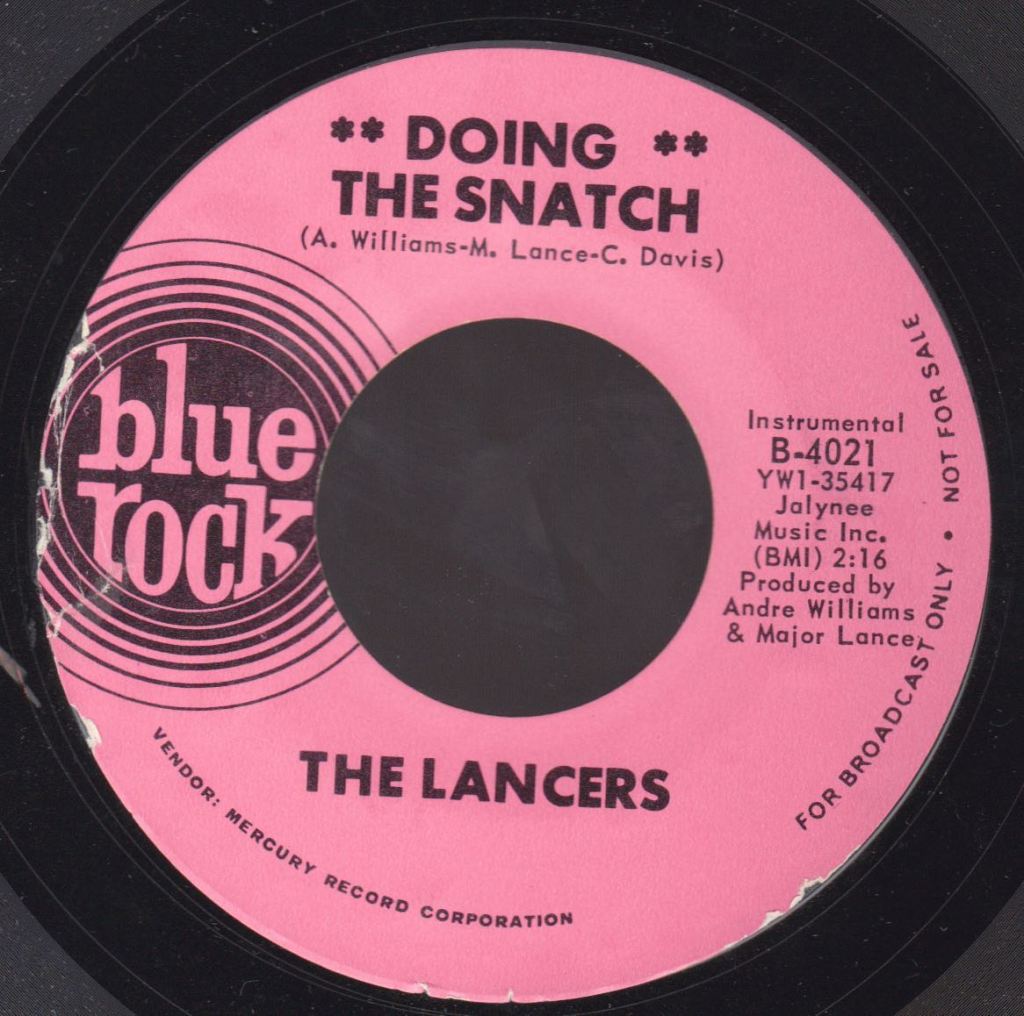
“Doing the Snatch” is the kind of genius record that could only have been created by Andre Williams. He is credited as co-writer and co-producer and you can hear him in the background, exhorting folks to do the snatch baby! The other producer is Major Lance, he of “Monkey Time” and “Um, Um, Um, Um, Um” fame; plus he lends his name to the musical ensemble—The Lancers. The third songwriter is Carl Davis, a Chicago music producer and songwriter who began his career around 1958 or so and worked with such esteemed artists as Gene Chandler, Ted Taylor, Walter Jackson, Jackie Wilson, The Chi-Lites… the list goes on. For some reason, these well-worn music professionals asked the world to do the Snatch!!

In 1978, Cal Tjader’s Huracán album was recorded direct-to-disc and released as a 12” LP spinning at 45 RPM on white vinyl for the audiophile market. Obviously, such a thing could not have been a big seller, which is a shame—Tjader’s mambo records are among the finest in the world. The album has been basically unavailable until the nice folks at Liberation Hall Records reissued it last year.
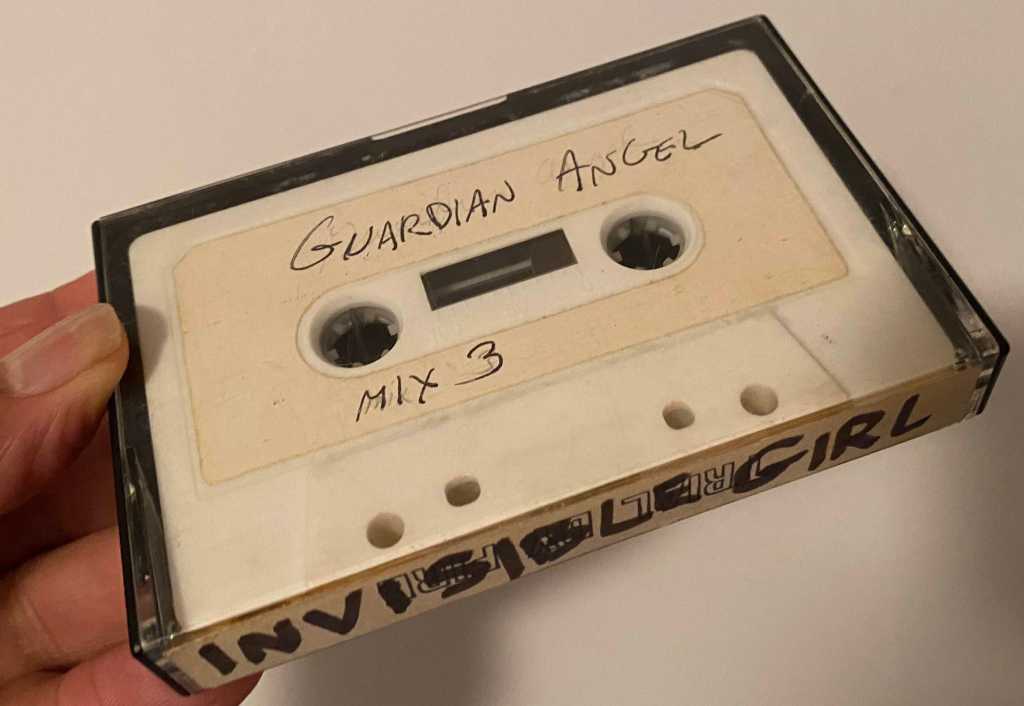
The GO Mechanism producers often reach into their personal archives to present music that will never be heard anywhere else—ie., the Jeffrey Lee Pierce track in GO Mechanism Number Eighteen. In this GO we’ve pulled out a song by The Invisible Girl called “Guardian Angel.” It is a beautiful, moody ballad, written and performed by Charlotte Caffey, AKA, The Invisible Girl. This song was written in 1976 and it was inspired by a painting that hung in the home where she grew up. The picture depicted two children walking over a bridge with a big guardian angel guiding them. It was recorded in early 1977—probably before she joined The Eyes, one of L.A.’s first punk rock bands. That is when she handed the cassette of her song to the future GO Mechanism host. We’ve always dug it and always wanted to share it with the world. A few years after this recording, Ms. Caffey found great success as a member of The Go-Go’s. A guardian angel is most definitely watching over her!
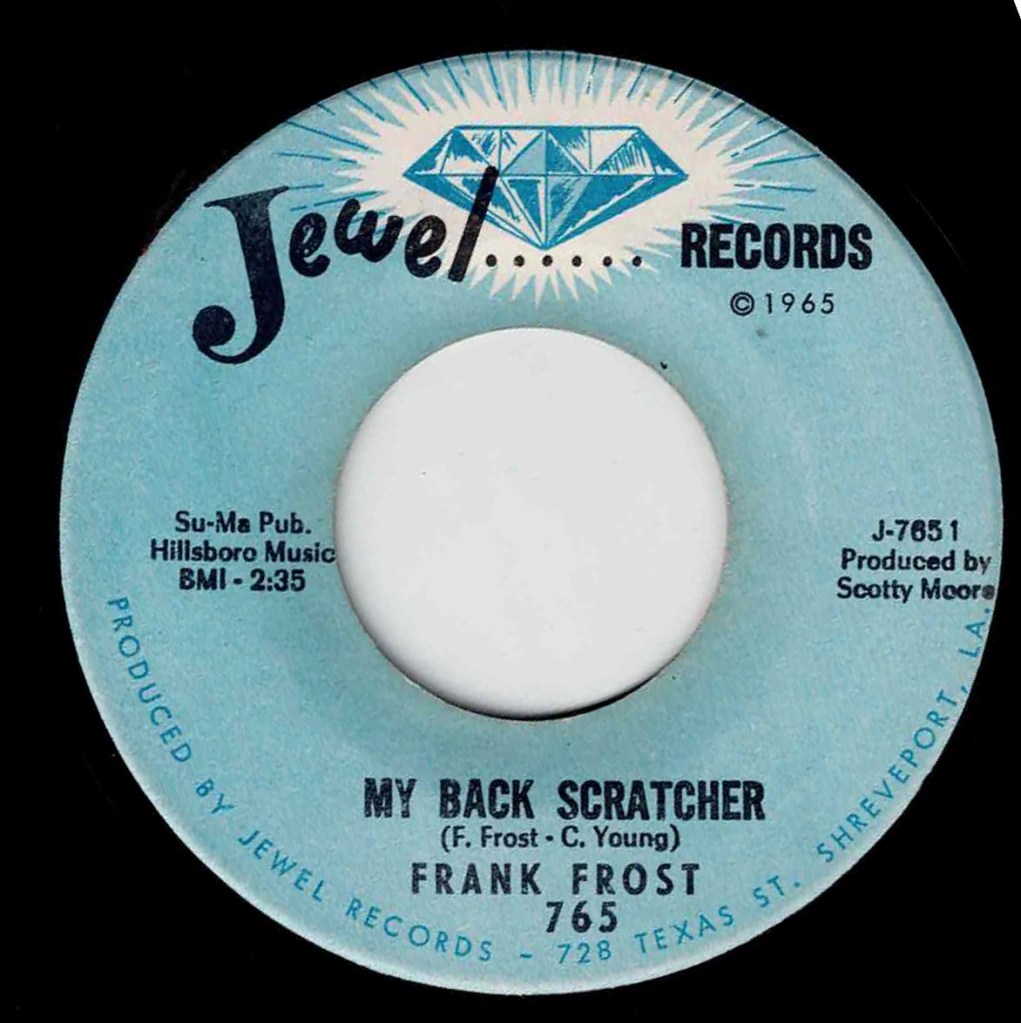
Frank Frost was a blues man from Arkansas who often worked across the Mississippi River in Memphis. He was brought to the attention of Sam Phillips and he cut a single and an album for the Sun subsidiary Phillips International in 1962. This was likely the last blues Sam Phillips would record—certainly the last great blues. In the mid-sixties, Frost cut some singles for Jewel Records; one of which is “My Back Scratcher,” heard here in The GO Mechanism. It’s lazy tempo, spoken lyric and subject matter owe a bit to Slim Harpo’s “Scratch My Back,” that’s for sure, but Frost’s song stands up on it’s own anyway. It has such a hip groove that we can’t get enough of.
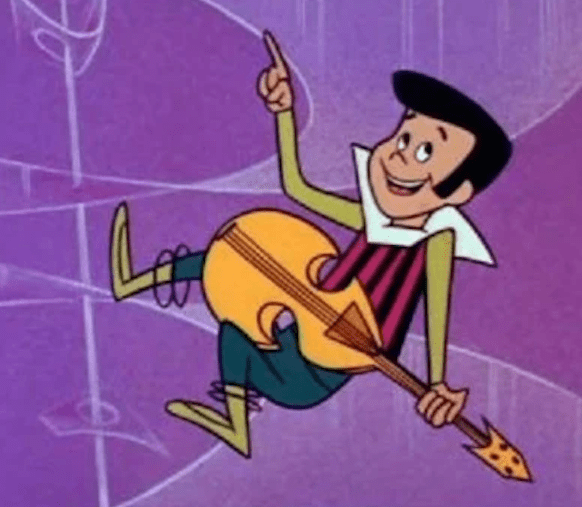
The Jet Screamer track “Eep Op Ork Ah Ah” comes to us via The Jetsons cartoon show. Jet Screamer is a futuristic teen idol adored by Judy Jetson. Her pop George Jetson plays the drum solo at the beginning of the song. I guess you have to see it to believe it!

The GO Mechanism always ends with one of the Greatest Records Of All Time. This one ends with still another Beach Boys song—this one by The Andrew Oldham Orchestra. Oldham was the producer and manager of The Rolling Stones during their early days. He must had some pull at (British) Decca Records, for whom The Rolling Stones recorded, and cashed it in. The records were all made with studio musicians and we believe some of The Rolling Stones play on them. One of Oldham’s albums was called East Meets West in which he recorded six songs by The Four Seasons and six by The Beach Boys. From that album comes this fantastic version of “I Get Around.” We like to think that it is Keith Richards playing that fabulous fuzz guitar bit. The GO Mechanism producers will even posit that it is better than the original!
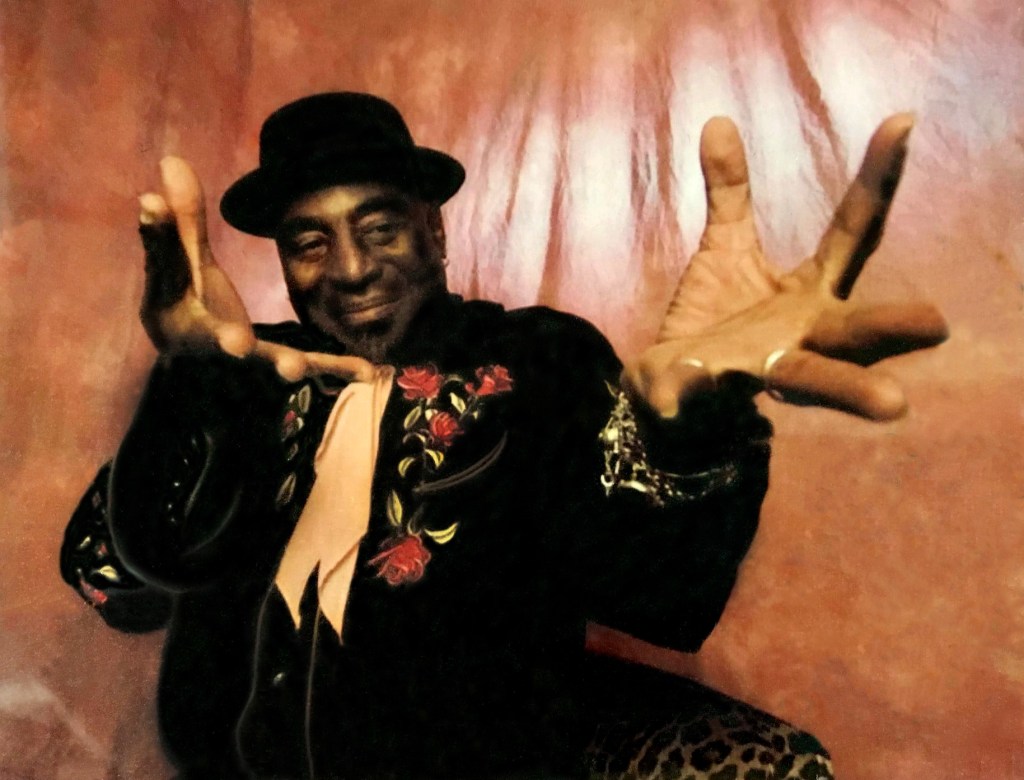
One of the extended spoken word selections in this GO is by our pal Paul Body. In 1993 he released an album called Love Is Like Rasputin in which he reads his memoir from the year 1965. His writing is poignant, witty, clever, moving and often very personal. We first met Mr. Body when he was drumming for the great R&B-injected rock band The Sheiks of Shake in the mid-seventies. During the eighties he joined us in Phast ’n’ Bulbous and The Love Supremes. Presented here is his entry for the date June 16. Playing behind it is an excerpt from Miles Davis’ “Miles Runs the Voodoo Down” from Bitches Brew. [By the way, the hearty laugh heard at the end of most GO Mechanisms belongs to Mr. Body. It was recorded by producer Vitus Mataré during the recording of a Love Supremes album that may never come out!]

The GO Mechanism is produced whenever we feel like it and it initially airs on the Luxuria Music interweb streaming hustle as a Saturday Night Special. The GO Mechanism producers sincerely thank the swingin’ folks at Luxuria Music for presenting The GO Mechanism whenever we get around to putting one together. Luxuria Music is an extremely independent entity that can use some help. Please go to the Luxuria Music website and buy something from its store or sponsor something fun. Also, while you are at Luxuria Music, check out the other fabulous shows there.
If you are interested in previous GO Mechanisms, they can be found on the Mixclouds and here in The Boogaloo Bag. After a while the audio portion of this GO Mechanism will magically appear below…
Here is a list of all the records played during The GO Mechanism Number Twenty Three:
- Earl Bostic—Lester Leaps In (King – theme song)
- James Moody’s Modernists—Moody’s All Frantic (Blue Note)
- Red Prysock—Red Speaks (Mercury)
- Bill Doggett—The Eagle Speaks (King)
- Charlie Parker—Bird Gets the Worm (Savoy)
- Joe Houston—Lester Leaps In (from album Cornbread and Cabbage Greens; Specialty)
- Howlin’ Wolf—Moanin’ for My Baby (Chess)
- Xavier Cugat—Watermelon Man (Mercury)
- Los Bravos—Coca Cola jingle
- Haramiler—Adanli (Hürriyet, Turkey)
- The Ho-Dads—Space Race (Imperial)
- Afrosound—Cumbia en la Jungla (Discos Fuentes)
- Dave Bartholomew—The Monkey Speaks Its Mind (Imperial)
- Ted Auletta & His Orchestra—Quiet Village (from LP Exotica; Cameo)
- Mothers of Invention—My Guitar (Verve)
- The Lancers—Doing the Snatch (Blue Rock)
- Professor Longhair and His New Orleans Boys—She Walks Right In (Atlantic)
- Miles Davis—Miles Runs the Voodoo Down (excerpt) (from LP Bitches Brew; Columbia)
- ***Paul Body—June 16, Wednesday (from album Love Is Like Rasputin; New Alliance)
- The Dap Kings—The Collection Song (Daptone)
- Cal Tjader—Ritmo Calietne (from album Huracan; Liberation Hall)
- ***Gil Scott-Heron—Omen (from LP Small Talk at 125th & Lexington; Flying Dutchman)
- Major Lance—What’s Happening (from album The Monkey Time; OKeh)
- The Invisible Girl—Guardian Angel (¡GO Mechanism exclusive!)
- —Science Corner
- Beach Boys—Pet Sounds (from LP Pet Sounds; Capitol)
- Bobby Vee—Here Today (Liberty)
- Debra Swisher—You’re So Good to Me (Boom)
- Los Javaloyas—Buenas Vibraciones (La Voce de Su Amo; Spain)
- Roger Simard et son Orchestre—Noir C’est Noir (from LP Drums Au Go-Go; Gala/RCA Victor; Canada)
- Nat King Cole Trio—Caravan (from LP After Midnight; Capitol)
- Nels Cline/Wally Shoup/Greg Campbell—Queen of Angels (from album The Inkling; Cryptogramophone)
- *** John Cale recites The Gift (from The Velvet Underground LP White Light/White Heat 45th Anniversary Edition; Polydor)
- Los Babys—Jinetes en el Cielo (Peerless; Mexico)
- Frank Frost—My Back Scratcher (Jewel)
- Jet Screamer—Eep Op Ork Ah Ah (The Jestsons!)
- Sherlock Holmes Investigation—The Pot’s Hot (C.S.R.)
- The Temptations—Ungena Za Ulimwengu (Unite The World) (Gordy)
- Tito Puente and His Orchestra—Hong Kong Mambo (from LP Dance Mania; RCA Victor)
- Captain Beefheart & the Magic Band—Alice in Blunderland (from LP Spotlight Kid; Reprise)
- The Debonaires—Be Arlight (Steady-O-Phonic)
- Sandy Nelson—Midnight Magic (Imperial)
- Curtis Mayfield—Freddie’s Dead (closing Theme, Boogaloo edit) (Curtom)
- The Andrew Oldham Orchestra—I Get Around (Parrot)
 boogaloobag