

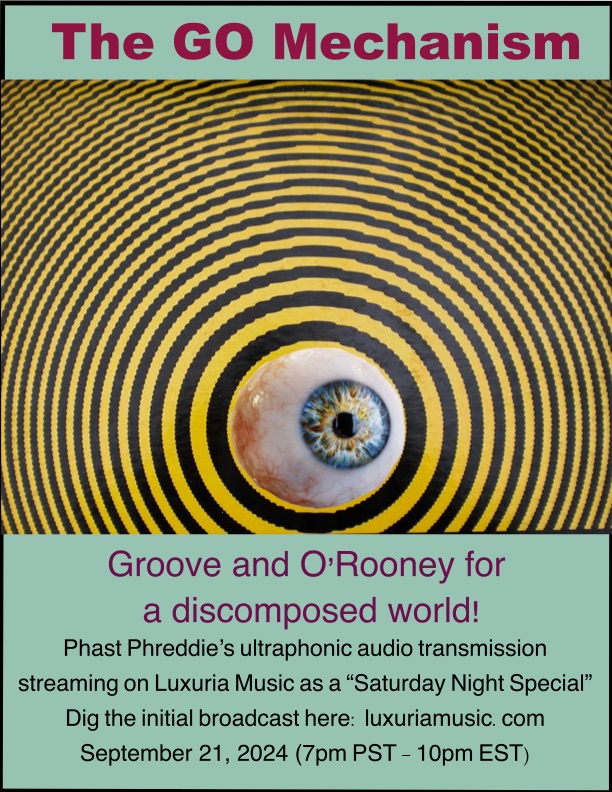
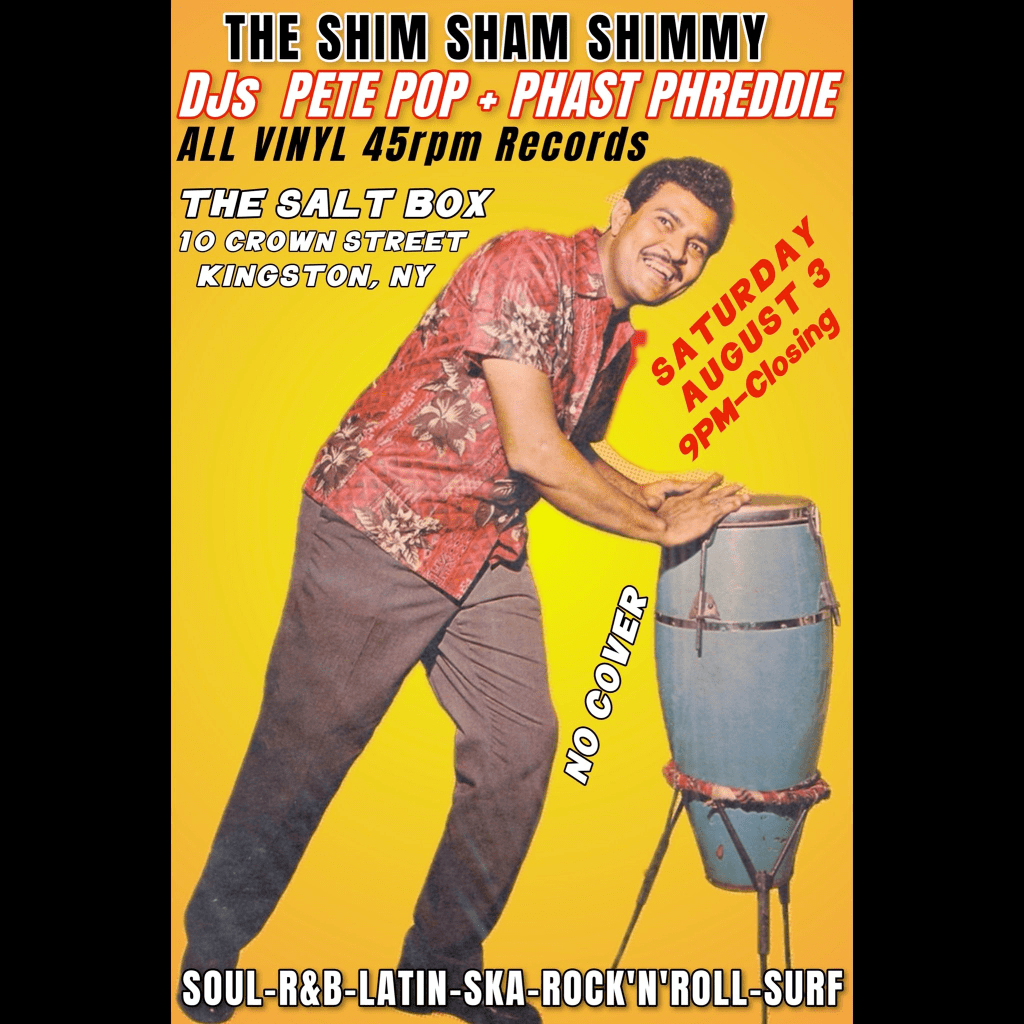
Hello, boys and girls. Welcome to another exciting adventure of The GO Mechanism with your host, Phast Phreddie. The GO Mechanism is an audio Odyssey scientifically engineered and programed in the secret laboratory of Boogaloo Omnibus Productions incorporating ultra-phonic techniques not available to other broadcast entities. The G stands for Groove, and there is always plenty of Groove in each GO Mechanism. The O stands for O’Roony, an intricate and complex attitude that is incomprehensible to those who possess standard-issue precepts. Listen and you will hear.
The GO Mechanism is first aired on the Luxuria Music web streaming hustle as a Saturday Night Special. It will then be available as a podcast on the Luxuria Music web site for a few weeks, then it will sit in that limbo called the Mixclouds. This one will first air on September 21, 2024.
In order to achieve total comprehension of this GO Mechanism, it is strongly suggested that the listener follow along with this blog post as he or she listens to the program. This blog will act as a guiding light, with a track listing and information regarding some of the songs featured in the show.
An hour into the GO there will be a Science Corner—a segment of the trip where we discuss a topic of musical importance. This Science Corner we will listen to three lesser known songs by Smokey Robinson & the Miracles for no other reason than, we can!
Smokey Robinson was a dynamic entity during the golden era of Motown Records: He wrote hit songs, he sang on hit songs and he produced hit records. The vocal group in which he commenced his career, The Miracles, was one of the finest during this period. It emerged from the ashes of the fifties R&B vocal group era into full-fledged soul music innovators during the sixties. Smokey was the guiding light; and, with his silky smooth, high tenor voice and his songwriting, The Miracles couldn’t miss. Even many of their records that were not big hits are worth listening to. In the Science Corner, we have spotlighted three songs that were hidden as LP tracks.

Smokey Robinson & the Miracles 1965 album Goin’ to A’ Go-Go (on the Tamla label, a subsidiary of Motown) was the group’s best selling album, reaching Number Eight on the charts. It was full of great songs and we have selected “Head to Toe” for your listening pleasure. Despite the excellence of its hummable melody it was never released as a single. However, a couple of years later, Smokey produced a version of it by a white female singer signed to Motown named Chris Clark. That version—also quite good, though the beat wasn’t as strong—was released as a single but it didn’t do much business.
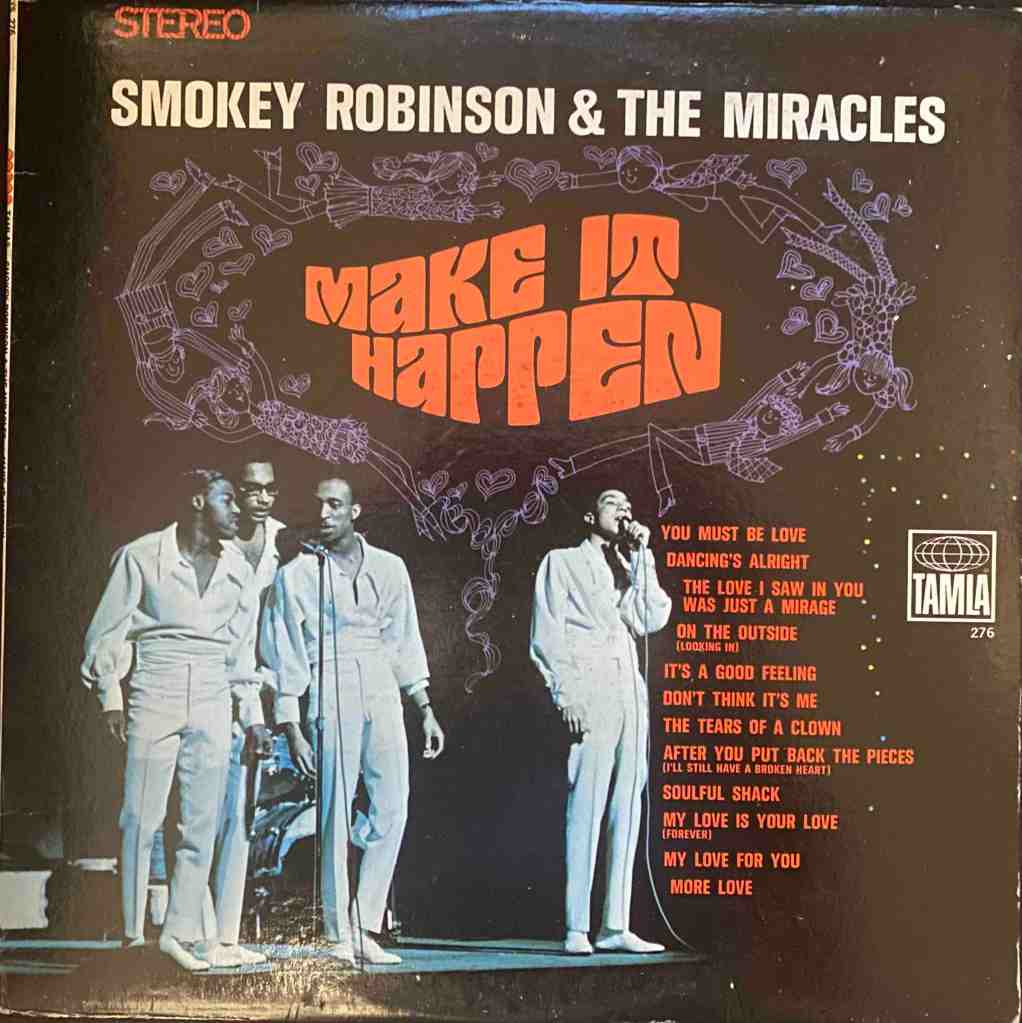
“Dancing’s Alight” is from the 1967 album Make It Happen, which was full of good songs, including the hits “The Love I Saw in You Was Just a Mirage” and “More Love.” It also had some good LP-only tracks such as “Soulful Shack,” It’s a Good Feeling” and “The Tears of a Clown.” About two years after the album was released, British Tamla/Motown issued “The Tears of a Clown” as a single and it did quite well. U.S. Motown got wise and subsequently issued it here, where it went to Number One in the Pop and R&B charts in 1970.

For a 1969 soul album, Four in Blue may have been unique as no singles were released from it. One of its songs, “Dreams Dreams” could have been a hit, so we’ll listen to it here in The GO Mechanism’s Science Corner in order to expose the outstanding work that Smokey Robinson & the Miracles were creating at the time.
GO Mechanism Number Twenty Four jumps right into the swing of things with two hot recordings that each feature a baritone saxophonist.

The first is by Sir Charles Thompson and his All Stars and it features Leo Parker. Parker started on the alto saxophone in the early forties, but took up the baritone when he joined Billy Eckstine’s big band of bebop musicians (Charlie Parker, Dizzy Gillespie, Miles Davis, Dexter Gordon, Gene Ammons and many others passed through this orchestra before Eckstine found his calling as a crooner.). When Leo Parker left the band he continued on the baritone, in part because he didn’t want to be playing alto saxophone in the shadow of Charlie Parker. It is on the baritone that he made a name for himself, especially in bebop circles. He played the big horn with groups lead by Dizzy Gillespie, Illinois Jacquet and Fats Navaro. In 1947 he cut “Mad Lad” with pianist Sir Charles Thompson for Apollo Records and it became his signature tune. He was often called “The Mad Lad” and he composed several songs incorporating it in the titles in order to recapture the magic of the Thompson recording: “Mad Lad Boogie,” “Mad Lad Returns.” Due to health issues, his recording output was limited. He cut two albums for Blue Note in the early sixties, but one wasn’t released until 1980. Parker died in 1962 at the age of 36.

The next baritone saxophonist was much more prolific than Leo Parker, but sows confusion as he shares the name of several other well known musicians: Paul Williams. Our Paul Williams is often called Paul “Hucklebuck” Williams after his biggest hit; it was Number One R&B for 14 weeks! Williams cut records for the Savoy label for about five years, starting in 1947. Some of them did quite well. Several R&B stars got their start in Williams’ band, including singer Little Willie John and saxophonists Noble “Thin Man” Watts and “Wild” Bill Moore (who would later play on Marvin Gaye’s What’s Goin’ On LP). The song heard here in The GO is “Hoppin’ John,” named after a favorite food. Williams died in 2002 at the age of 87.
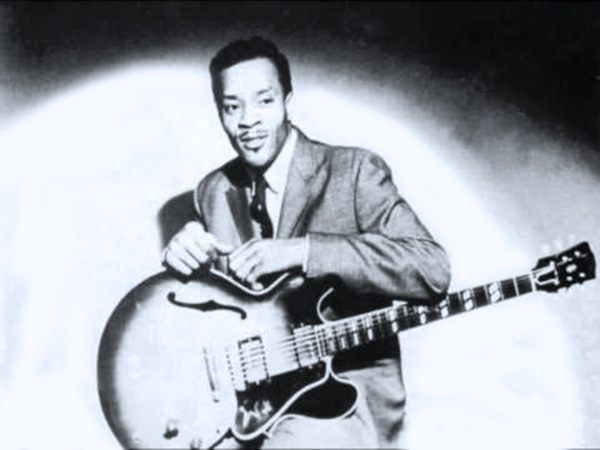
Next up is the legendary blues guitarist Earl Hooker with his take on Paul Williams’ big hit record! Hooker’s track was recorded in Memphis 1953 but not released until the seventies when some genius British people raided the vaults at Sun Records. This Hooker isn’t nearly as well know, nor was he as successful as, the other Hooker, John Lee. Although both were born in Mississippi, they are not related. However, folks who really know their blues records are aware of his awesomeness. This version of “The Huckelbuck” will give you an idea.
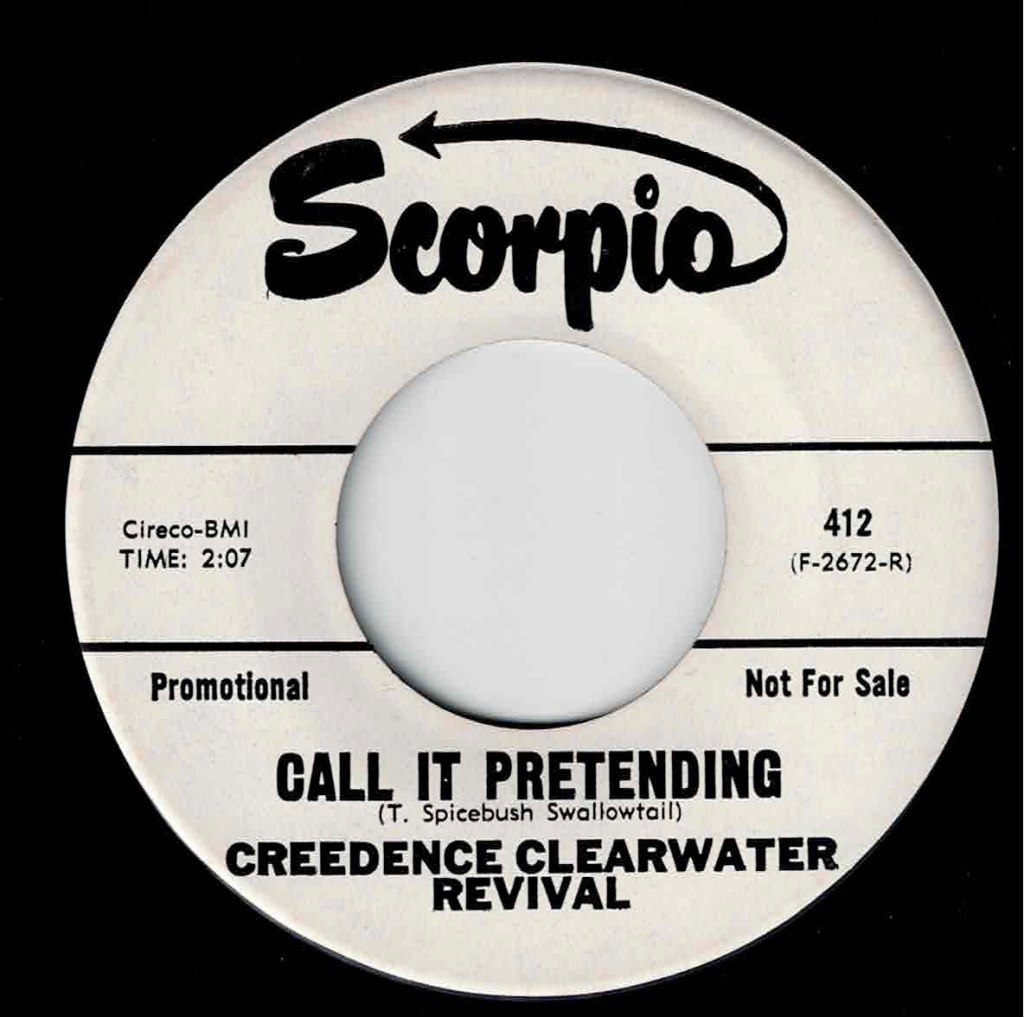
“Call It Pretending” is the B-side of the first single released by Creedence Clearwater Revival. The group made some records previous to this, but under different names, such as The Golliwogs, a name that was forced upon the group. In fact, this record was first released as by The Golliwogs, then changed to Creedence Clearwater Revival when the band started to assert control over its own direction. The A-side was an early version of “Porterville,” which made it onto the first Creedence LP. “Call It Pretending” never made it onto a proper Creedence album even though it is the group’s best song.

The weird noises you hear on Melvin Jackson’s “Funk Skull” is Jackson playing his stand-up bass hooked up to some electrical effects devices that were meant for guitars. He plucks his bass in some parts and plays it with a bow in others. Perhaps he got this idea from Eddie Harris, who Jackson often worked with. Harris played his saxophone hooked up to a similar device.
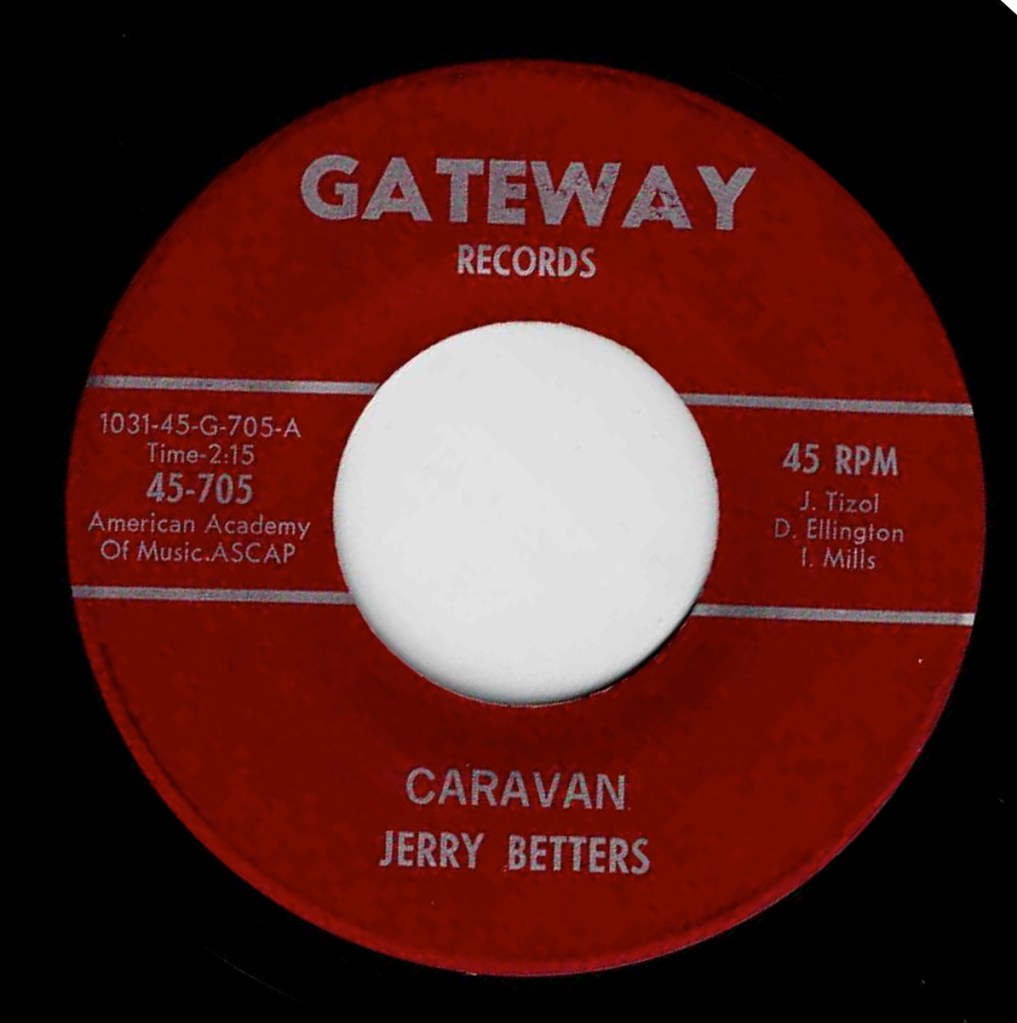
It would not be a GO Mechanism if there were not a version of “Caravan” included. For this installment of The GO, we have included a rendition by Jerry Betters; a drummer who was the younger brother of Harold Betters, a trombone player who had a minor hit with “Do Anything You Wanna” in 1964. Jerry played on some of Harold‘s recordings, but was also a singer who appeared in the Pittsburgh area. He died in Connellsville, PA, where he grew up, when a truck hit him as he was crossing the street in 2007.
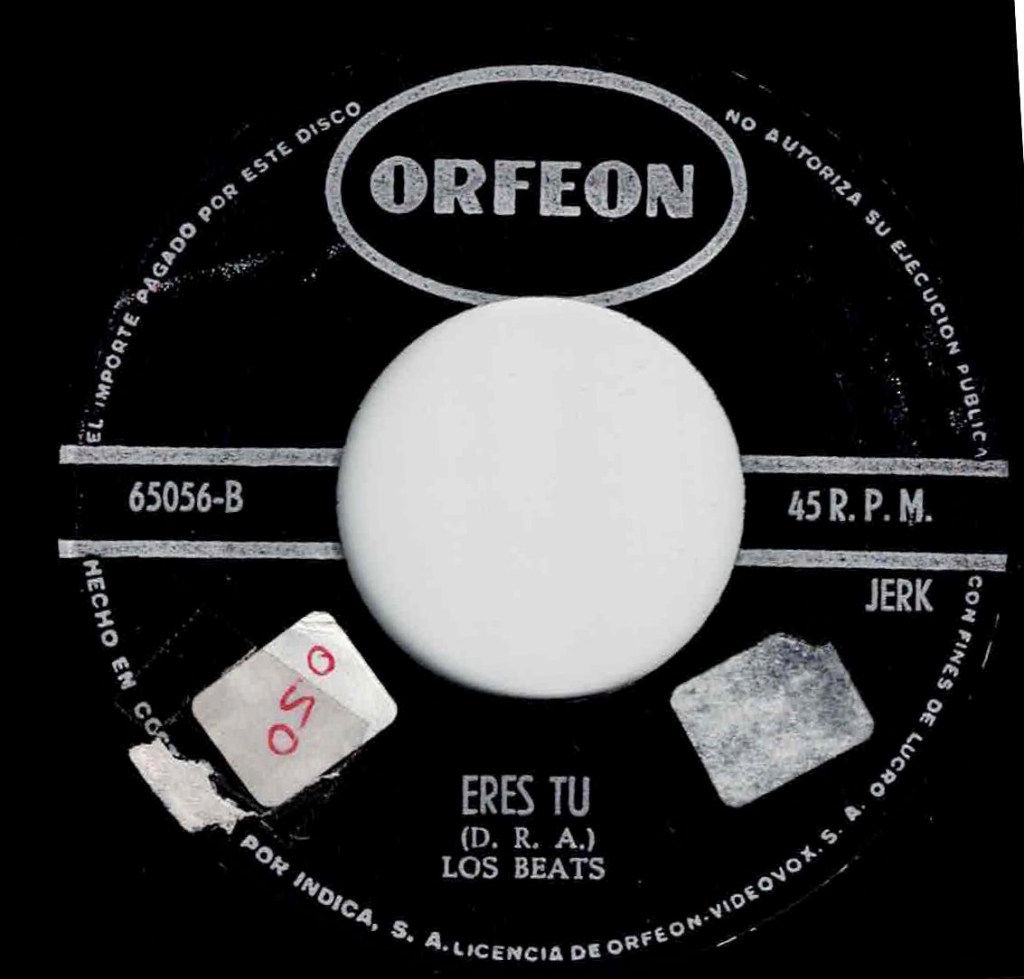
Los Beats were a band from El Salvador that would often take songs by The Beatles and other English-speaking acts and translate them into Spanish for their market. “Eres Tu” is the group’s version of a song found on the first Grateful Dead album called “Cold Rain and Snow.” Although The Dead took songwriting credit on their album, it was actually an old folk song that they most likely heard from a 1961 album by the banjo player Obray Ramsey.

“Kanfera (Return to Fisher) is by Mor Thiam, a percussionist who was born in Senegal. In 1973 he moved to St. Louis, and soon after, recorded an album consisting of a fusion of modern jazz and African beats—the kind of music the kids today call Spiritual Jazz. The record, called Dini Safarrar, benefited from the talents of several musicians from the area, including the producer Oliver Sain, trumpet player Lester Bowie, saxophonist Oliver Lake and guitarist Phillip Westmoreland (listed here as Wesdmoread!). Also in 1973 in St. Louis, Thiam’s son was born: Aliaune Damala Bouga Time Puru Nacka Lu Lu Lu Badara Akon Thiam—better known as the successful contemporary R&B singer/rapper Akon.
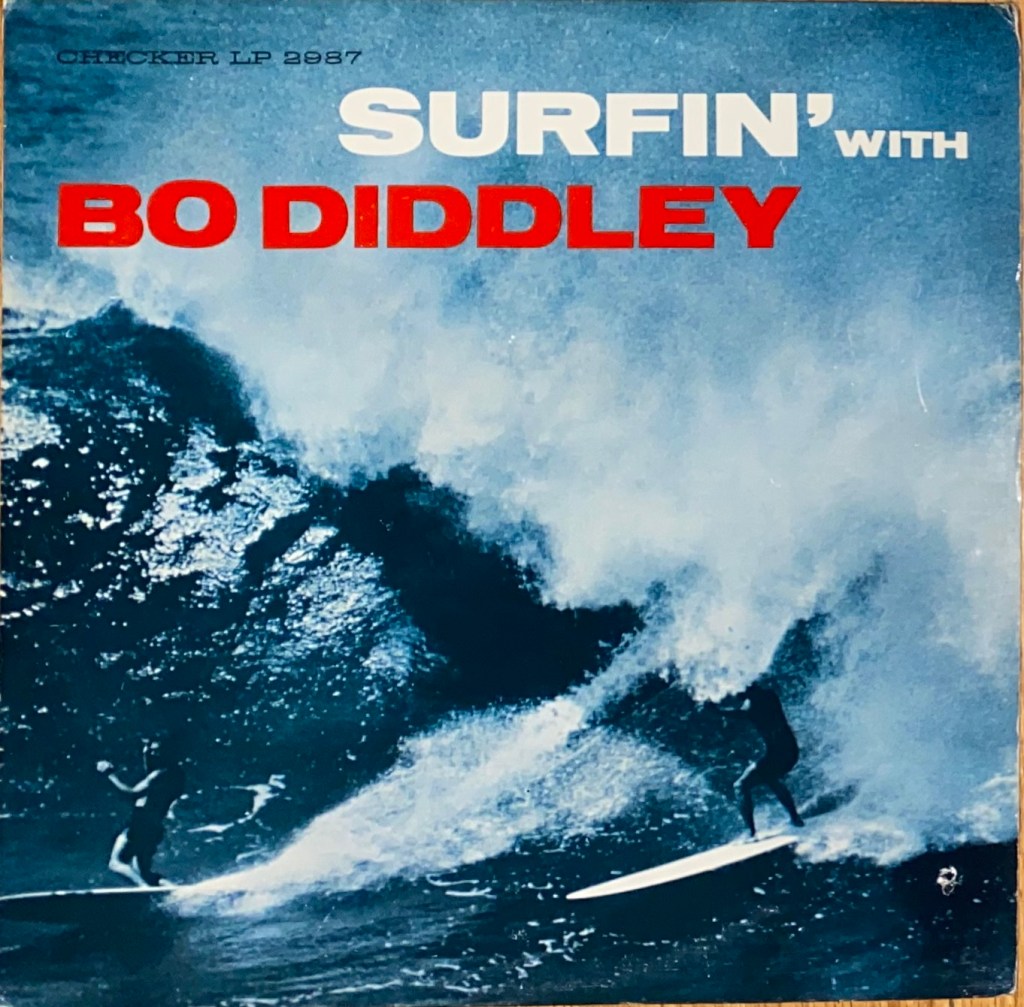
Bo Diddley’s version of “Old Man River” is almost unrecognizable from the song sung by Paul Robeson in the film Showboat. Bo’s version is close to surf music—maybe because it was included on the album Surfin’ With Bo Diddley. This is a controversial LP in itself, since only four of the dozen songs on the album were actually by Bo Diddley. For some reason, the album was filled out with eight tracks by The Megatons, a group that featured rockabilly singer Billy Lee Riley. Some of this is addressed in the Science Corner of GO Mechanism Number Eight.

in 1963, Bobby Fuller, his brother Randy and a couple other Texas musicians traveled to Los Angeles to make a name for themselves. They had already released some singles on their own and were a big deal in their home town of El Paso. In California, the boys studied the local surf bands and tried to get signed to a record company. The only one who paid attention to them was Bob Keane at Del-Fi Records—the label that had issued records by Ritchie Valens. Keane thought the group was interesting, but told them to return to El Paso and work on their music for a year then come back. About a year later, the Fuller brothers with new musicians, now called The Fanatics, came back and knocked on Keane’s door again. Keane had them record a cheesy teen ballad, but the flip side was “Our Favorite Martian,” a super boss, reverb-drenched surf instrumental that clearly wipes out just about every other surf instrumental you can name. Soon after, the group would change its name to The Bobby Fuller Four and cut a series of fantastic records for Keane’s other label, Mustang Records; this included “I Fought the Law,” “Let Her Dance” and “The Magic Touch.” Right as Bobby Fuller was poised to become a big Rock’n’Roll star, he died a mysterious death. Suggested reading: I Fought the Law: The Life and Strange Death of Bobby Fuller by Miriam Linna and Randall Fuller.
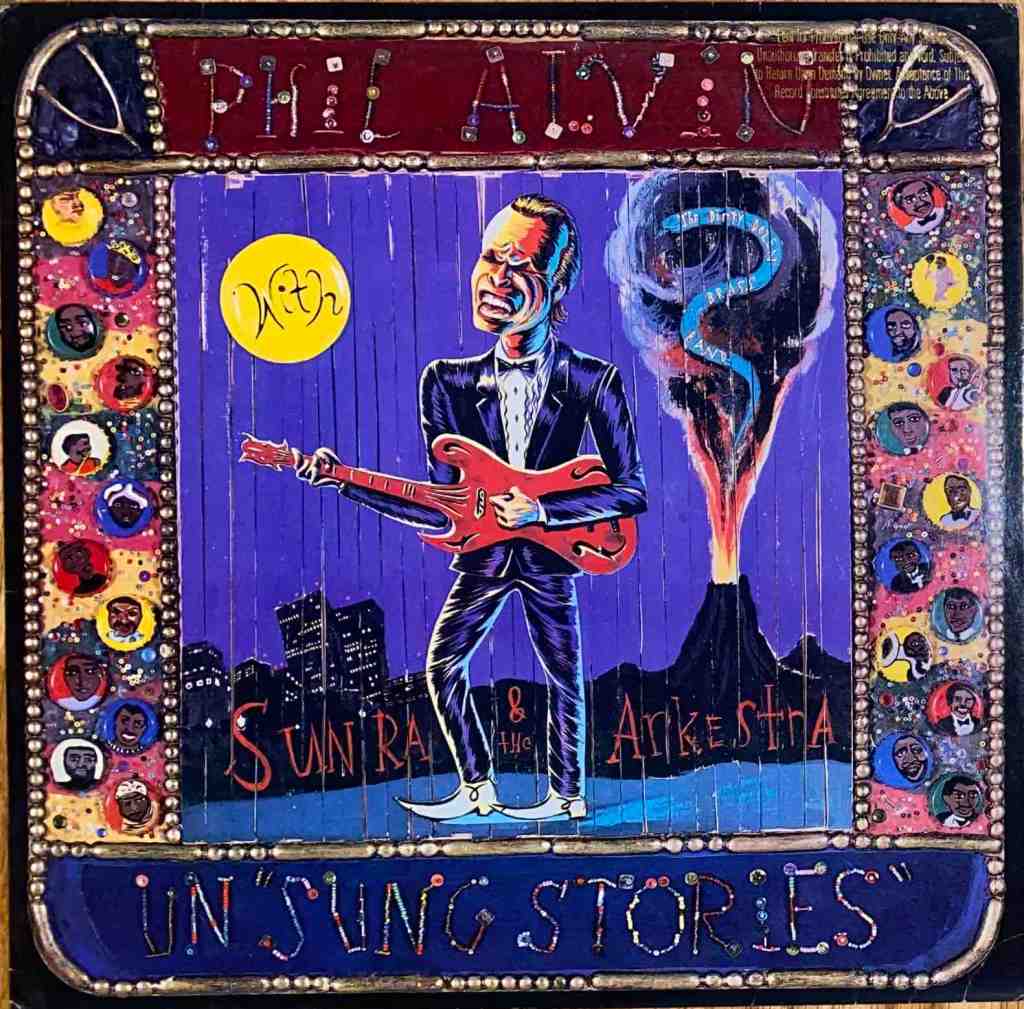
Phil Alvin is quite simply one of the greatest singers of our time. He came to prominence as the singer of The Blasters—one of the greatest Rock’n’Roll bands this planet has ever produced. Phil has made a couple of solo albums and “Daddy Rolling Stone” comes to us from his first one, Un Sung Stories (which has been recently reissued on CD by Liberation Hall Records with liner notes by our pal Chris Morris.)

This GO Mechanism, like many of the recent ones, closes out with one of the greatest records of all time: “Anyway Ya Wannta” by Harvey. This is Harvey Fuqua, who began his career as the leader of the great R&B vocal group The Moonglows in the fifties; “Sincerely” was a Number One R&B hit in January 1955. That group disintegrated in Washington D.C. around 1959, and Bo Diddley, then a D.C. resident, suggested to Fuqua that he enlist a local group called The Marquees to be the new Moonglows. Once this was done, Fugua eventually took these Moonglows, which included a fellow named Marvin Gaye, to Chicago to cut a few records for their record company, Chess. When The Moonglows broke up, Fuqua took Gaye to Detroit. There they became entangled professionally and personally with Barry Gordy and his family. Fuqua would form record companies (Anna, Tri-Phi, Harvey) with Gordy’s sisters Anna and/or Gwen and married the latter. Gaye worked as a session musician—he played drums, some piano, and of course he could sing—for the labels and he married the former. When Barry Gordy’s label Tamla first released Barrett Strong’s “Money (That’s What I Want)” it couldn’t handle it and the record was shifted to Anna and Gwen’s Anna Records where, with the help of Chess distribution, it became a Number Two R&B hit in 1960. Brother Barry learned his lesson and the next year he had a smash Number One hit with The Miracles’ “Shop Around.” Soon after, he formed Motown and a few subsidiaries and eventually absorbed his sisters’ labels—including the talent which included Junior Walker & the All Stars, The Spinners, David Ruffin and Marvin Gaye—who hadn’t recorded as a solo act yet but was part of the family.
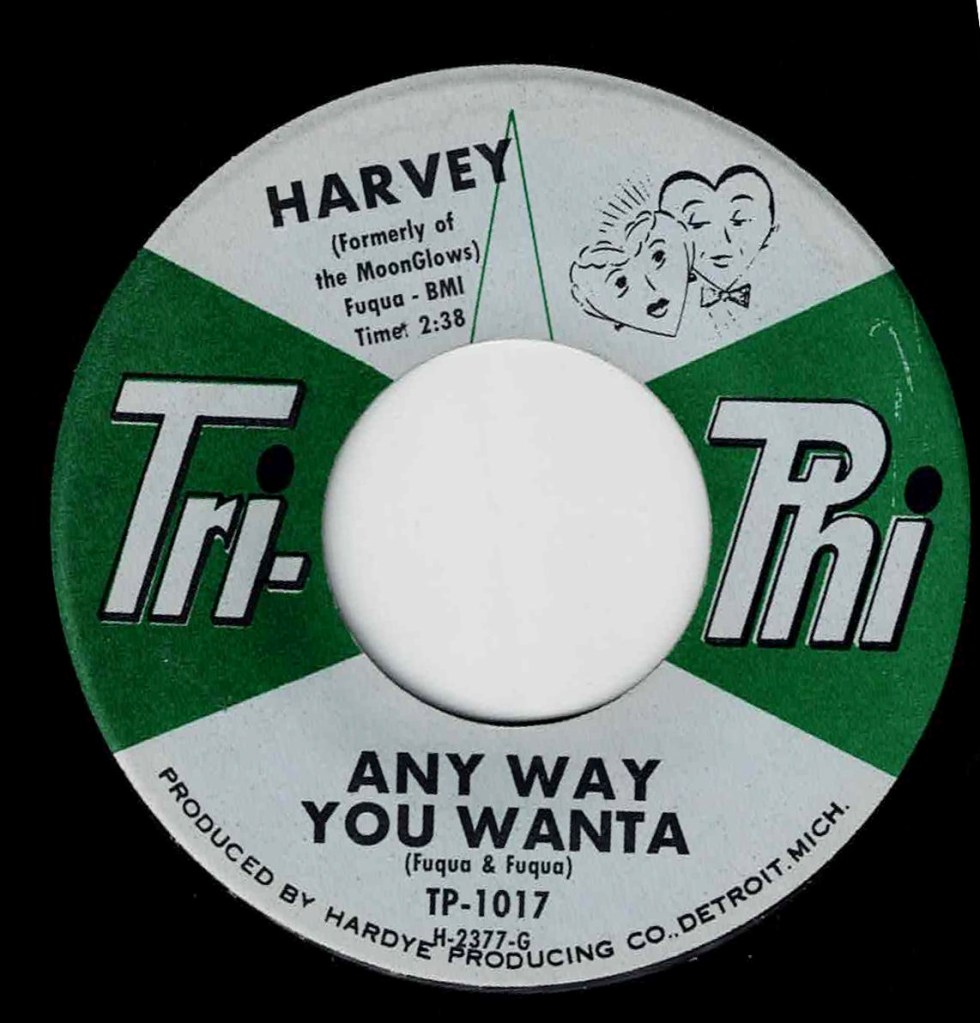
Harvey’s 1962 record on Tri-Phi, “Anyway Ya Wanta,” is one of our most favorite of records, what with it’s wild yelps, calling out of popular dances and its bump-bump-bumpity bump rhythm. The first time we heard it (probably when Mr. Fine Wine played it at an Empire State Soul Club event during the nineties) we thought it was some Billy Stewart record that we somehow missed; it really captured us with “Do the hitchhike!” Man, we went crazy for it—we bought a cheap bootleg and, after several years, tracked down an affordable original in good shape. It is presented in The GO Mechanism as one of the Greatest Records Of All Time.
Once again we thank the groovy people at Luxuria Music for allowing us to present The GO Mechanism over their web-streaming hustle. Luxuria Music is a listener supported entity and can not exist without your help. Please visit the Luxuria Music website and figure out how you can send them some money.
- Earl Bostic—Lester Leaps In (King)
- Sir Charles Thompson and his All Stars—Mad Lad (Apollo)
- Paul Williams—Hoppin’ John (Savoy)
- Earl Hooker—The Hucklebuck (from LP Sun: The Roots of Rock: Volume 11: Memphis Blues Sounds; Charly; UK)
- James Booker—Cool Turkey (Peacock)
- Creedence Clearwater Revival—Call It Pretending (Scorpio)
- Los Mirlos—El Sonido de Los MIrlos (Infopesa; Peru)
- The Maytals—Do the Boogaloo (Trojan; UK)
- Timmie Thomas—Have Some Boogaloo (Goldwax)
- Bobby Rush—Sock Boo Ga Loo (Checker)
- Melvin Jackson—Funky Skull Part 1 (Limelight)
- Cal Tjader—A Night in Tunisia (Fantasy)
- Gregory Corso—The Fleeting Hand of Time
- Jerry Betters—Caravan (Gateway)
- Los Beats—Eres Tu (Orfeon; Costa Rica)
- The Green Slime—The Green Slime (M-G-M)
- Dick Hyman & His Orchestra—Agent Double-O Soul (Command)
- Grupo Miramar—El Cameron (Accion; Mexico)
- Marvin Gaye—Walk on the Wild Side (Tamla)
- The Quik—Bert’s Apple Crumple (Klook’s Kleek; UK)
- Mor Thiam—Kanfera (Return to Fisher) (from LP Dini Safarrar – Drums of Fire; Rite Record Production)
- Los Lobos—A Matter of Time (from LP How Will the Wolf Survive?; Slash)
- Smokey Robinson & the Miracles—From Head to Toe (from LP Goin’ to A Go-Go; Tamla)
- The Funk Brothers—The One Who Really Loves You (bed music—from soundtrack Standing in the Shadows of Motown – Deluxe Edition; Hip-O/Motown)
- Smokey Robinson & the Miracles—Dancing’s All Right (from LP Make It Happen; Tamla)
- Smokey Robinson & the Miracles—Dreams Dreams (from LP Four in Blue; Tamla)
- Grupo Sta. Cecilia—1, 2, 3, Hustle (Orfeon; Mexico)
- Gene Redd & the Globe Trotters—Zeen Beat (King)
- The T-K-O’s—The Charge (Ten Star)
- Bo Diddley—Old Man River (from LP Surfin’ With Bo Diddley; Checker)
- Wanderlea—Vou Lhe Contar (Pushin’ Too Hard) (CBS; Brazil)
- Roland Kirk—Safari (from LP Slightly Latin; Limelight)
- W.H. Auden—As I Walked Out One Evening
- Dyke & the Blazers—The Broadway Combination (from LP The Funky Broadway; Original Sound)
- The Ventures—Diamond Head (Dolton)
- Booker T & the M.G.’s—Chicken Pox (from LP Melting Pot; Stax)
- Slim Harpo—I’m a King Bee (Excello)
- Aaron Neville—Space Man (Par Lo)
- Bobby Fuller and the Fanatics—Our Favorite Martian (Donna)
- Phil Alvin—Daddy Rollin’ Stone (from LP Un “Sung” Songs; Slash)
- Pete Terrace—The Basic Cha Cha (Tico)
- Curtis Mayfield—Freddie’s Dead (Boogaloo edit, closing theme; Curtom)
- Harvey—Anyway Ya Wannta (Tri-Phi)
- OKeh Laughing Record
This edition of The Go Mechanism will be available as a podcast on the Luxuria Music website after its initial air-date of September 21, 2024 as a Saturday Night Special. After a few weeks it will be posted on the Mixclouds and it will appear below…










 boogaloobag