
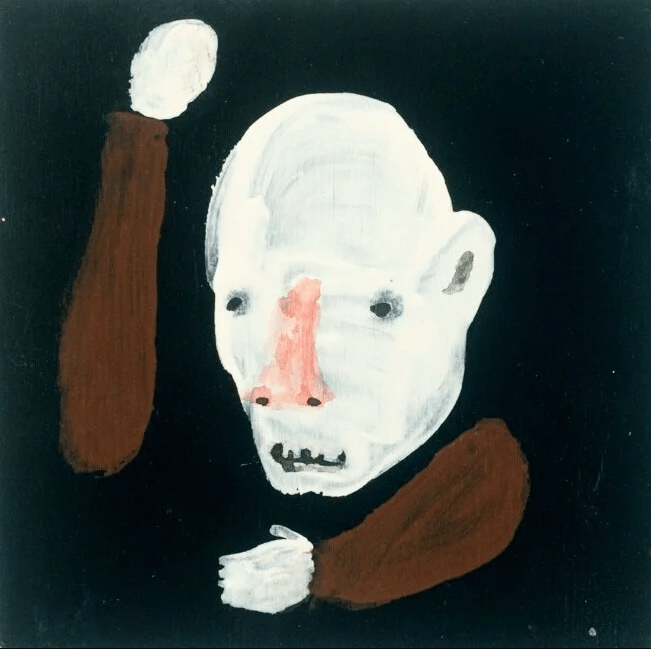
This is The GO Mechanism, an audio Odyssey scientifically engineered and programed in the secret laboratory of Boogaloo Omnibus Productions by Phast Phreddie. It incorporates ultra-phonic techniques and transcendental procedures that other programmers have not yet discovered. The G stands for GROOVE, and each GO has the absolute maximum GROOVE that is allowed by the law. The O stands for O’ROONY, an intricate and complex attitude that is incomprehensible to those who possess standard-issue precepts. Listen and you will hear.
The GO Mechanism is first aired on the Luxuria Music web streaming hustle as a Saturday Night Special; this one on December 27, 2025. It will then be available as a podcast on the Luxuria Music web site for a few weeks, before we post it on the Mixclouds. It is imperative that this blog is consulted when the listener is digging The GO in order to achieve complete comprehension of the program. We won’t be stopping to tell you what we’ve just listened to, so here you will find a complete track list of the songs played plus information regarding some of them.
It has been more than nine months since the last GO Mechanism, so in order to expedite the process, The Science Corner has been temporarily suspended. (The assembly of the Science Corner, as featured in previous GO Mechanisms, is time consuming, requiring extra attention and O’Rooney.)
Here’s the complete track listing and notes in a spanking new format for this program:
- Earl Bostic—Lester Leaps in (King)
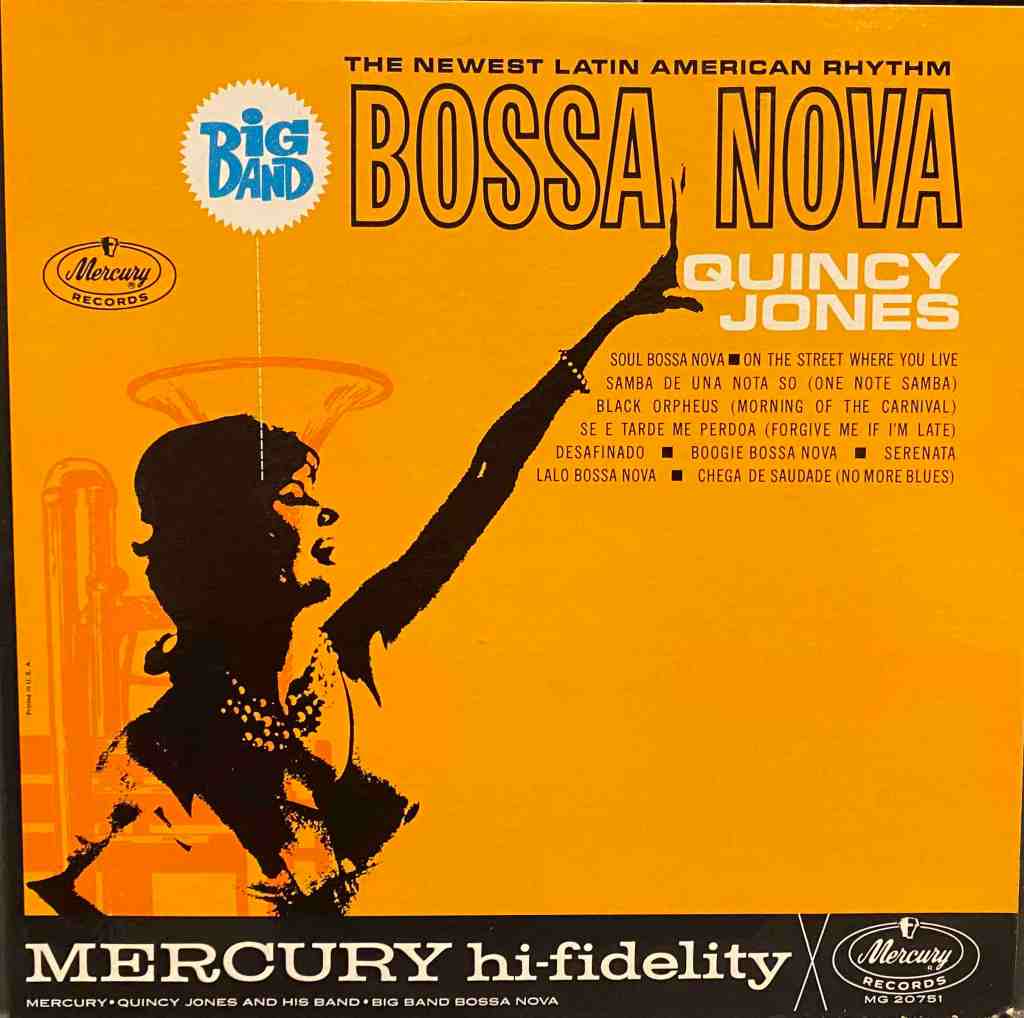
- Quincy Jones and his Orchestra—Boogie Bossa Nova (Boogie Stop Shuffle) (Mercury)
- ———This is the first of the three ‘shuffle’ songs that open the GO. Quincy Jones’ albums on Mercury range from fabulous to interesting but the great thing is that he got the best jazz musicians available to play on them. For example, on this recording he had Clark Terry and Paul Gonsalves—two cats who worked with Duke Ellington. Plus, Quincy got away with covering this fabulous composition by Charles Mingus. On Jones’ album Big Band Bossa Nova it was called “Boogie Bossa Nova,” but it is really “Boogie Stop Shuffle” from Mingus Ah Um. Others in the orchestra include bassist Chris White, drummer Rudy Collins and pianist Lalo Schifrin—all three were in Dizzy Gillespie’s quintet at the time. In fact, the drummer and bass player also play on the Dizzy track later in our program.
- Big Jay McNeeley—Big Jay Shuffle (Federal)
- Billy Larkin & the Delegates—Harlem Shuffle (Aura)
- Nuggets Mega Mix featuring The Electric Prunes, The Blues Magoos, The Amboy Dukes and The Chocolate Watchband
- ———The above is an exclusive, super-deluxe mega mix developed in the Boogaloo Omnibus Laboratory specifically for this GO Mechanism. Psyche-out, people!
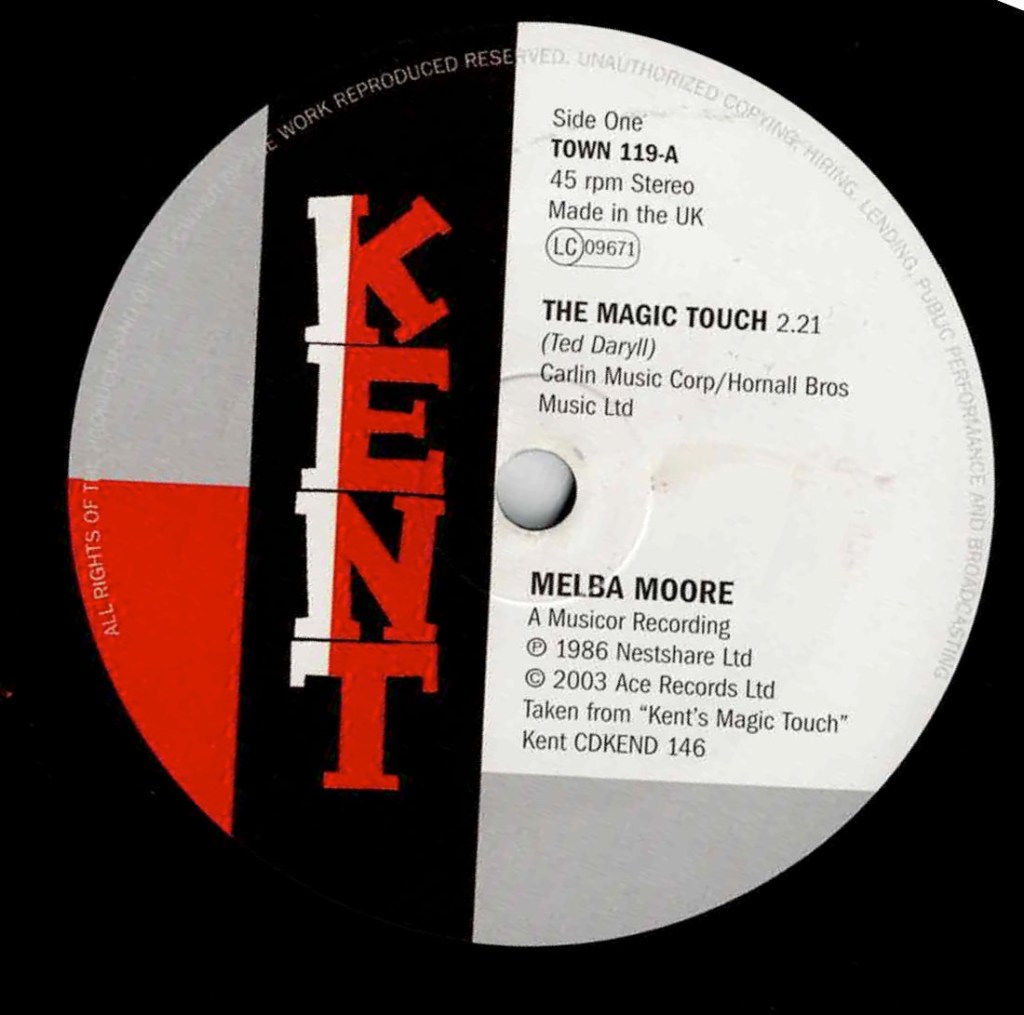
- Melba Moore—The Magic Touch (Kent; UK)
- ———This track may have been an unreleased demonstration recording made by a music publishing company in order to hustle the song. One artist it was pitched to was the Bobby Fuller Four, who did a great version of it. This record was originally pressed as a give-away for a sixties dance night in England. It was subsequently bootlegged, then later issued legally by England’s Kent Records for the Northern Soul market. Melba Moore started her career as a demo singer before she achieved stardom with her R&B and disco records during the seventies and eighties.

- The Fur Ones—El Cacahuate (The Fur Ones)
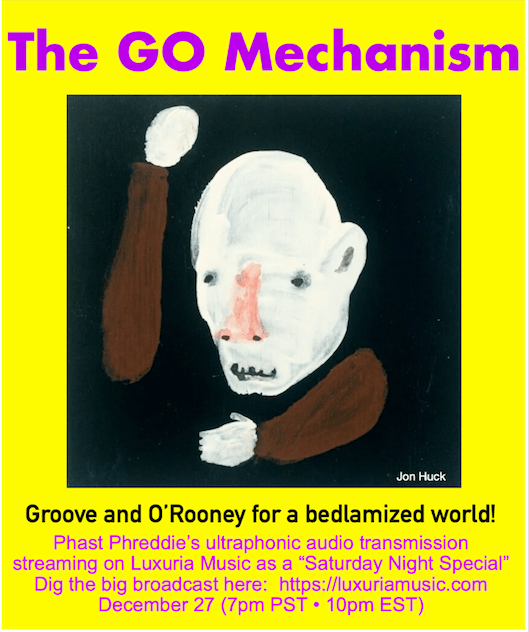
- ———We don’t remember where we found this track, but The Fur Ones was led by the artist Jon Huck, who painted this episode’s graphic. Huck was once the bass player for the wild punk rock band Thelonious Monster and even sat in as a substitute bassist for a Phast ’n’ Bulbous gig (if you know where that’s at!). He’s still in Los Angeles where he concentrates on his art and has displayed it in galleries and exhibitions. Dig his paintings at the Jon Huck Art website.
- Emil Richards—Opal (October) (from LP Psychedelic Percussion)
- [spoken] Gary Watson—Song of the Dying Gunner (from LP Will It Be So Again? Argo; UK)
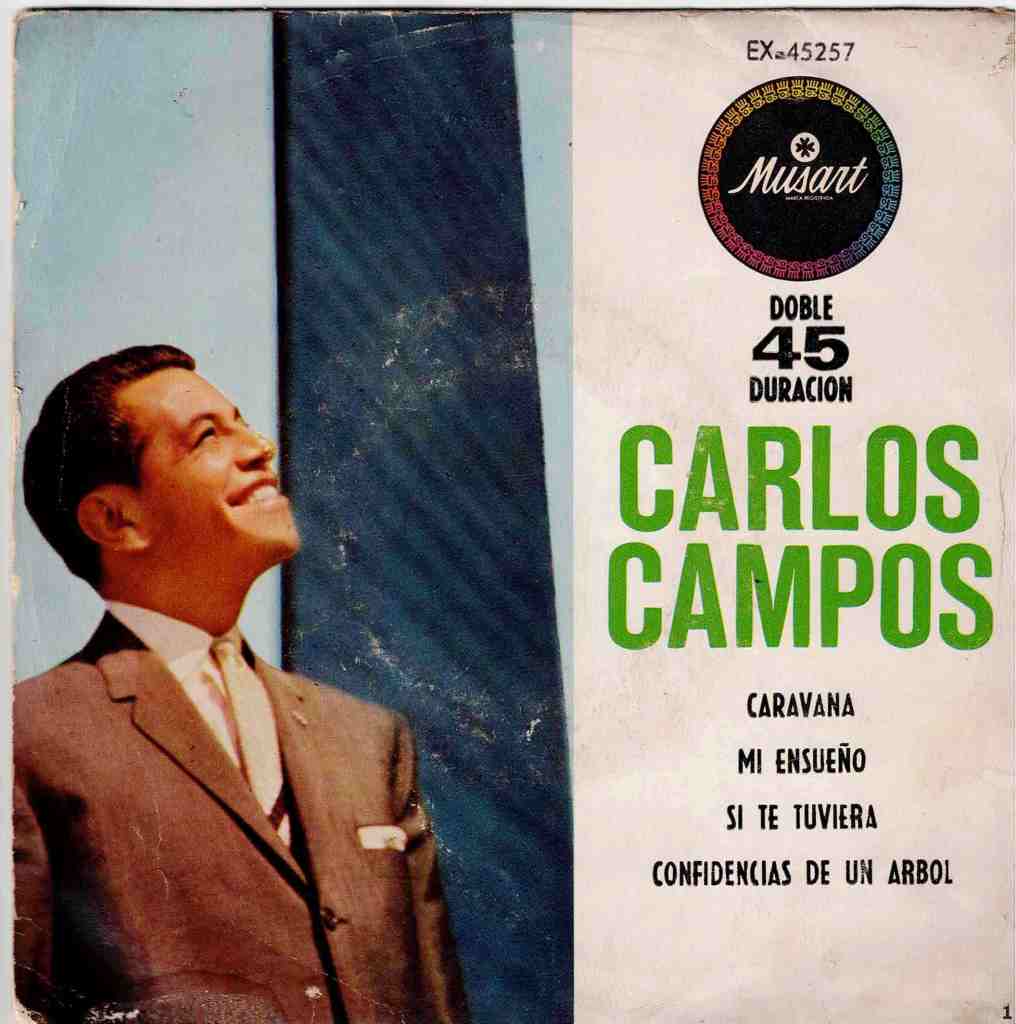
- Carlos Campos—Caravana (Musart; Mexico)
- ———Every GO Mechanism contains a version of “Caravan,” the excellent composition by Duke Ellington and Juan Tizol. GO 28 is no exception. Carlos Campos was a Mexican band leader whose career lasted from the fifties to the seventies. His music consisted of danzons, pachangas, cha-chas, Afro-Cuban jazz, mambos and all sorts of exotic stuff. His version of “Caravan” is great.
- Marvin Holmes & the Uptights—Ooh Ooh the Dragon (Uni)
- Art Blakey & the Jazz Messengers—Weird-O (from album The Jazz Messengers; Columbia/Legacy)
- [spoken] Dylan Thomas—Dawn Raid (from album The Caedmon Collection)
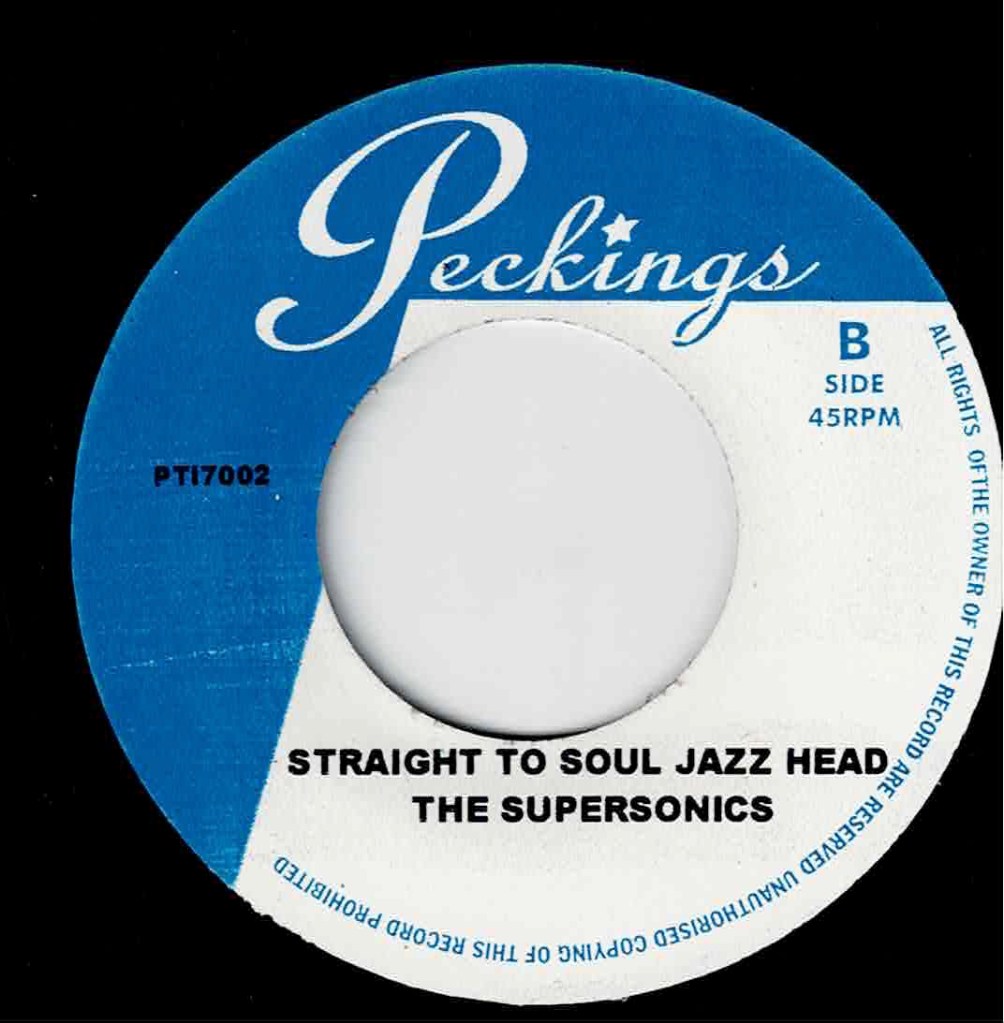
- The Supersonics—Straight to Jazz Soul Head (Peckings)
- ———Upon listening to this track it is pretty obvious that it is a dub version of “The World Is a Ghetto.” The reggae version that this recording was derived from is by The Paragons, a top notch Jamaican vocal group. The Supersonics were a studio backing band that was very prolific, having worked with such artists as Alton Ellis, Hopeton Lewis, Justin Hinds, The Heptones, and many more.
- The Funk Brothers—Pride and Joy (edit) (from album Standing in the Shadows of Motown; Motown)
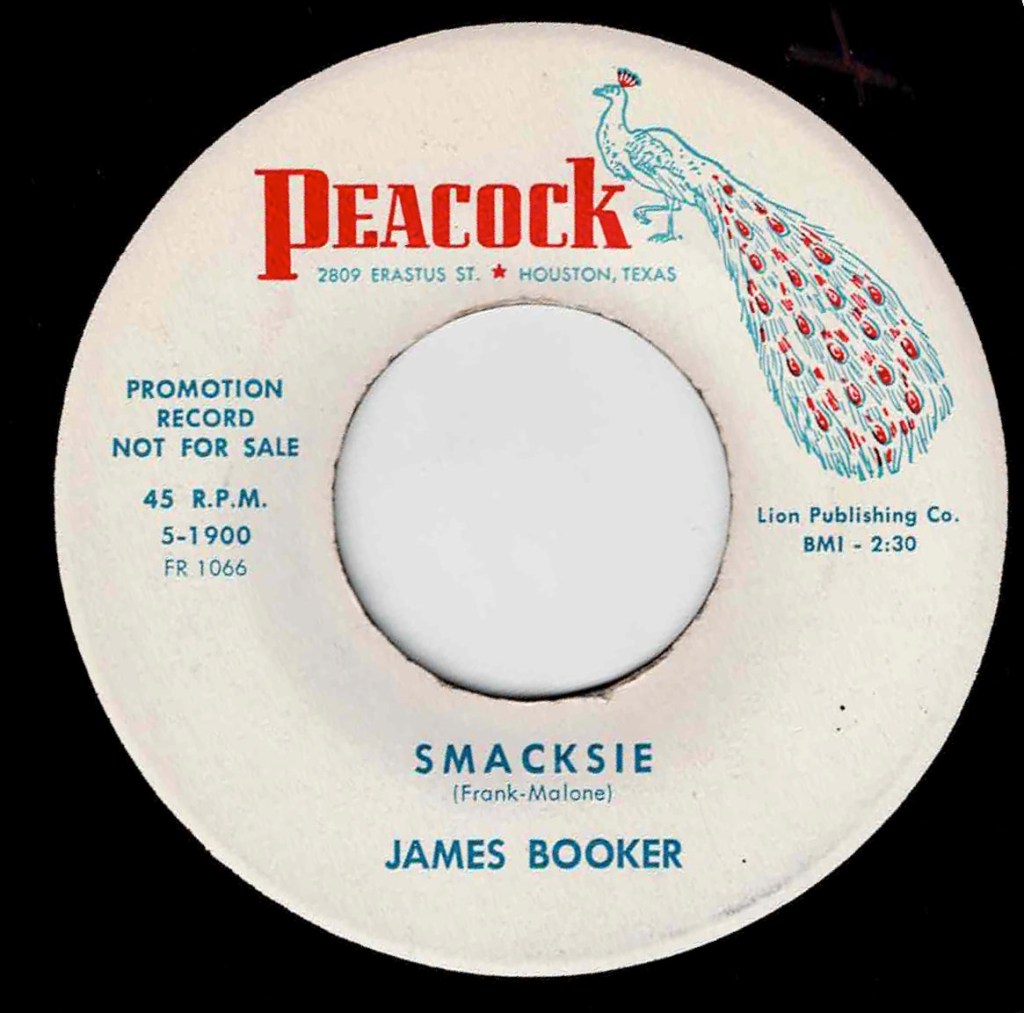
- James Booker—Smacksie (Peacock)
- ———James Booker was a classically trained musician who was a legend in New Orleans. He was black, homosexual, addicted to heroin, walked with a limp, was a flashy dresser and had only one eye. In spite of all that—maybe because of all that—he was quite possibly one of the greatest keyboard players of our time. “Smacksie” comes to us from 1961.
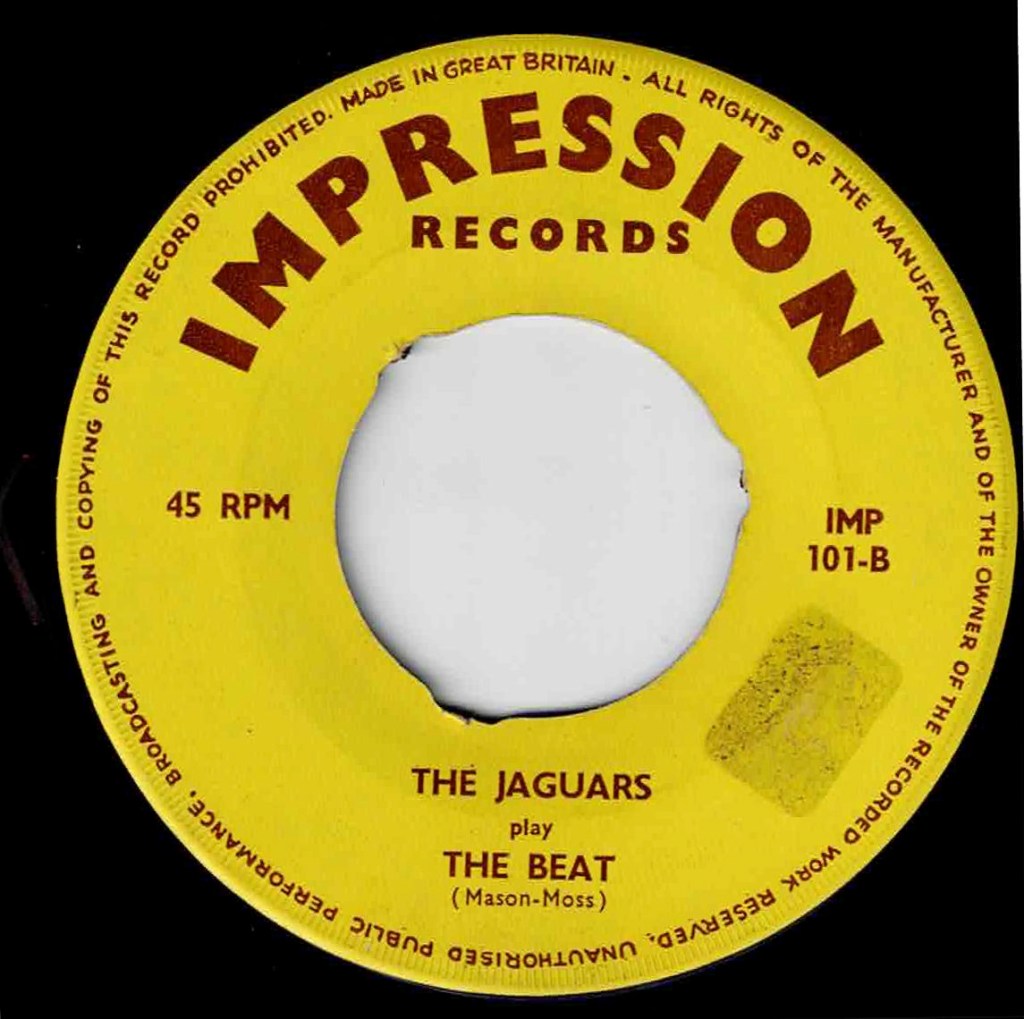
- The Jaguars—The Beat (Impression; UK)
- ———The parents of a sixteen-year-old guitarist from Worcester, England financed this record, of which only a thousand were pressed by a local record company. The guitarist would eventually make a pretty good name for himself several years later when he formed a group called Traffic and wrote a song called “Feelin’ Alright.” Yeah, the sixteen-year-old kid was Dave Mason.
- Los Mirlos—La Danza de Los Mirlos (Cumbia de los Pajaritos) (Infopesa; Peru)
- Bobby Byrd—Fight Against Drug Abuse (King)
- Mahlathini—Ngizothi Mamakubani (from album King of the Groaners; Earthworks)
- Jimi Hendrix—Third Stone From the Sun [excerpt] (from LP Are You Experienced? Reprise)
- Dick Dale—Third Stone From the Sun [excerpt] (from album Guitar Legend: The Very Best of Dick Dale; Shout Factory)
- The Fleshtones—Screaming Skull (from LP Hexbreaker; I.R.S.)
- Ravi Shankar—Bhimpalasi (from album The Sounds of India; Columbia)
- Charanjit Singh—Hey Mujhe Dil De (from LP Instrumental Film Tunes; Odeon; India)
- Booker T & the M.G.’s—Melting Pot—(from LP Melting Pot; Stax)
- [spoken] Charlie Chaplin—speech from The Great Dictator
- Los Lobos—El Canelo (Son Jarocho) (from album Los Lobos Del Este de Los Angeles)
- Laika & the Cosmonauts—Beat Girl (from album C’mon Do the Laika; Amigo; Finland)
- Eddie & the Hot Rod—Do Anything You Wanna Do [exclusive Boogaloo Omnibus edit] (Island; UK)
- The Dyna-Tones—Skunk Part 1 (Alto)
- Rolling Stones—Commit a Crime (from album Blue and Lonesome; Rolling Stones)
- Stanley Turrentine—Niger Mambo (from album In Memory Of; Blue Note)
- Jesse Fortune—Too Many Cooks (U.S.A)
- The Happenings Four—Boogaloo Boogaloo (Capitol; Japan)
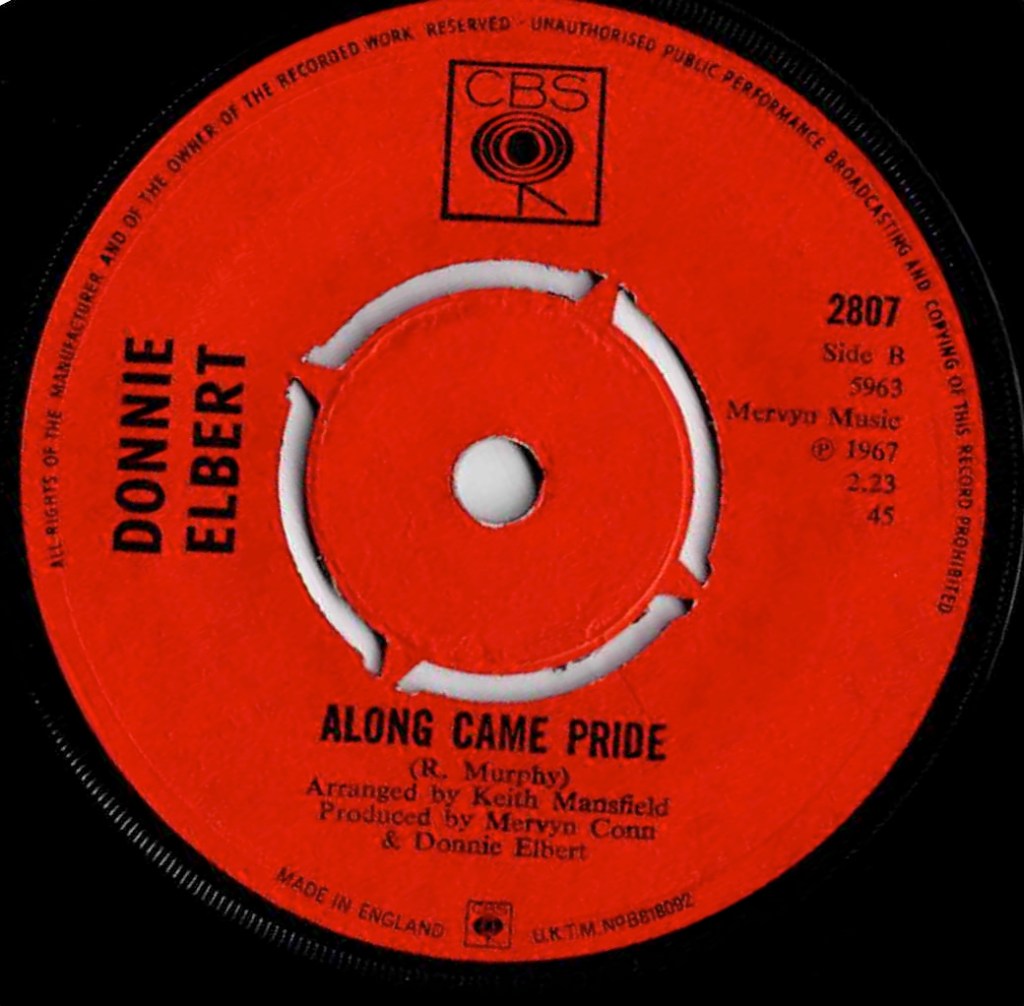
- Donnie Elbert—Along Came Pride (CBS; UK)
- ———Donnie Elbert is an excellent example of a journeyman Rhythm & Blues singer. He cut some smooth R&B ballads with his falsetto voice in the late fifties that did fairly well, especially “What Can I Do” and “Have I Sinned” (both lowrider standards), plus a few jump numbers for DeLuxe Records. Then, in the sixties he released about a dozen singles on nearly that many labels. He lived in England from 1966 to 1969 and recorded there, including a cool rocksteady number called “Baby Please Come Home.” After returning to the States, he hooked up with All Platinum Records where he had the most success; his version of The Supremes’ “Where Did Our Love Go” was his biggest hit, going to Number 6 R&B and Number 15 Pop. Elbert would cut several Motown-related songs, but the first one he recorded was The Temptations’ “Get Ready” in 1967. It was the A-side to the track we hear in GO 28: “Along Came Pride.” This single was never issued in the U.S. Elbert’s experience as an entertainer was not fun for him and by the end of the seventies he was working a record company.
- Tom Waits—Midtown (from album Rain Dogs; Island)
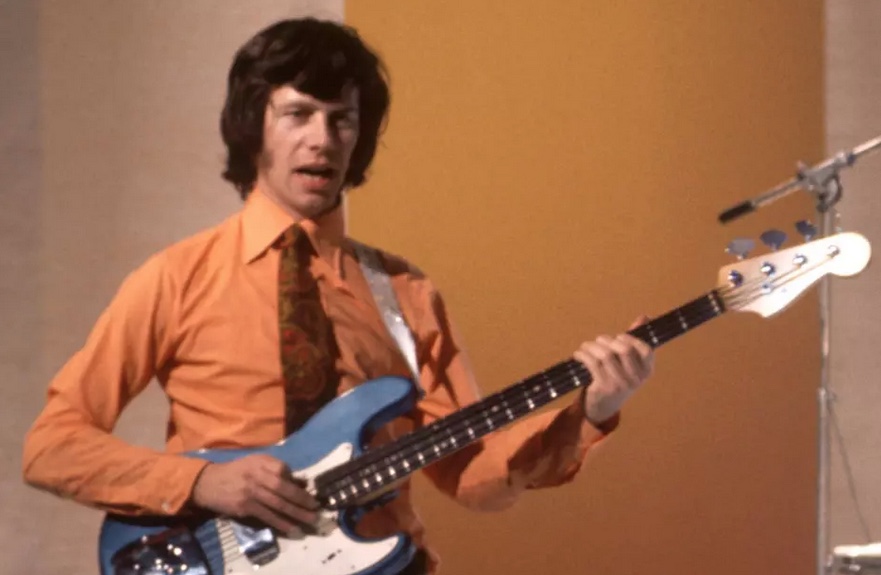
- Lou Reed/Emily Dickenson—Walk on Nobody (GO Mechanism exclusive mash-up)
- ———The classic bass riff from Lou Reed’s “Walk on the Wild Side” (played by Herbie Flowers) makes an exquisite backdrop for Nancy Wickwire’s recitation of the famous Emily Dickinson poem.
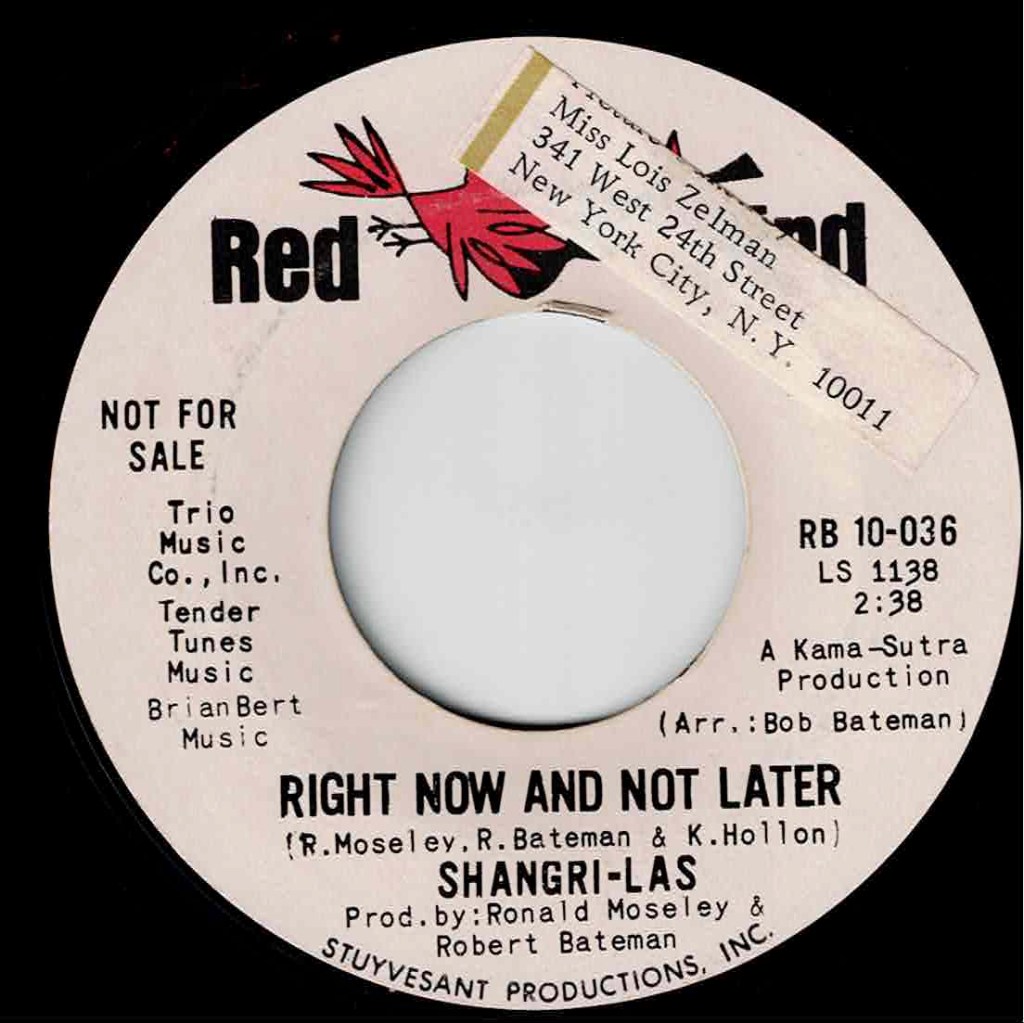
- The Shangri-Las—Right Now and Not Later (Red Bird)
- ———If this recording sounds like a soul record, well, it kind of is! It was co-produced, arranged and co-written by Robert Bateman, who was employed by Motown Records at that label’s beginning. He helped write “Please, Mr. Postman” for The Marvelettes and it was one of the company’s first major successes. The other producer was Ronald Mosley, who often worked with Bateman in the mid-sixties—including on some of our favorite soul records—and later was one of the founders of Sussex Records. This Shangri-Las song has a definite R&B groove with a tough bass line and prominent tambourine hits and the gals sing it with suitable expressiveness, however, the record only spent two weeks at Number 99 on the Top 100 before it disappeared.
- Pharoah Sanders—The Creator Has a Master Plan (edit) (Impulse)
- Red Crayola—Hurricane Fighter Plane (International Artists)
- Dizzy Gillespie—Theme From The Cool World (from album The Cool World – soundtrack; Philips)
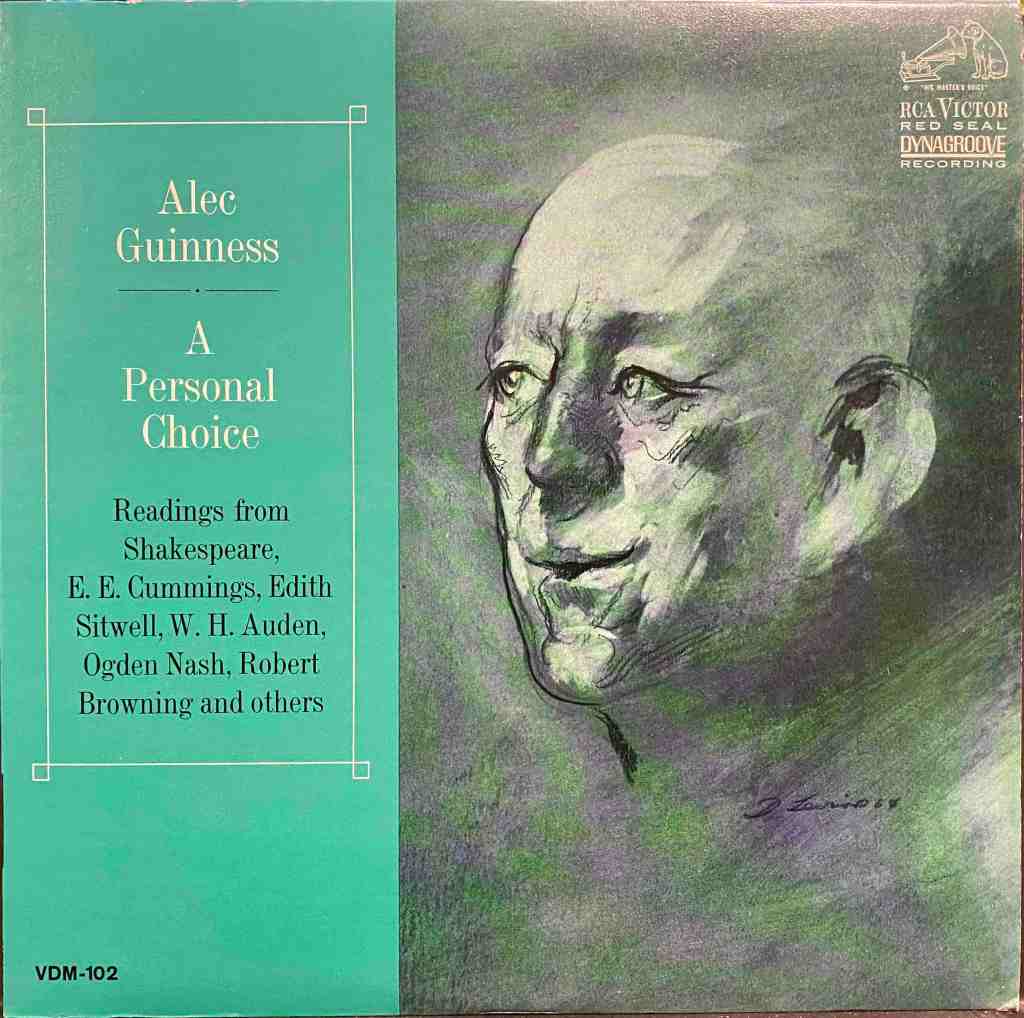
- ***Alec Guinness reads “When the Faces Called Flowers Float Out of the Ground” by e.e. cummings
- [spoken] Alec Guinness was a British Shakespearean actor who had a long, successful career on screen and on stage. He starred in a lot of really good movies, starting in the late forties, and received several awards for his acting abilities. However, these days he is best know for his portrayal of Obi-Wan Kenobi in the Star Wars trilogy. Somehow, he found the time to make several spoken word albums and we found one. Here he recites an interesting poem by e.e. cummings, one of America’s most important poets. “When the Faces…” is a sort of surrealistic look at the coming of spring.
- Big Mama Thornton—Wade in the Water (Arhoolie)
- Curtis Mayfield—Freddie’s Dead (GO edit) (Curtom)
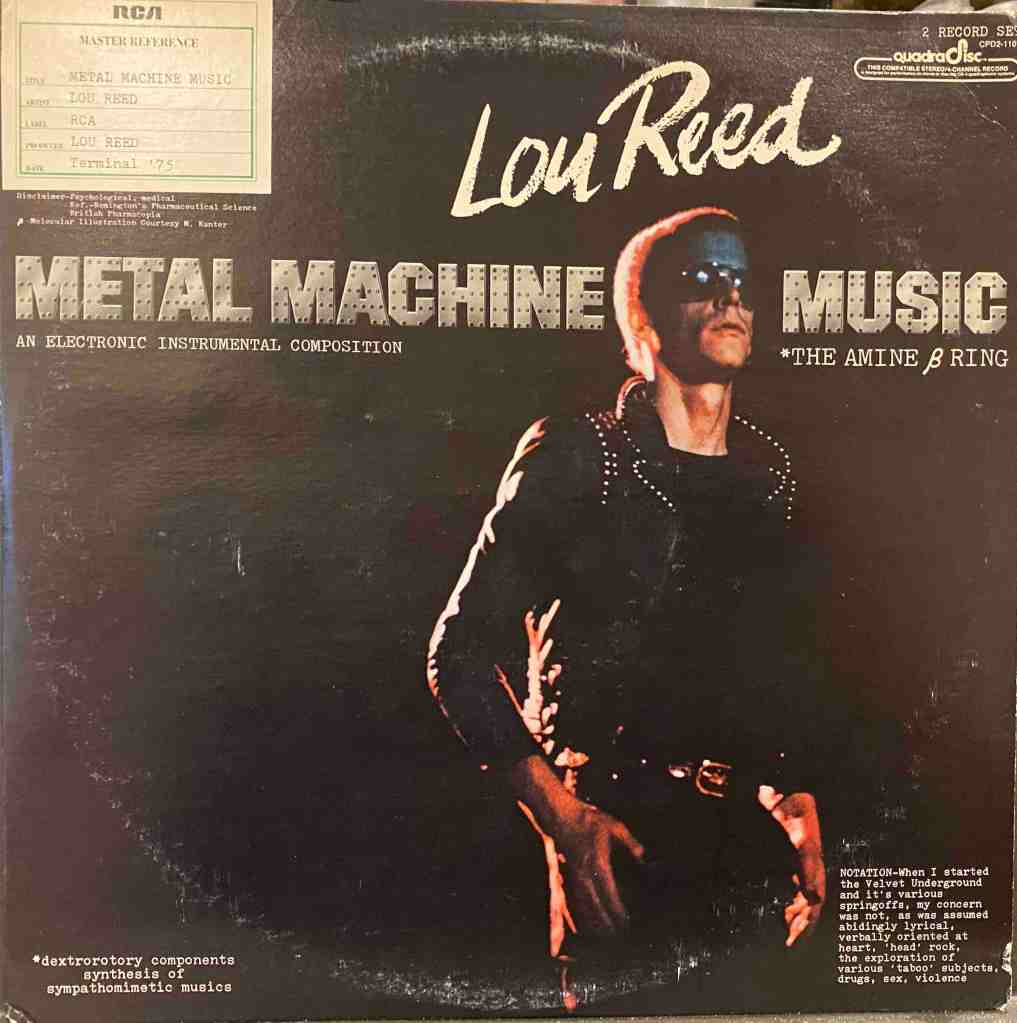
- Lou Reed—Metal Machine Music * The Amine ß Ring (an electronic instrumental composition) (RCA Victor)
- ———“As way of disclaimer, I am forced to say that, due to stimulation of various centers (remember OOOHHHMMM, etc.), the possible negative contraindications must be pointed out. A record has to, of all things Anyway, hypertense people, etc. possibility of epilepsy (petite mal), psychic motor disorders, etc., etc., etc. My week beats your year” —Lou Reed from liner notes to Metal Machine Music.
The GO Mechanism originates on the Luxuria Music streaming platform as a Saturday Night Special whenever we get around to producing one. Luxuria Music is a wonderful and unique web-streaming entity that has loads of great shows. We strongly suggest that all Boogaloo Bag readers and GO Mechanism enthusiasts give it as much support as possible. Somehow it exists without commercials or the largess of a deep-pocketed oligarch. We thank the Luxuria Music folks for sponsoring The GO. The GO Mechanism producers ask each of you to support them. They have a lot of cool trash available in their online store. We urge you to get as much money as you can, stuff it into a shoe box and send it to Luxuria Music. Do it today.

If you missed the original airing on Luxuria Music, you can find it as a Luxuria Music podcast for a few weeks, and then it will be mounted in the mixclouds and accessible below.
 boogaloobag