

This is The GO Mechanism—an audio Odyssey technically engineered and programed in the sub-state-of-the-art laboratory of Boogaloo Omnibus Productions by its host Phast Phreddie. The GO incorporates exclusive ultra-phonic techniques in order to present a show with the highest standards of standardness. The “G” stands for Groove—the fuel for the GO Mechanism. The “O” stands for O’Rooney, an intricate and complex impulse that is incomprehensible to those who possess standard-issue precepts. Dig it and you will know.
The GO Mechanism is presented whenever its producers get around to constructing a program. It is initially heard on the Luxuria Music web streaming hustle as a Saturday Night Special—this one to be initially aired on March 23. It will then be archived on the Luxuria Music website for a few weeks as a podcast before it is posted to the Mixclouds and down below here in the Boogaloo Bag.
In order to achieve total comprehension of The GO Mechanism, it is strongly recommended that this post be referenced while listening to the corresponding program. Songs and artists are not back-announced in order to keep the Groove Grooving and the O’Rooney O’Ronneying.
An hour into the GO Mechanism, the producers will present The Science Corner, a segment of the show where a subject of musical interest is discussed and several records are aired to illustrate the point. This show will feature three “frog” records.


Frog records are records with the popular amphibian as a subject. Often, as in the case of these three records, frog records refer to a dance, the Frog (no, not the Frug). The first one is “The Frog” by Bo Diddley. Bo Diddley is a legend and there is no need to go into his story here. Suffice it to say that he made a ton of great records, especially for the Checker Records company in the fifties and sixties and this is one of them. Nearly all of Bo Diddley’s records have a wicked beat and “The Frog” is no exception. It was recorded in May 1966 in Chicago. The drummer is Clifton James, who recorded with Bo Diddley extensively—he’s on Bo’s early hits, “Bo Diddley,” “I’m a Man,” etc. Bo Diddley’s foil and maraca player Jerome Green retired from music at the end of 1964. By the spring of 1965, Connie Redmon—also known as Cookie Vee—sort of took his place, but on tambourine. That’s her banging away on this recording. She would work with Bo Diddley for about ten years, as a back-up singer—sometimes with the vocal group The Bo-Ettes and/or The Cookies—as well as a percussionist.
Next up is “The Frog” by Sir Frog and the Toads. According to the garage rock bible, Teenbeat Mayhem!, Sir Frog and the Toads were from Las Vegas and also released a single as The Last Word. Both records were issued on the Downey label—known for its boss surf music records (Rumblers, Chantays). A likely scenario is that the band traveled to Los Angeles to play some gigs at the local clubs, came to the attention of Downey Records and cut six tracks (two were unissued until recently) then returned to Nevada. “The Frog” is the bossest of boss, with its very tuff fuzz guitar work-out.
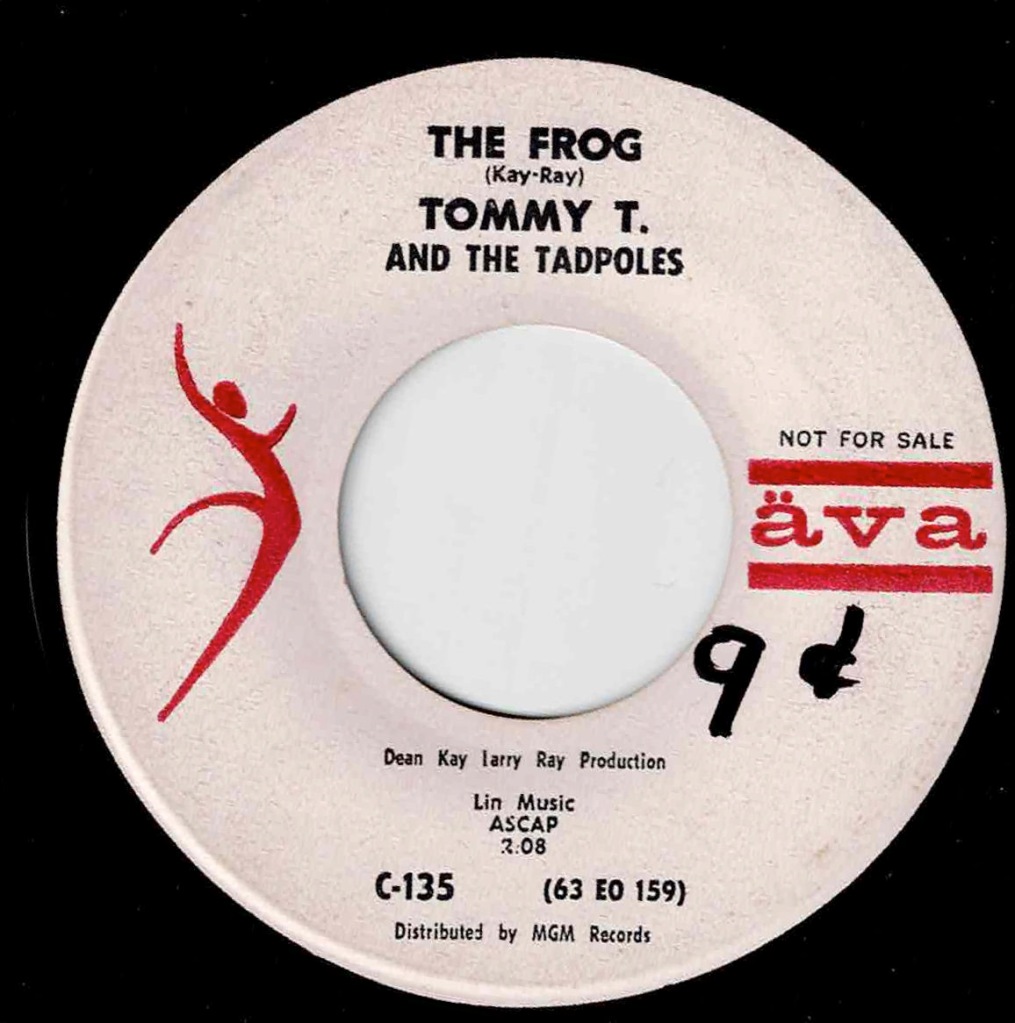
Our third frog record is “The Frog” by Tommy T and the Tadpoles. This record is interesting for a few reasons. To begin with, it was issued on Äva Records, a company that was co-owned by Fred Astaire! Another thing is the songwriting—co-written by Dean Kay and Larry Ray. Probably before the frog record was made, Dean Kay was in a teen vocal duo with a fellow named Hank Jones (not the jazz cat). The act had a sort of Everly Brothers vibe, appeared regularly on the Tennessee Ernie Ford TV Show and issued an album on RCA. A few years later, Kay would have a Number Four pop hit with his song “That’s Life” as sung by Frank Sinatra. Around 1971, Kay gave up songwriting to concentrate on the business end of the music industry—mostly dealing with music publishing.
The other songwriter, Larry Ray—who was a childhood friend of Dean Kay—co-wrote songs for the Hank and Dean duo. He would also go on to work in the music business, at Elektra, Dunhill, A&M and ABC Records before going into the publishing side of the industry.

The track by The Animals that appears in this program, “We’re Gonna Howl Tonight,” was recorded for a 1965 TV musical special called The Dangerous Christmas of Little Red Riding Hood. The show is a re-imagining of the Little Red Riding Hood story as told from the point of view of The Big Bad Wolf. It starred Liza Minnelli in the title role. The Animals played ‘The Wolf Pack,’ a gang that hangs out with The Wolf, played by Australian actor Cyril Ritchard. The show was conceived by the Broadway songwriters Bob Merrill and Jule Styne and they wrote all the songs, including this one, which actually suits the band fairly well, in spite of the fact that the show is less than fabulous.

“Dance Hall Brawl” sounds just like the title says—it’s one of the wildest records ever to be filed in the ‘calypso’ section! Sparrow’s Troubadours were the backing band for the Mighty Sparrow, who is arguably the greatest calypso singer of all time—certainly one of the most famous. On this record, his band let’s loose with a fantastic recording of folks bangin’ on shit and screaming!!! One of our favorite records.

The cool thing about The Zombies’ version of “Rip It Up” is that they don’t try to rock harder than the Little Richard original, they just play it as if they were, well, The Zombies; they add a jazzy touch and a dash of Ray Charles-style R&B in order to make it their own. It comes to us from BBC recordings.

The track “Abiana” by Ukonu is from his second LP, called African Nite Life (Imperial LP-9044, 1957). The artist’s full name is Anyaogu Elekwachi Ukonu and when he recorded his two LPs he was a pre-medical student at UCLA. His albums are among the earliest examples of African traditional (or traditional-like) music recorded in the U.S.A., even predating the fabulous records made by Olatunji for Columbia Records. Ukonu was a member of the Ibo tribe in Nigeria and the son of Chief Elekwachi. While in the U.S., he also appeared in a couple of films. After his studies in California, he returned to Nigeria to become the chief of his tribe as well as a television personality and executive.

“Soul Dance No. 3” by Carl Holmes & the Commanders is a fantastic, hard soul record that was apparently lifted for a song of the same title by Wilson Pickett. The Wicked Mister Pickett was fond of covering other’s songs—and he did it quite well, turning many of them into bigger hits than the originals. However, in those cases, proper writing credit was always given. The Carl Holmes version shows Holmes and Pervis Herder, who is the singer on this recording, as songwriters. The Pickett version credits Pickett as well as producer and Atlantic Records head Jerry Wexler as the songwriters.

The version by Holmes & the Commanders is a blasting, uptempo jam. Pickett’s version is slow and funky. The lyrics are nearly identical. Wexler may have been aware of Carl Holmes & the Commanders, since the group issued an LP and a single on Atlantic, plus a second album and a whole slew of singles on Atlantic Records in Italy, where the act was based during the early to mid sixties. The GO Mechanism producers speculate that perhaps Carl Holmes and his band needed money to return to the states and sold the songwriting credits to Pickett and Wexler. The Go Mechanism producers hate to think that Holmes was ripped off by people whom they admire.

Gougoush (also spelled Googoosh) is an Iranian pop singer and movie star who was vary popular in her home country. During the sixties she was a child actress and appeared several films. She released about a dozen albums between 1970 and 1978. In 1979, the Iranian Revolution brought the hard-core Islamic fundamentalists into power and they banned females from entertaining. Gougoush, whose real name is Faegheh Atashin, finally left Iran in 2000 and was able to perform again internationally to great success. Her track heard in The GO, “Nemiyad,” is from 1972 and has a subtle yet cool groove. It’s a song she still performs in concert for the Persian diaspora.

“Mister Moonlight” is a song most of us first heard when The Beatles recorded it and it appeared on Beatles 65 (or Beatles for Sale, depending on where you lived in the world). The original version is by the blues great Piano Red (Willie Lee Perryman), an African American albino who made nearly a 100 suburb records during the fifties. Around 1960, Piano Red reinvented himself when he formed a group and called it Dr. Feelgood and The Interns.
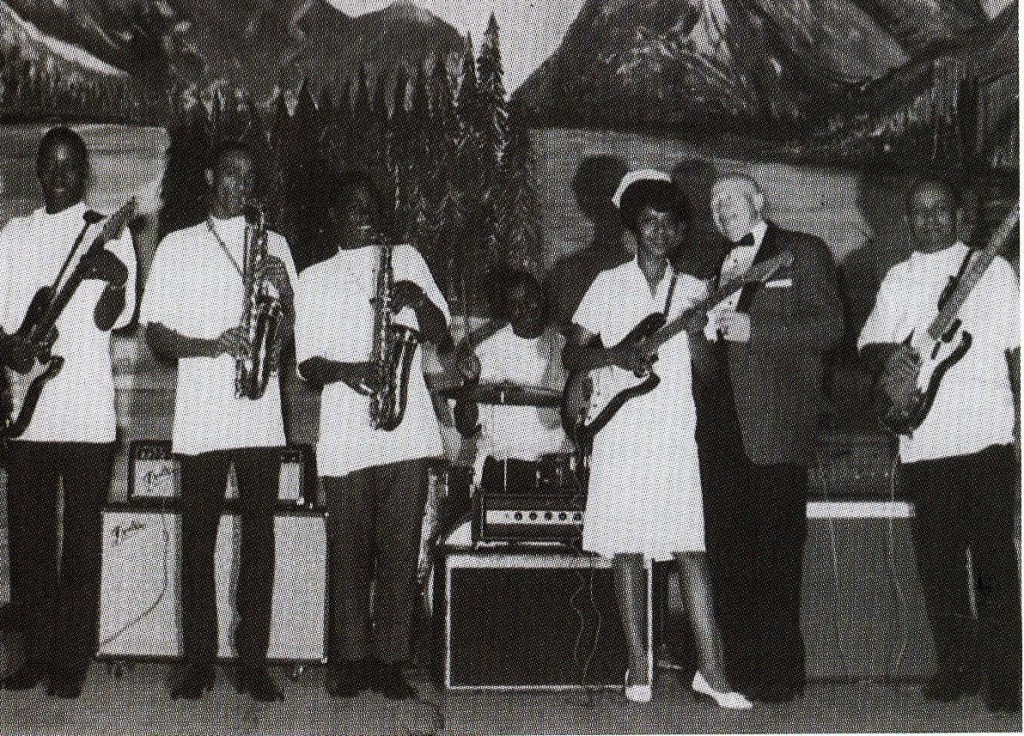
For shows, the band members all dressed in white medical smocks and its female guitarist, Beverly Watkins, dressed as a nurse. The act was signed to OKeh Records and they recorded “Mister Moonlight” at their first session in Nashville on May 31, 1961. The singer on this version was Roy Lee Johnson, a guitarist in the band, who wrote the song. (For some reason, early copies of the single listed the songwriter as R. Stevens/R.C. Stevens, but later pressings and the subsequent LP credits Johnson.) “Mister Moonlight” was actually the B-side of the record—the A-side was “Doctor Feel-Good,” which was a minor pop hit in 1962.

In this GO Mechanism the producers kind of cheated. After presenting three “frog” songs during The Science Corner, a fourth one is heard later in the program: the instrumental “Frog Hop” by Earl Hooker. Hooker is hardly a household name, but among true blues music enthusiasts, Earl Hooker is a legend; one of the great masters of the slide guitar. He recorded quite a bit and for a variety of labels in Chicago, mostly as a sideman, but a lot of the recordings on which he was the leader remained unissued for many years. He was struck with tuberculosis at an early age and it haunted him until he died in 1970.

The Sci-Flies are a surf-rock instrumental band from Kingston, NY. The GO Mechanism producers caught their act at The Jet Set in Newburgh a few weeks ago and quite enjoyed them. The band dresses up with fly masks, wings and fezes. “Oil Spill” is from their album Tomorrow We Die.
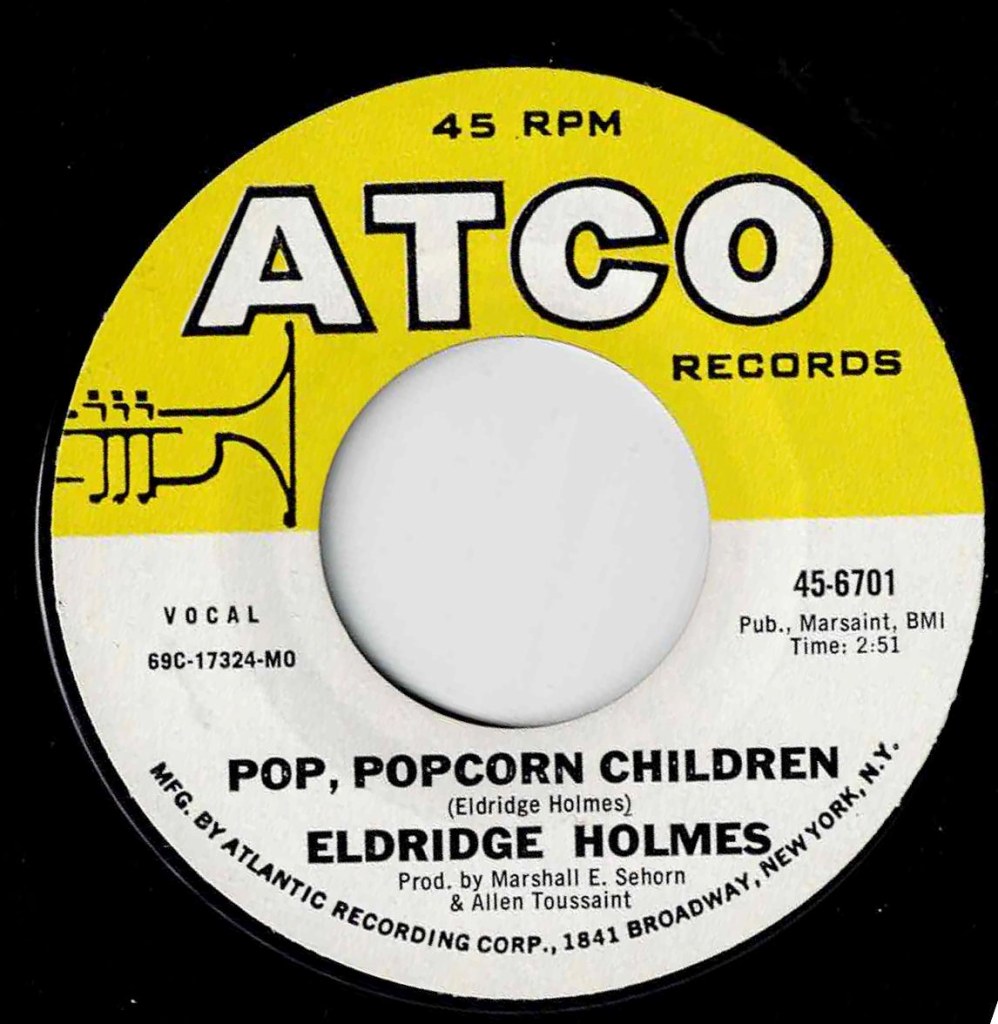
Eldridge Holmes (no relation to Carl Holmes above) was a New Orleans singer who worked closely with Allen Toussaint. He recorded less than twenty singles that were issued during the sixties, but by the early seventies he was mostly out of the music business. For some reason, none of his records became hits, in spite of the fabulousness of some of them. The GO Mechanism producers like his songs “Humpback” (1965) and “Popcorn Pop Pop” (1964). He revisited the popcorn theme in 1969 with one of the greatest funk records of all time, called “Pop Popcorn Children.” It is believed that The Meters are backing him on this record and it sure sounds like it; nobody else can play like that.
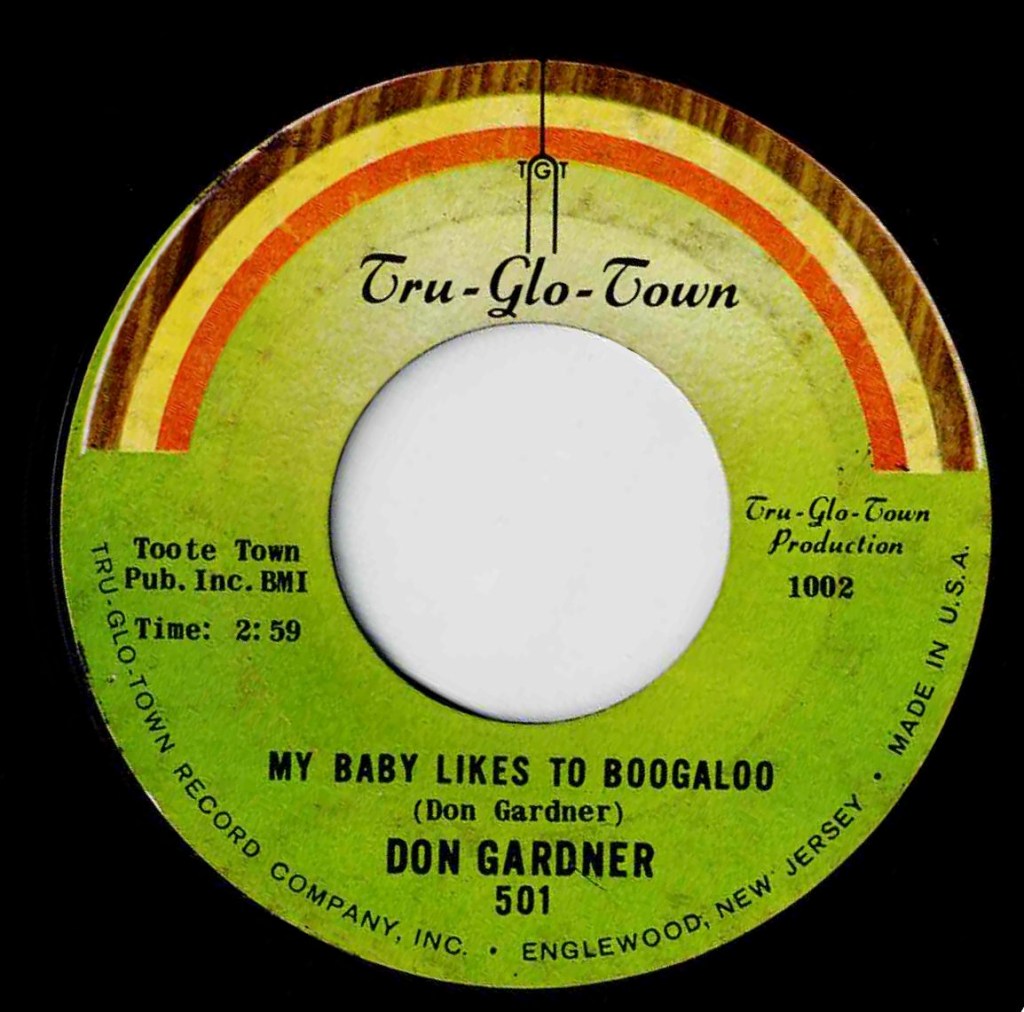
As usual, The GO Mechanism ends with one of the Greatest Records Of All Time. For this edition, the closing number is “My Baby Likes to Boogaloo” by Don Gardner from 1966. The record has a fantastic guitar riff—one that you would expect from a hot garage rock band. Also, the song has a very tough beat. It is one of the most rockin’est soul records you’ll ever hear. The song was covered by The Emperors, a soul group from Harrisburg, Pennsylvania and by Lewise Bethune as “Chi-Town Boogaloo.” In recent years, the song has been cut by the super-rock group The Woggles, bluesman Robert Cray, a French group called The Zemblas, the Dutch group Juicebox and others. Don Gardner was a drummer who led an organ combo called The Sonotones that featured first, Jimmy Smith, then Richard “Groove” Holmes (not related to any Holmes mentioned above) during the fifties. Gardner had his fifteen minutes of fame when he teamed up with Dee Dee Ford, an organ player who took Holmes’ place, and their gospel-drenched “I Need Your Lovin’” screaming duet was a Top Five R&B hit in 1962. The duo moved to Sweden for a while but when they returned to the States, they split up. She cut a single for ABC, then seemed to have disappeared. Don Gardner, however, made several excellent records, but achieved little success. The GO Mechanism producers were privileged to see Gardner in person at a fabulous Dig Deeper event in Brooklyn on June 28, 2008 where he sang “My Baby Likes to Boogaloo” twice!!
The GO Mechanism is produced whenever we feel like it and it initially airs on the Luxuria Music interweb streaming hustle as a Saturday Night Special. The GO Mechanism producers sincerely thank the powers-that-be at Luxuria Music for continuing to invite The GO back again and again. Luxuria Music is a very independent entity that can use some monetary love. Please go to Luxuria Music and buy something from its store. Also, while you are there, check out the other fantastic programs it has to offer.
Legacy GO Mechanisms can be found on the Mixclouds and here in the Boogaloo Bag. After a while, the audio portion of this GO Mechanism will magically appear below…
Here is a list of all the tracks played during The GO Mechanism Number Twenty One:
- Earl Bostic—Lester Leaps In (King)
- Duke Ellington & His Famous Orchestra—Copout Extension (from LP Festival Session; Columbia) (Dylan Thomas recites “Love in the Asylum”)
- Ramon Ropain, piano & ritmo—Plinio Guzman (from LP Grandes Exitos de Colombia; CBS; Colombia)
- The Animals—We’re Gonna Howl Tonight (from soundtrack to TV show The Dangerous Christmas of Little Red Riding Hood; ABC)
- The Fabulous Cyclones—Cyclone (Band Box)
- Sparrow’s Troubadours—Dance Hall Brawl (RA; Barbados)
- Dave Collins—Smooths and Sorts (Rhino; UK)
- Counter Points—Come Together (JA-WES)
- The Zombies—Rip It Up (from album Zombie Heaven; Big Beat; UK)
- Solomon Burke—Maggie’s Farm (Atlantic)
- Ukono—Abiana (from LP African Nite Life; Imperial)
- The 4 Instants—Bogatini (from LP Discoteque; Society; UK)
- Carl Holmes & the Commanders—Soul Dance No. 3 (Hit Jackpot)
- Captain Beefheart & the Magic Band—Woe-Is-Uh-Me Bop (from LP Lick My Decals Off, Baby; Straight)
- Steve Marcus—Tomorrow Never Knows (edit; from LP Tomorrow Never Knows; Vortex (Dylan Thomas recites “Death Shall Have No Dominion”)
- Gougoush—Nemiyad (Ahang Rooz; Iran)
- The Everly Brothers—Man With Money (Warner Bros.)
- Thomas Mapfumo & Blacks Unlimited—Zimbabwe Yevatema (from LP Gwindingwi Rine Shumba; Chimureanga Music; Zimbabwe)
- The Stooges—Loose (False Start) (from album 1970: Complete Fun House Sessions; Rhino)
- Howlin’ Wolf—I’ll Be Around (Chess)
- Ornette Coleman—Free Jazz – (in progress edit; from LP Free Jazz; Atlantic)
- Science Corner
- Bo Diddley—Do the Frog (Chess)
- Sir Frog and the Toads—The Frog (Downey)
- Tommy T and the Tadpoles—The Frog (Äva)
- Jack Costanzo and His Afro Cuban Band—Caravan (From LP Mr. Bongo; GNP Cresendo)
- Orchestra Ambros Seelos—Cape Kennedy Beat (from LP Beat and Sweet; Saba; Germany)
- Doctor Feelgood & the Interns—Mr. Moonlight (OKeh)
- Tito Lopez Combo—El Mariachi’s Revenge (Safari; UK)
- Charlie Parker—My Little Suede Shoes (Mercury)
- Big Jay McNeely—Nervous Man Nervous (Federal)
- Rockin’ Rebels—Donkey Twine (Swan)
- Earl Hooker—Frog Hop (Argo)
- Nels Cline—Queen of Angels (Boogaloo De-Mix; excerpt) (Dylan Thomas recites “The Hunchback in the Park”)
- Los Brincos—Flamenco (NoVoLa; Spain)
- Caminito Serrano—La Petrulla (Zeida; Colombia)
- The Sci-Flies—Oil Spill (from album Tomorrow We Die)
- Eldridge Holmes—Pop, Popcorn Children (Atco)
- The Mar-Kets—Sweet Potatoes (Arvee)
- Sugarman 3—Turtle Walk (Desco)
- Curtis Mayfield—Freddie’s Dead (Boogaloo edit; Curtom)
- Don Gardner—My Baby Likes to Boogaloo (Tru-Glo Town)
- Cassidy Hutchinson—Ketchup on the Wall (exclusive Boogaloo remix)




 boogaloobag