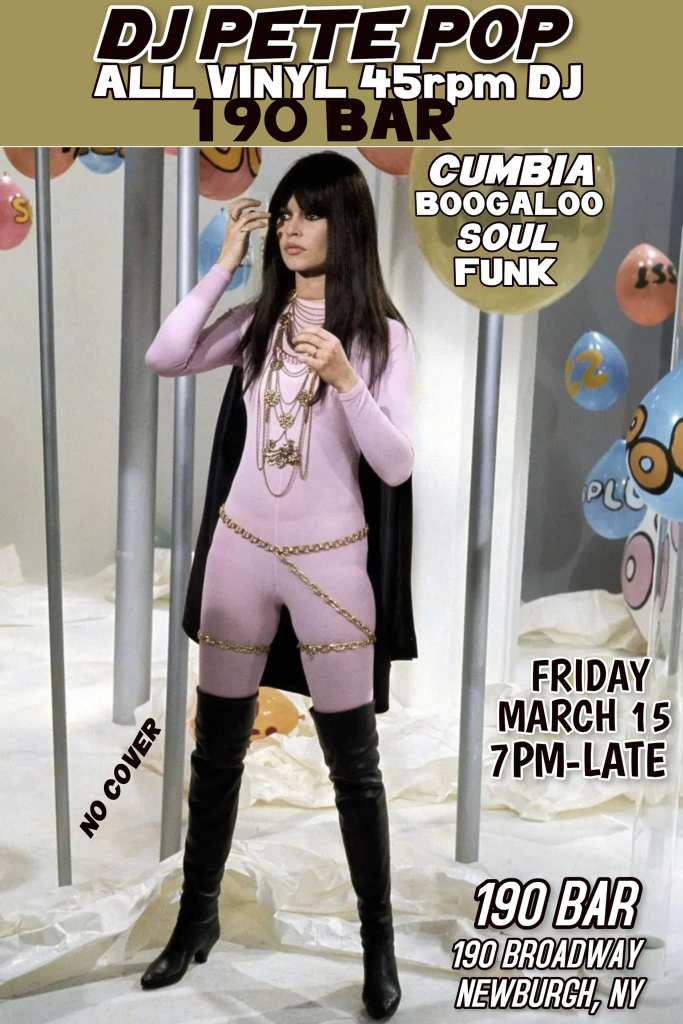
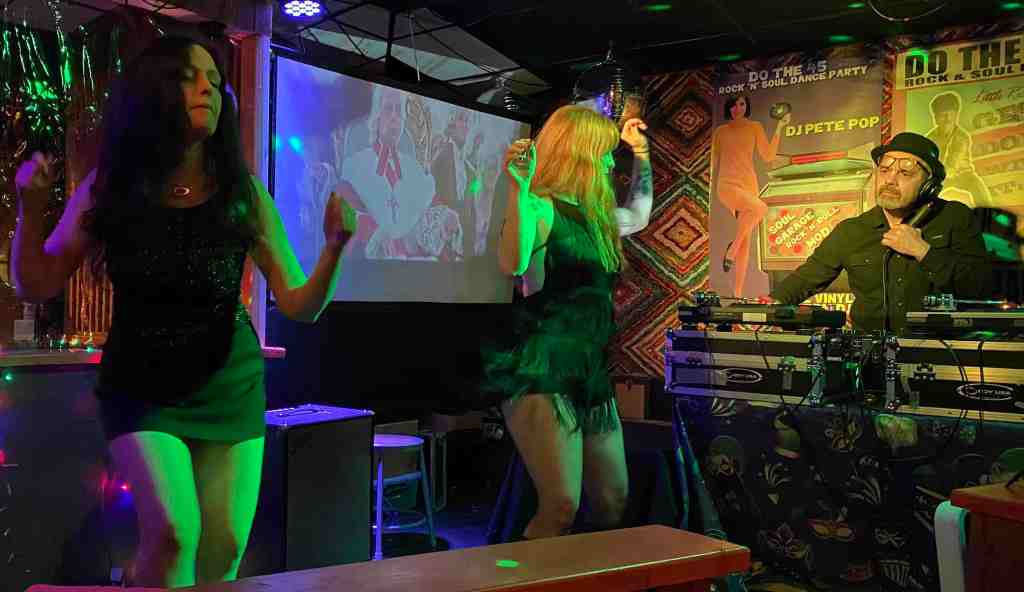
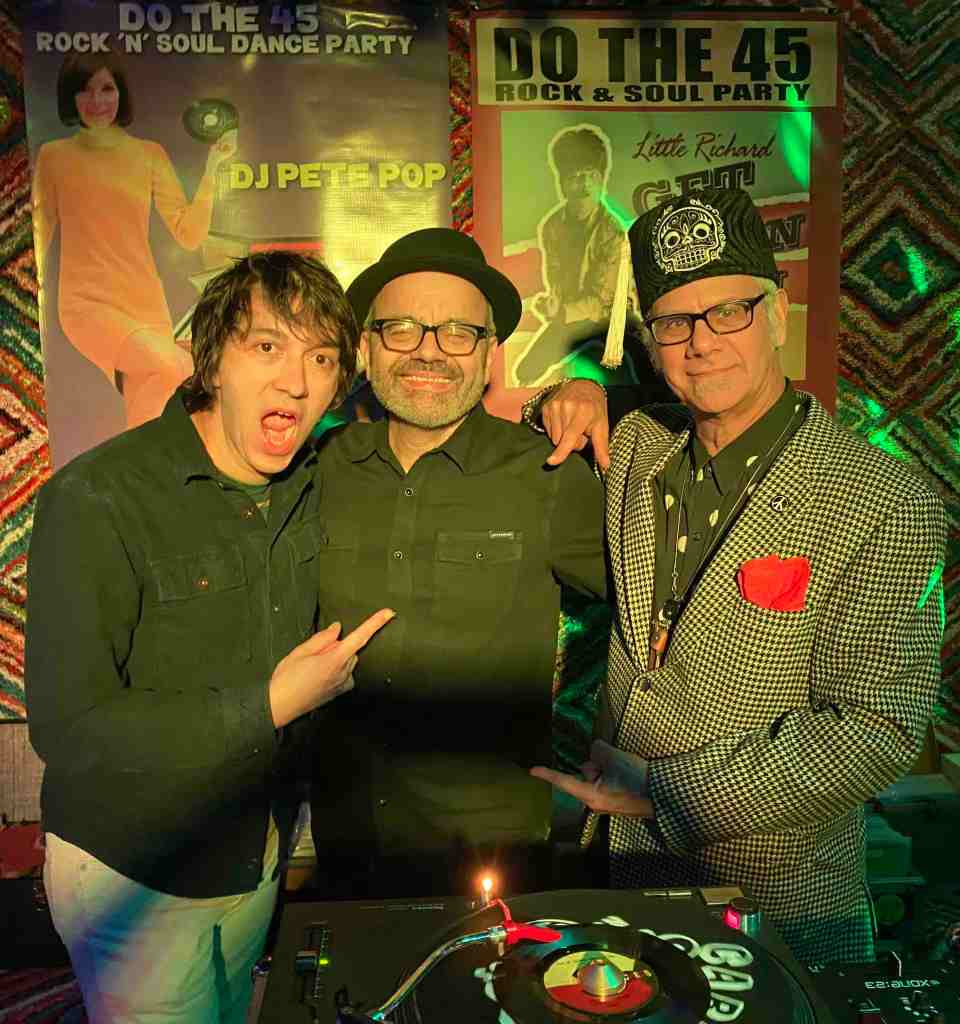
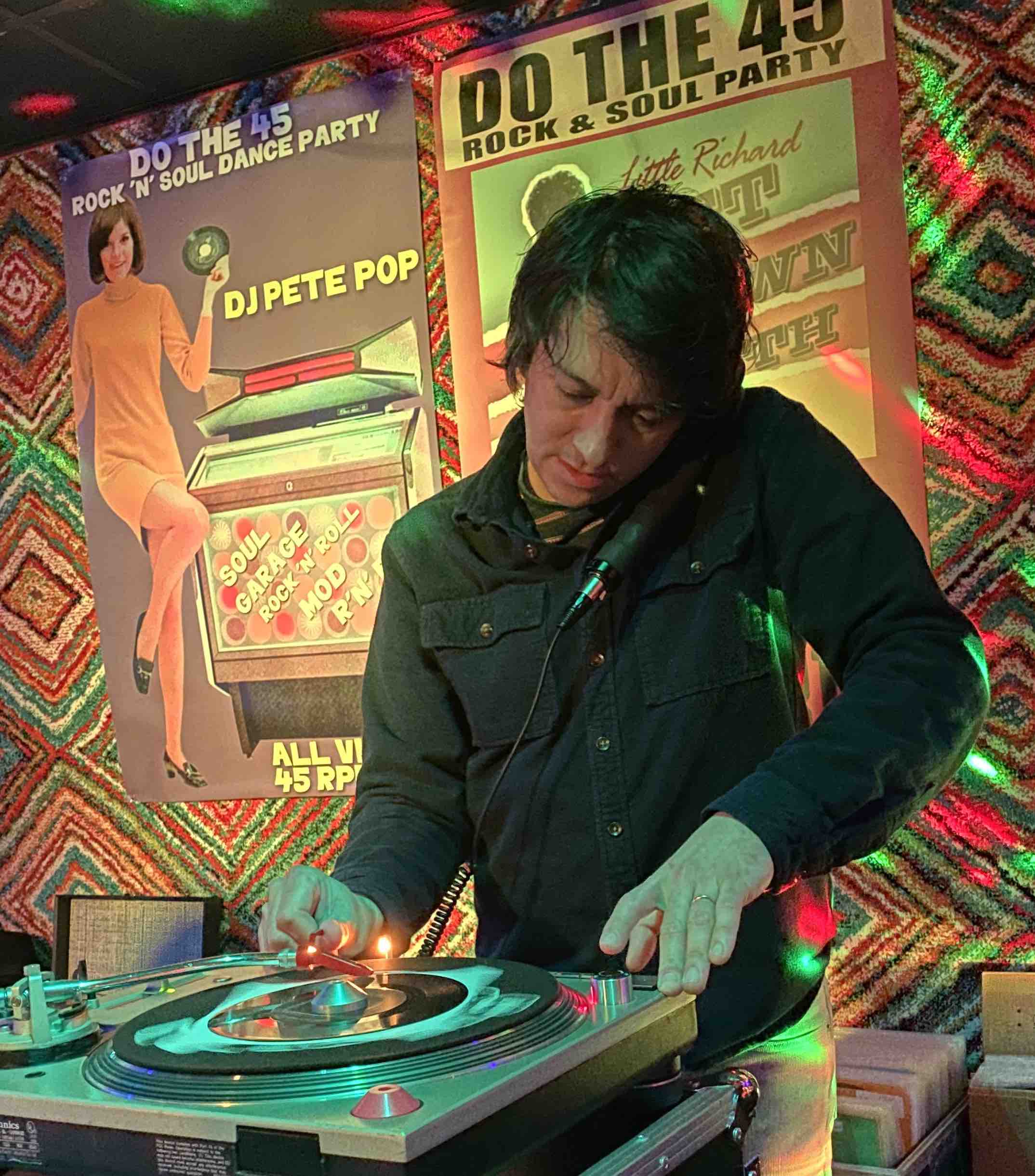
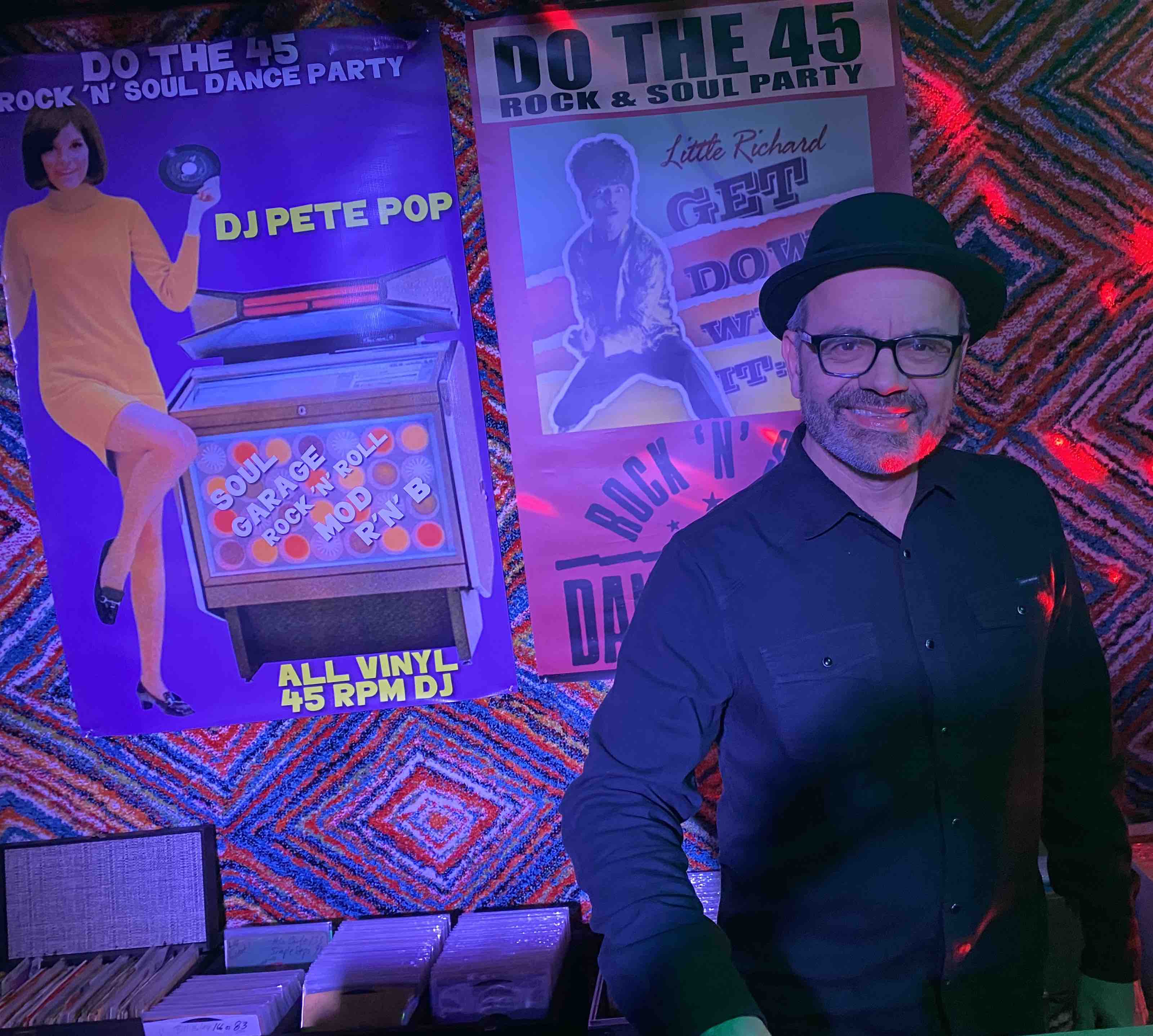
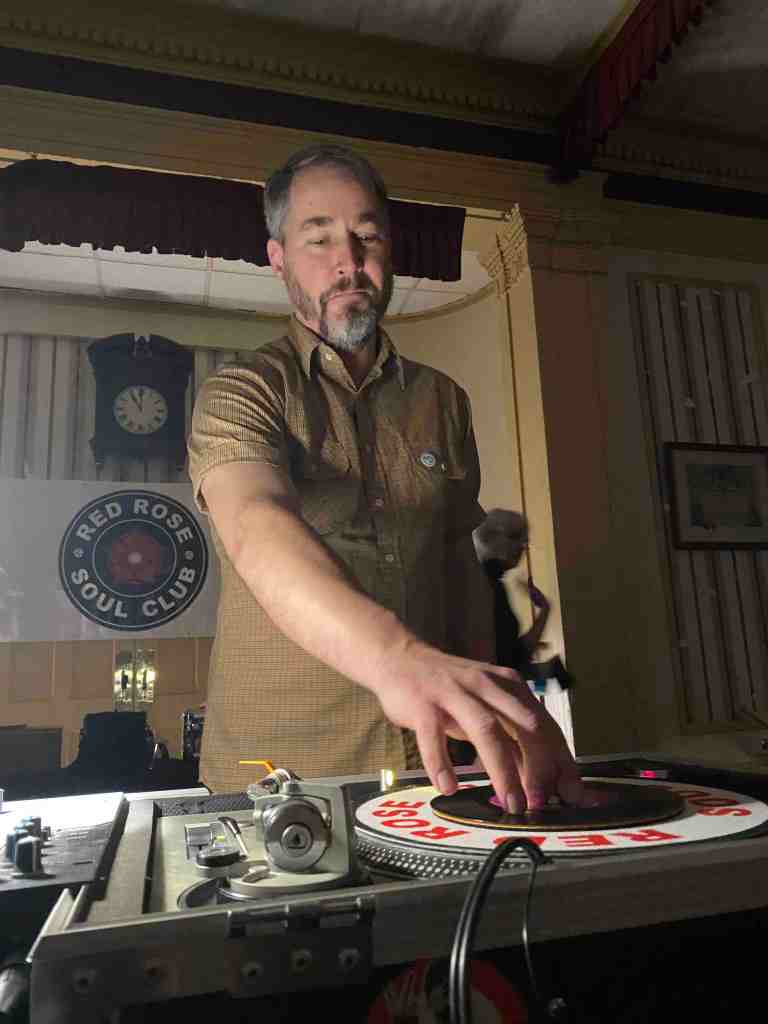
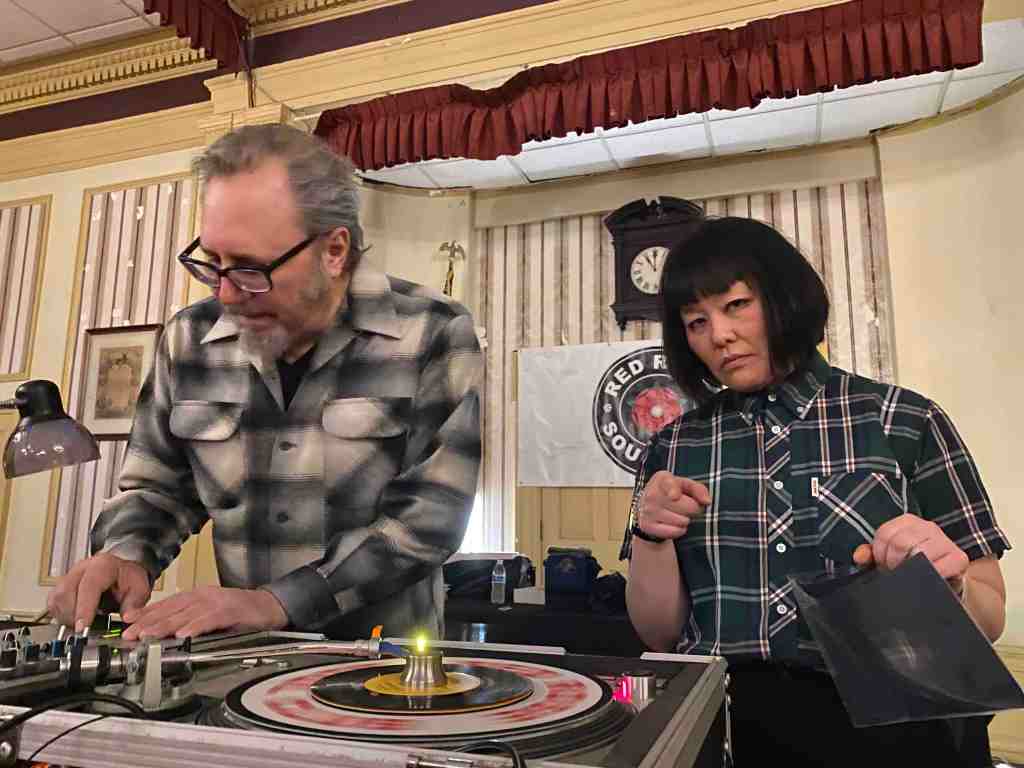
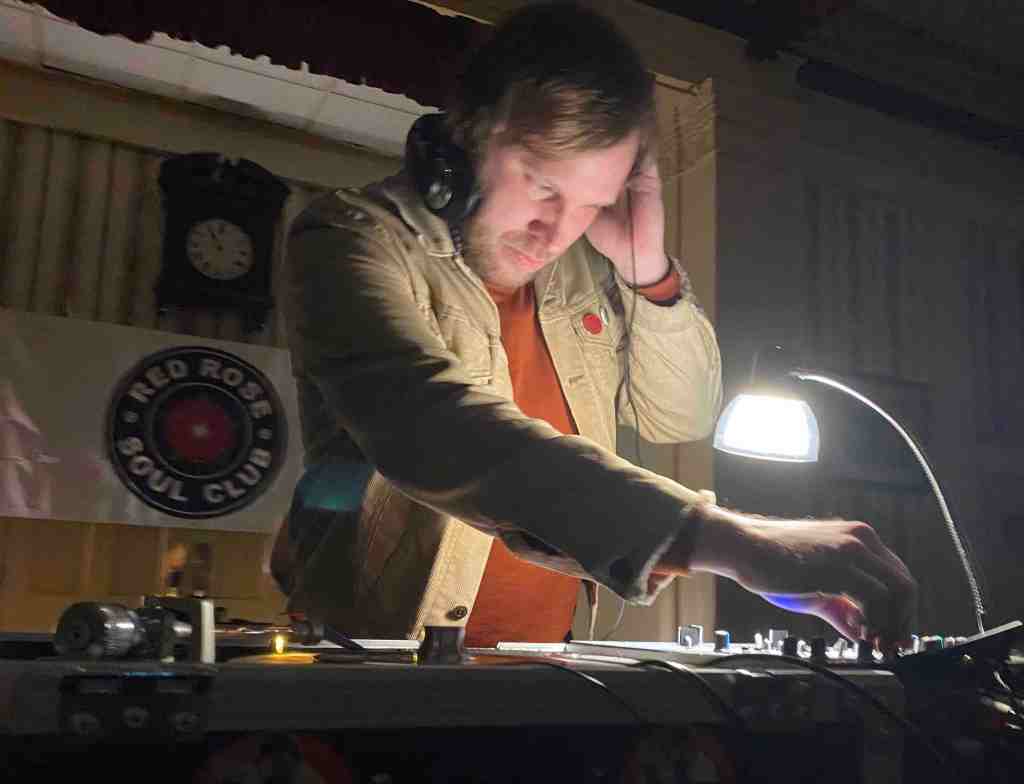
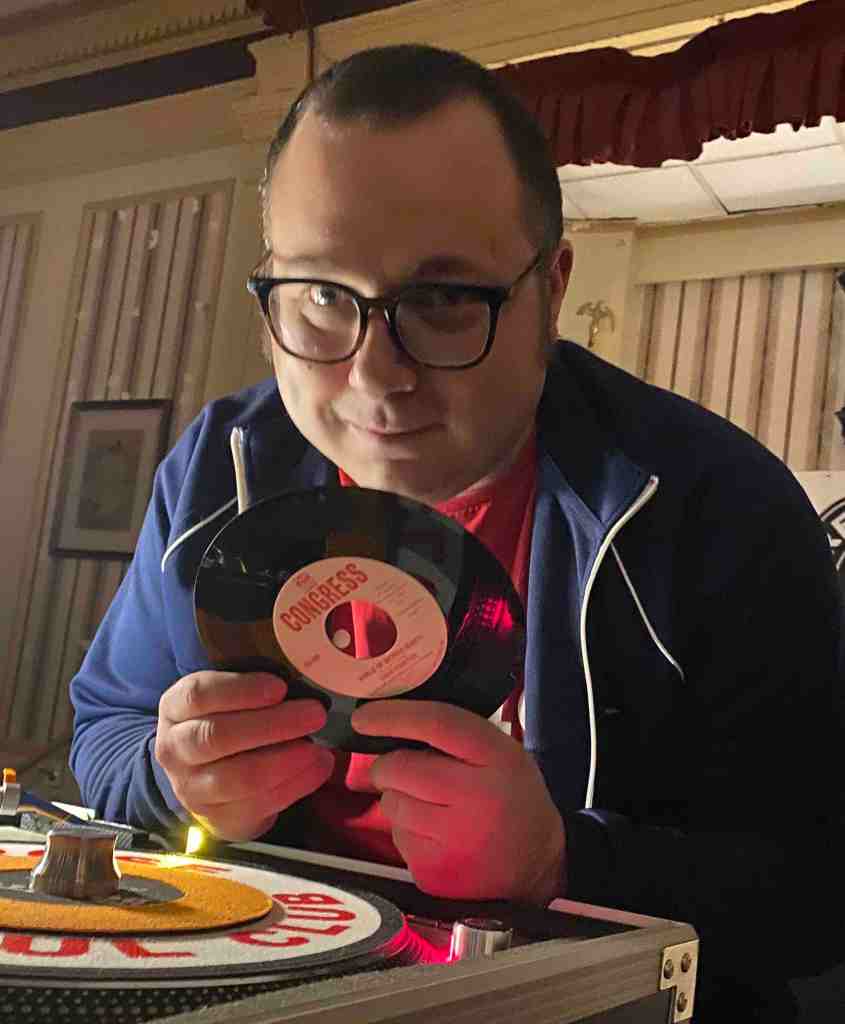
On Friday March 15, DJ Pete Pop was enlisted to provide music for a Friday night at the 190 Bar in Newburgh, NY. Pete Pop then enlisted Phast Phreddie the Boogaloo Omnibus to aid and abet his activities (although his name was left off the poster!).
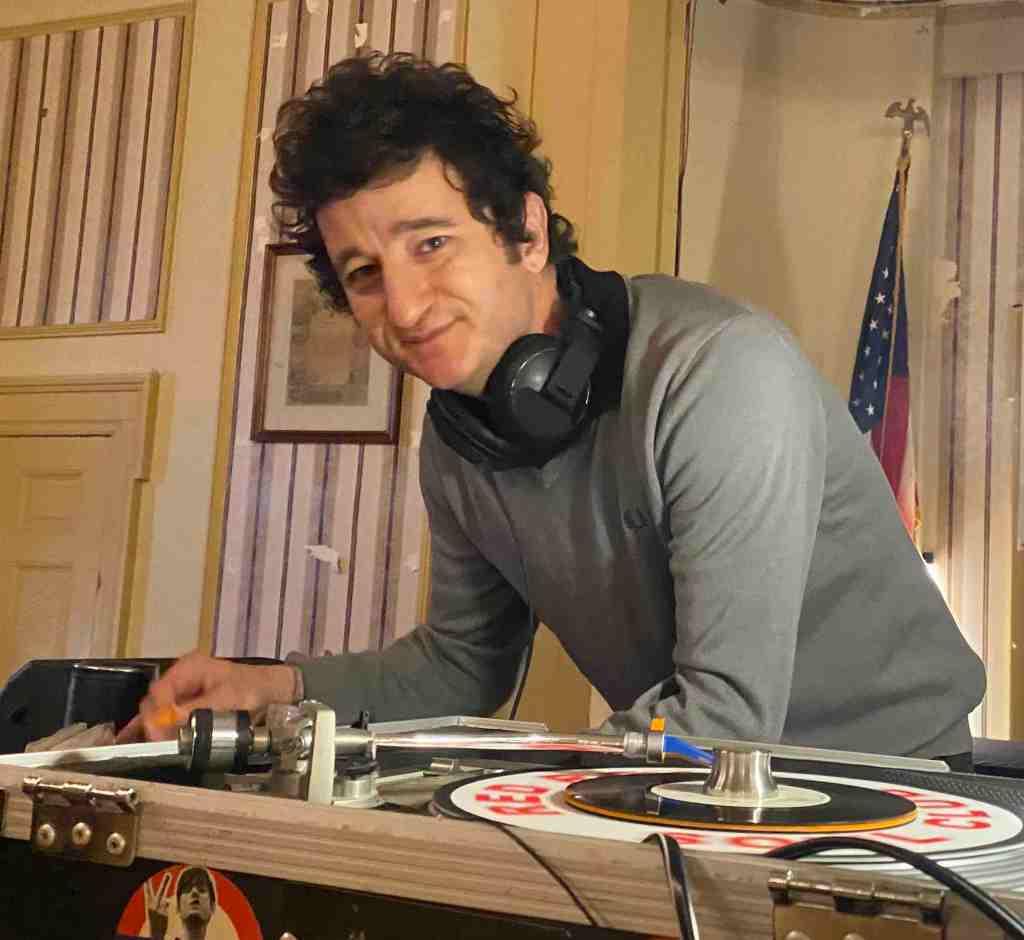
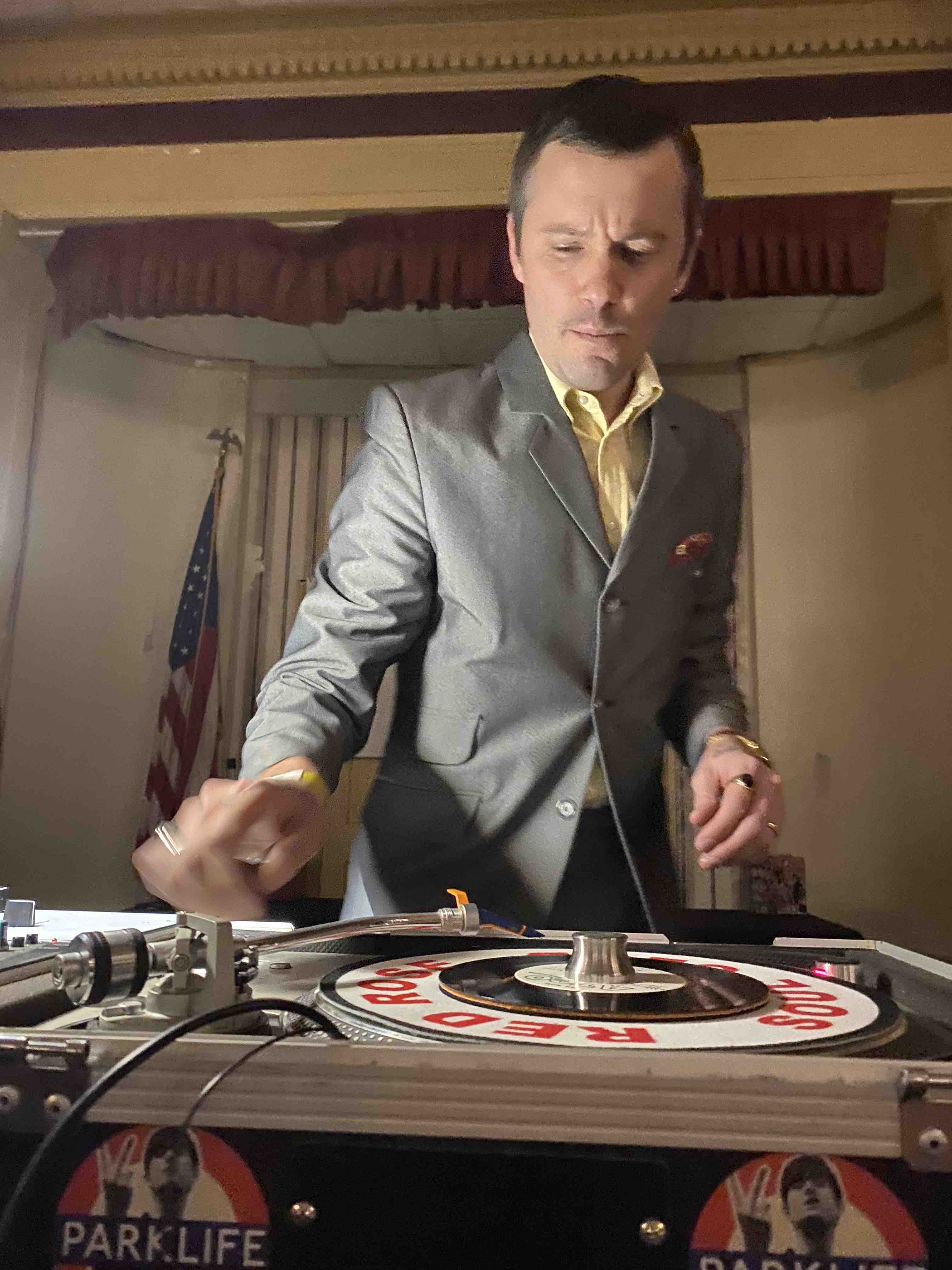
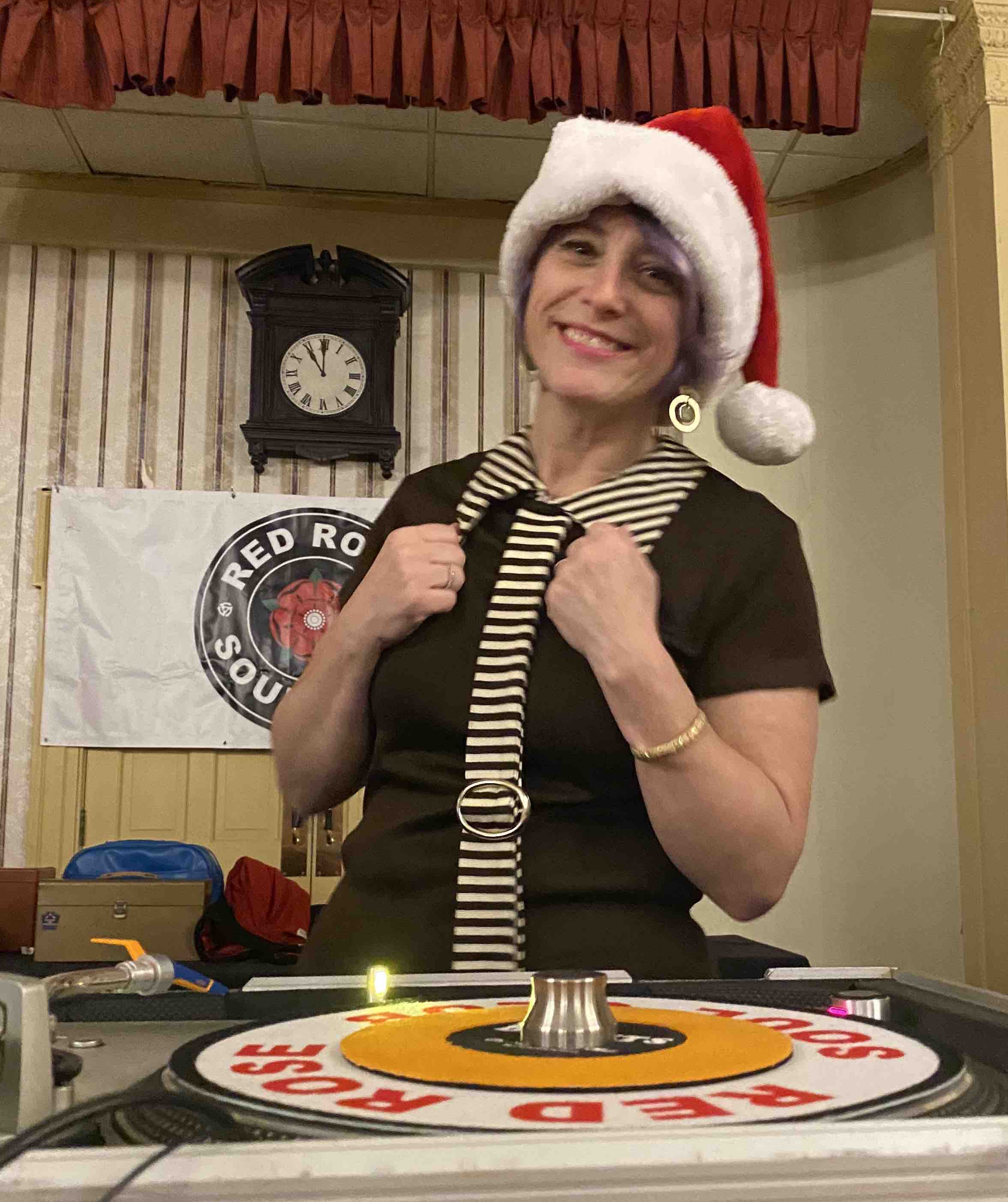
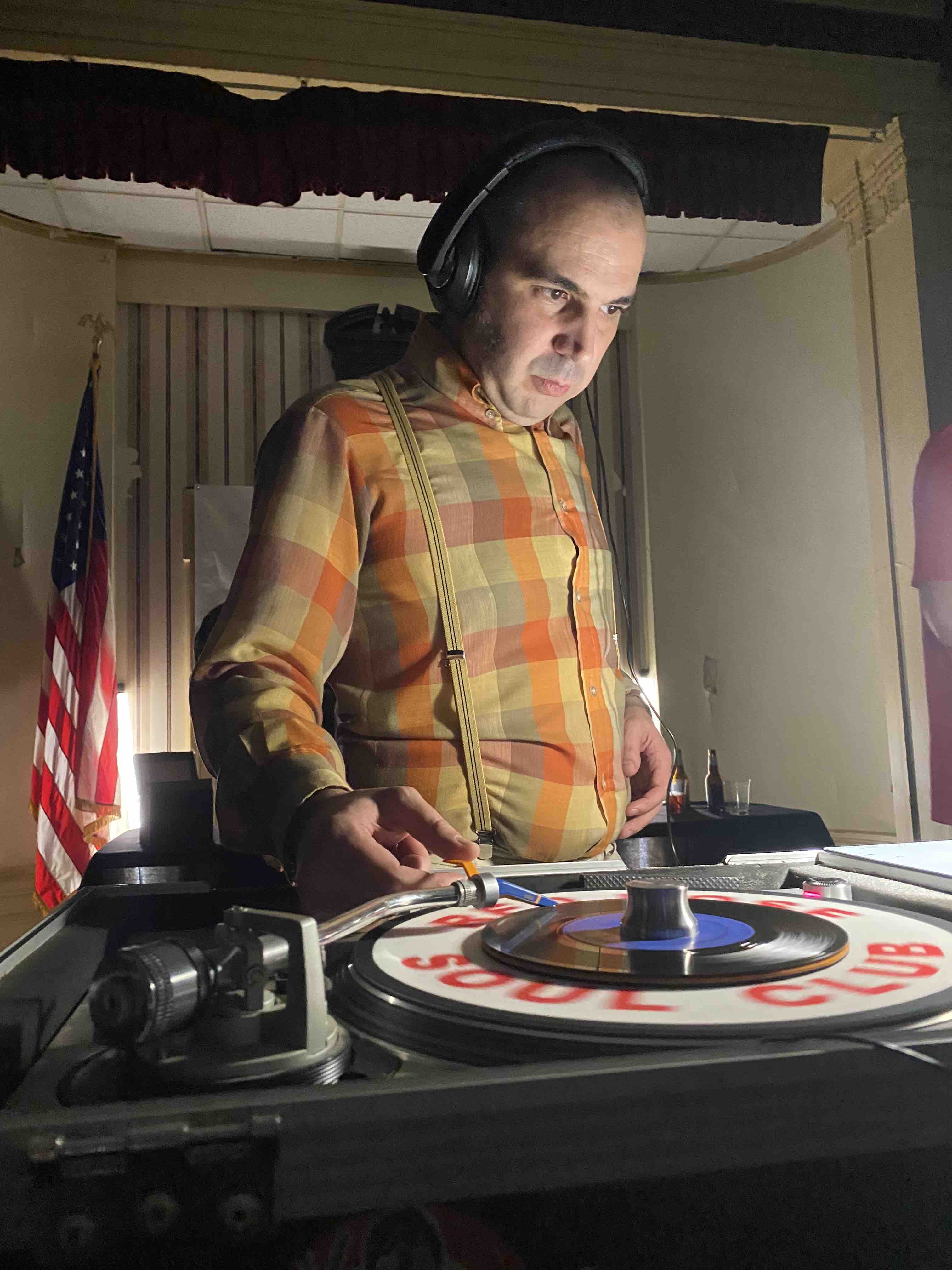
Phast Phreddie the Boogaloo Omnibus and Pete Pop swing at 190 Club.
The 190 Club, for some reason, is located at 190 Broadway in downtown Newburgh. It was the site of the super successful New Year’s Eve party that also had audio stimulation by Pete Pop and The Boog. However, for this particular Friday night happening, Pete Pop decided against a recreation of his Do The 45 in order to present a special evening for the elite crowd that comes to drink at 190; he called for cumbia, boogaloo, soul and funk. Knowing Phast Phreddie the Boogaloo Omnibus, we knew he would throw in some mambo records as well.
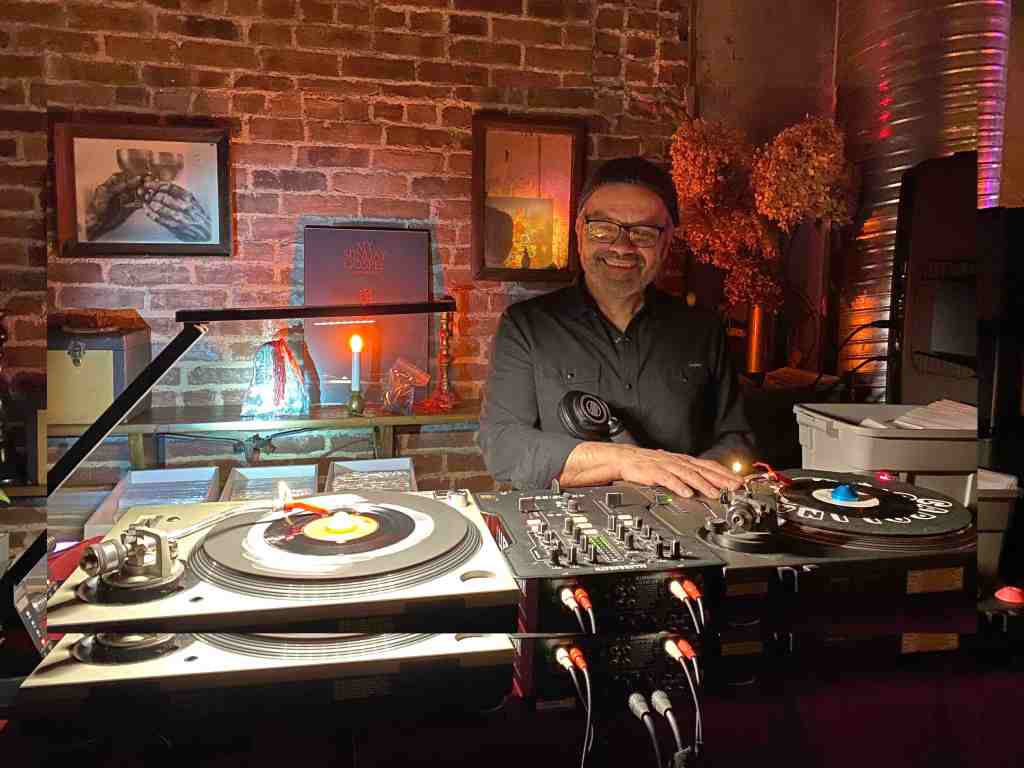
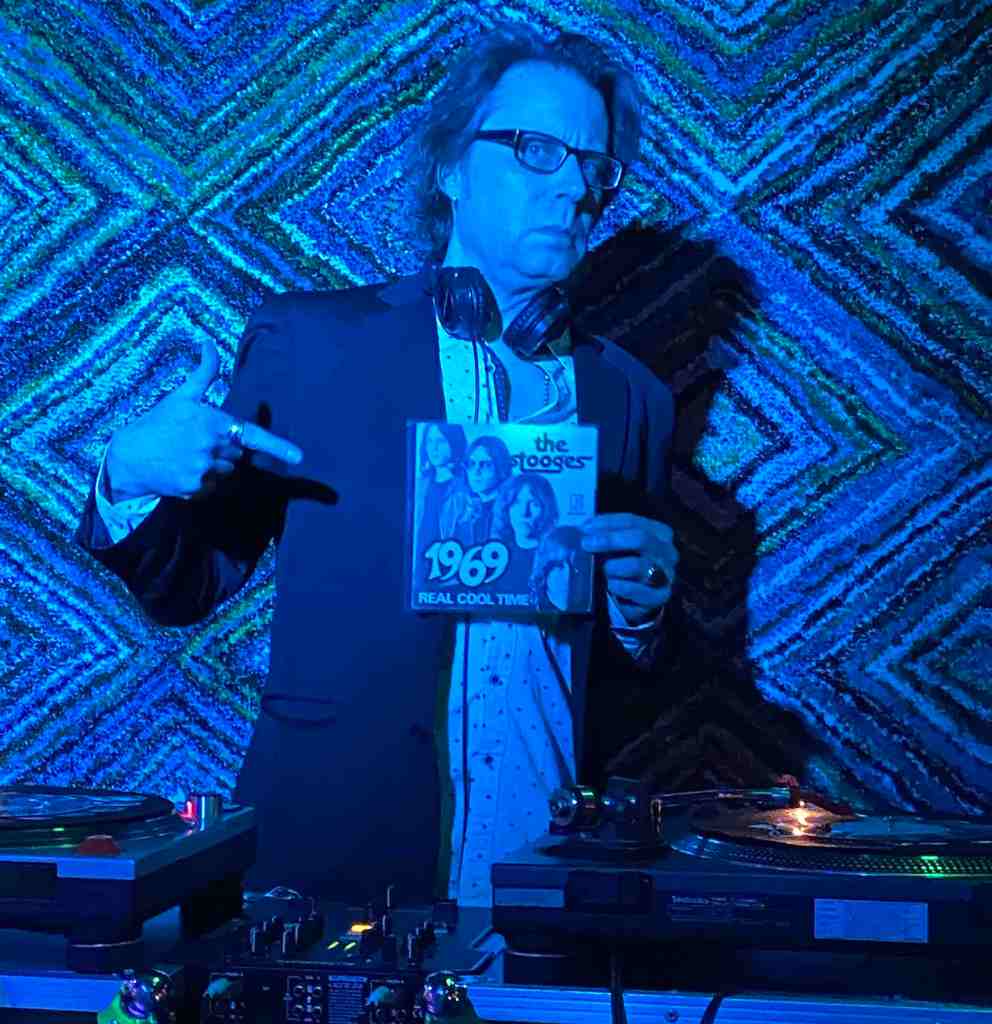
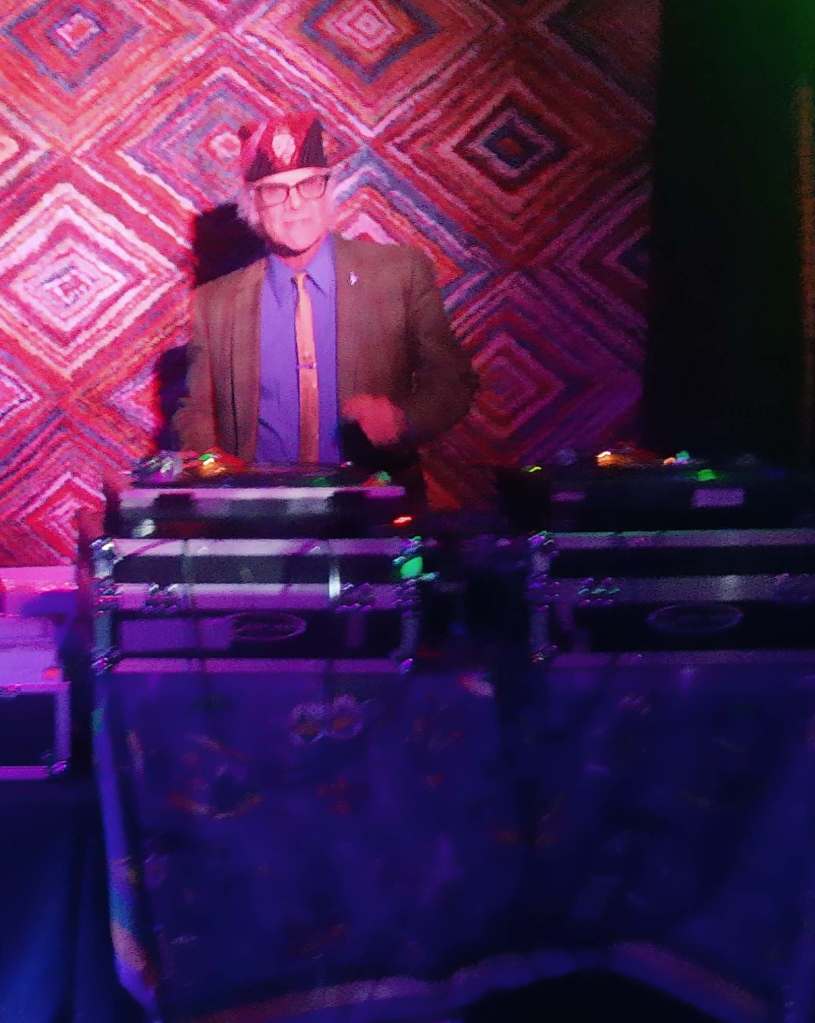
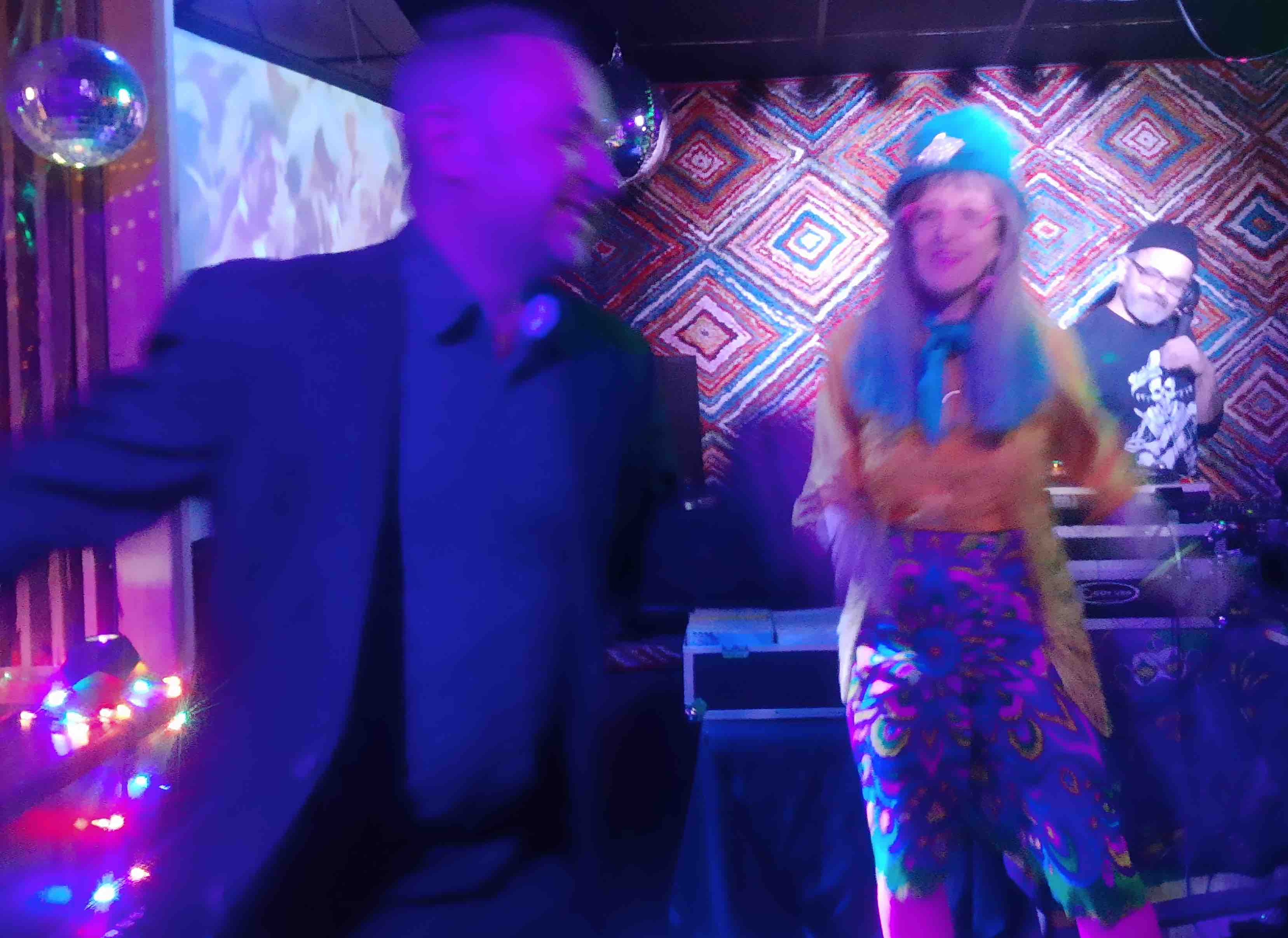
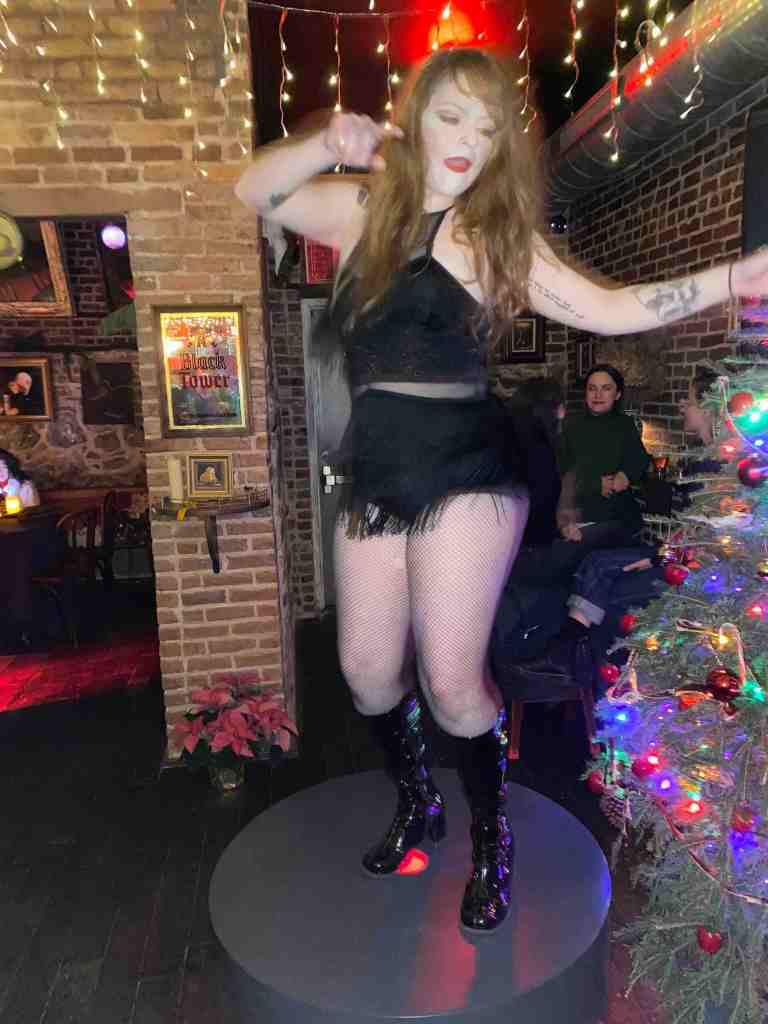
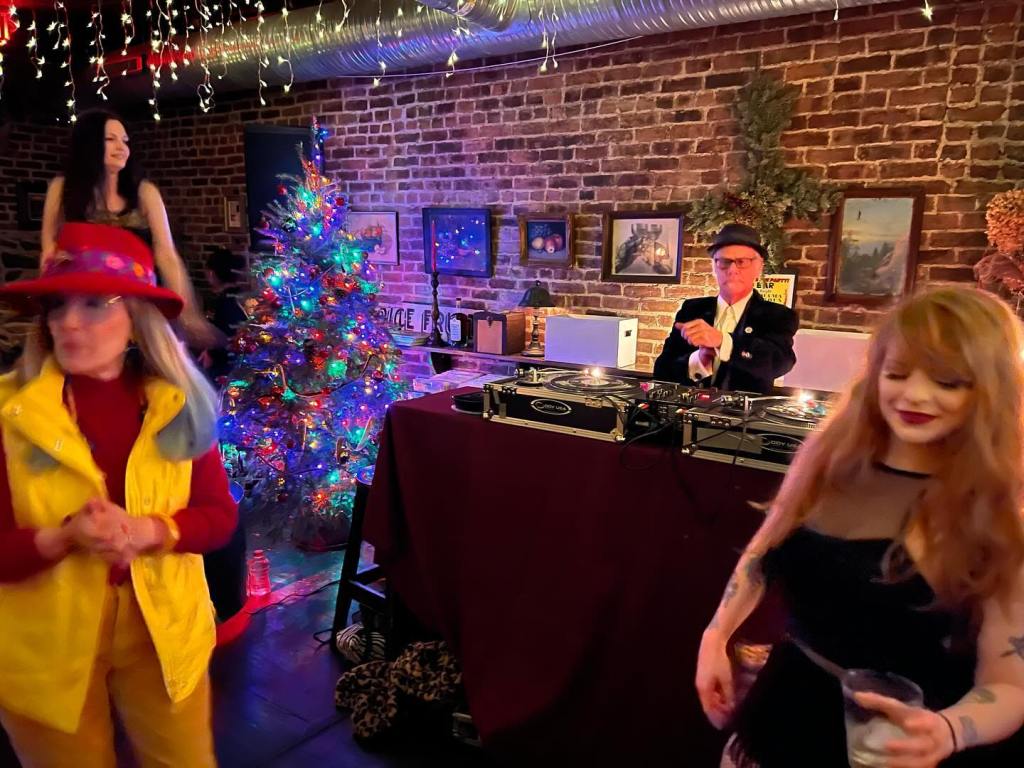
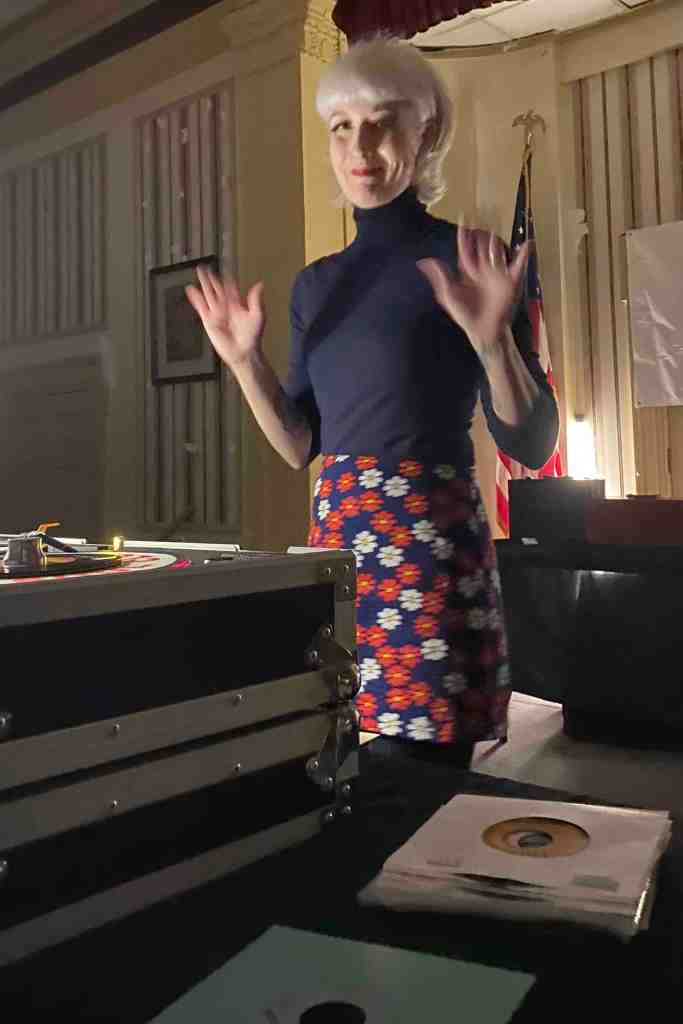
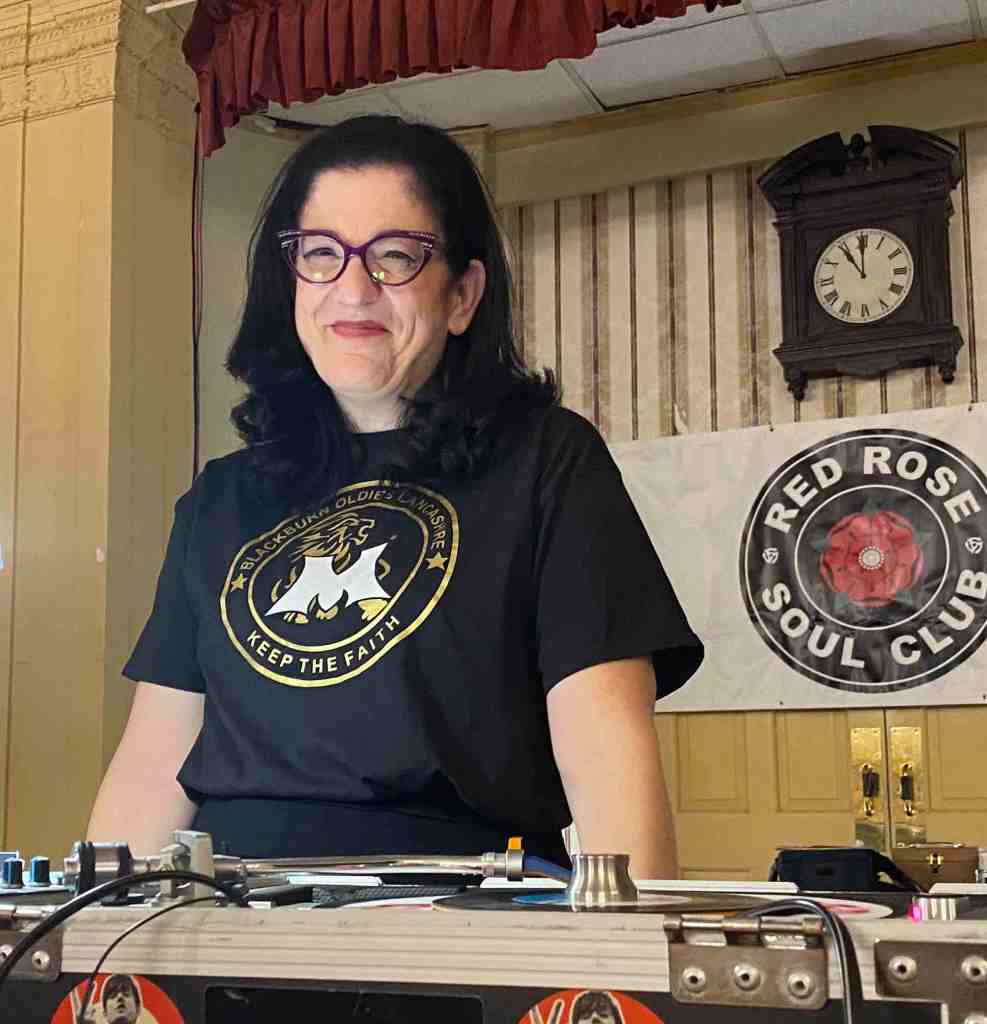
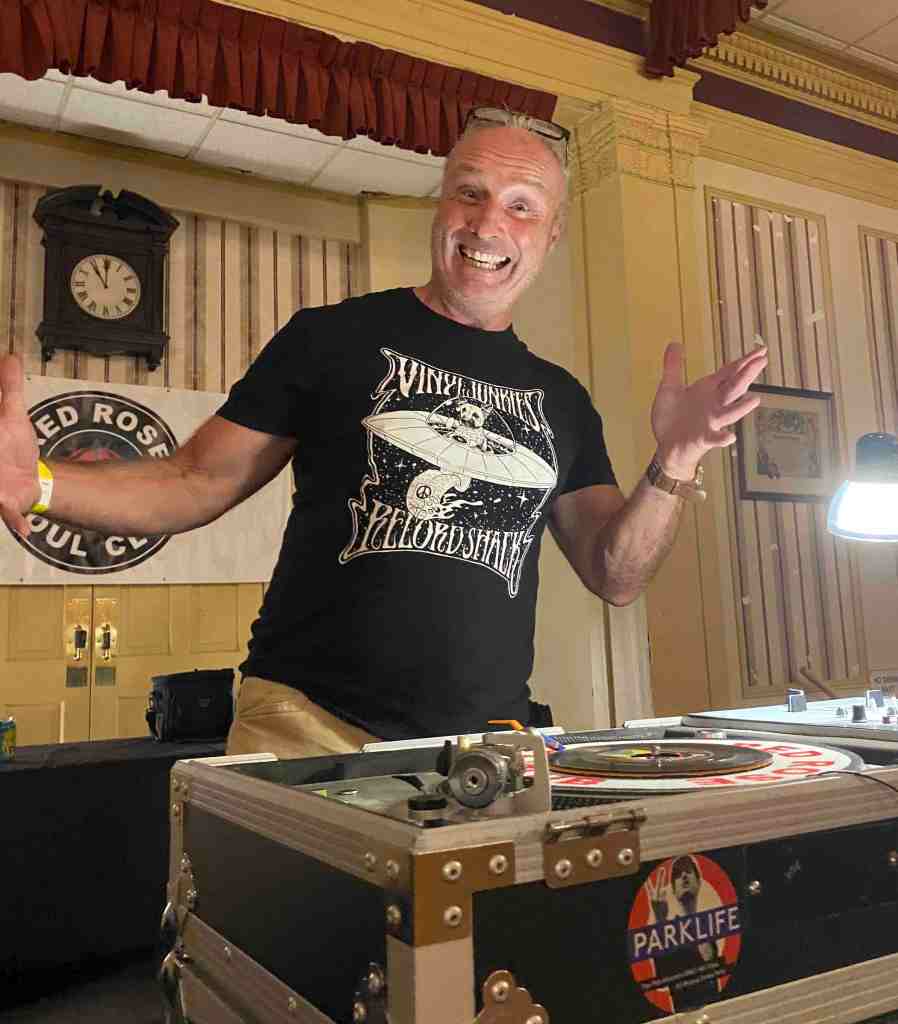
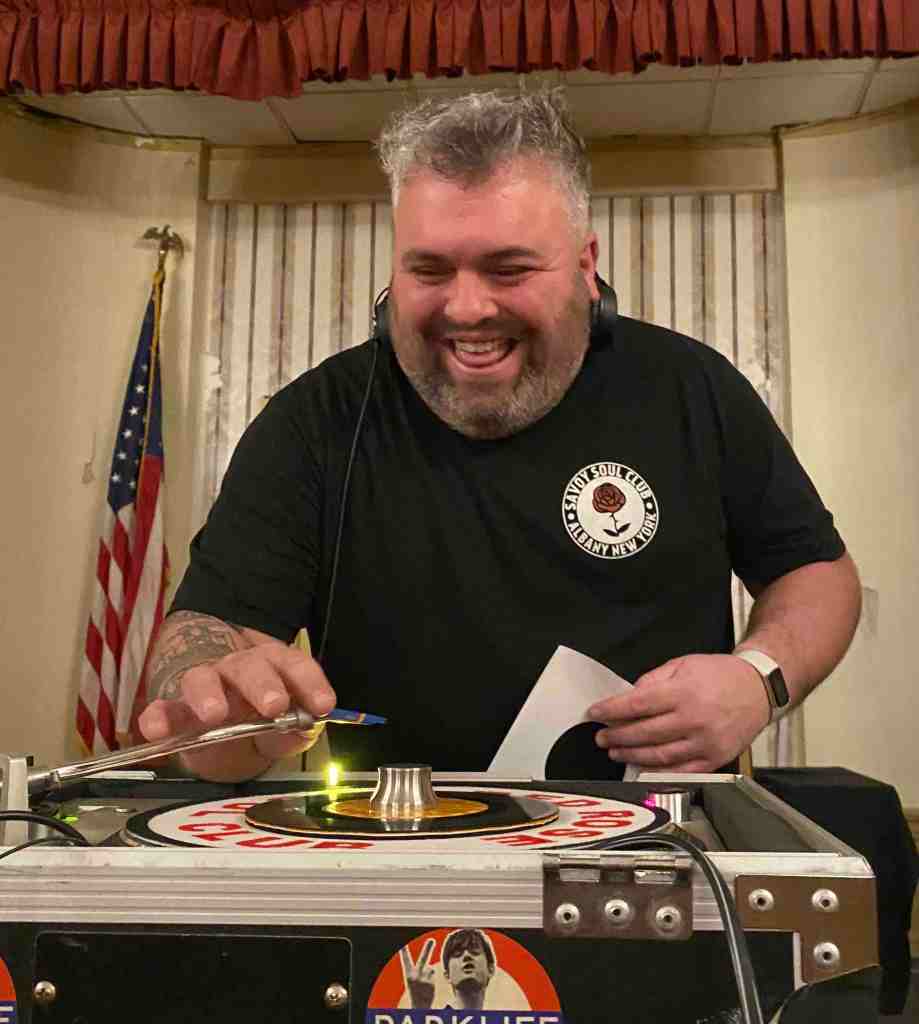
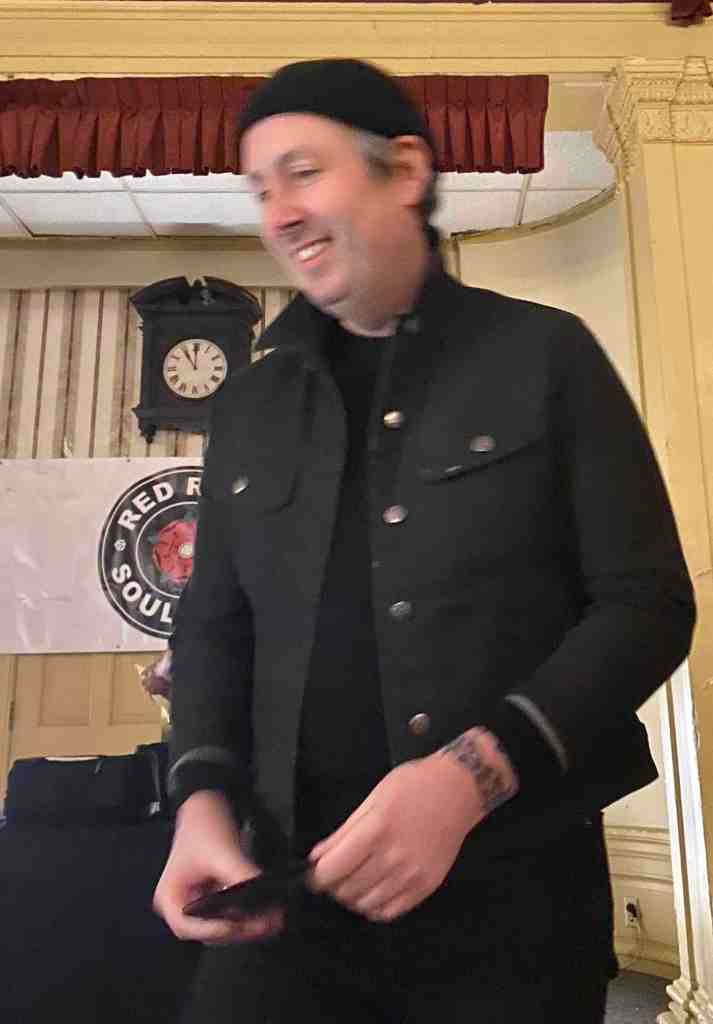
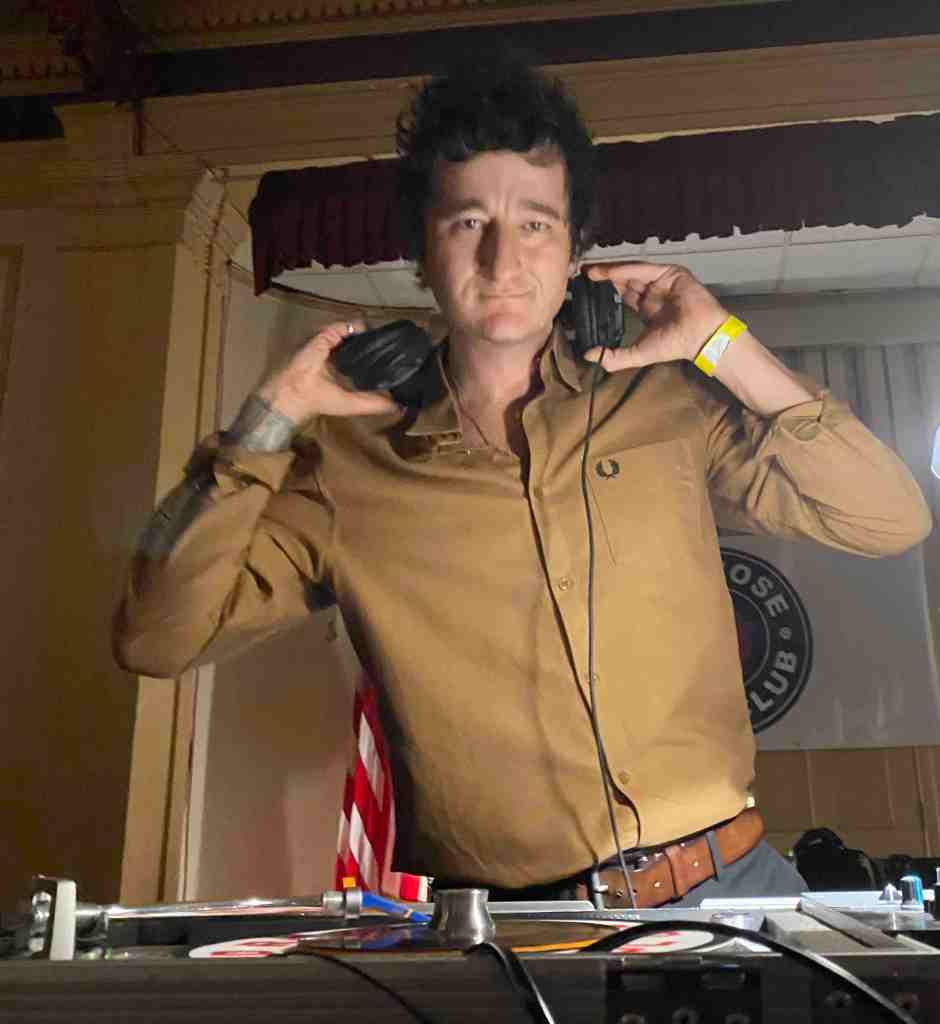
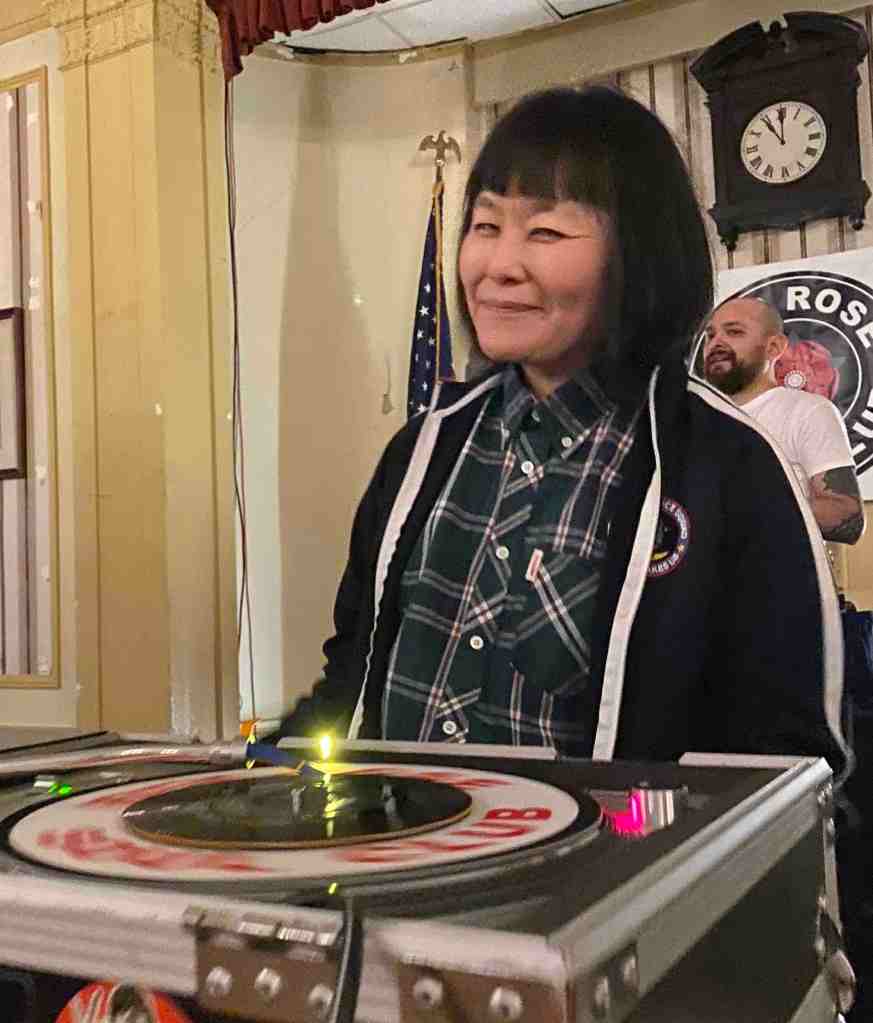
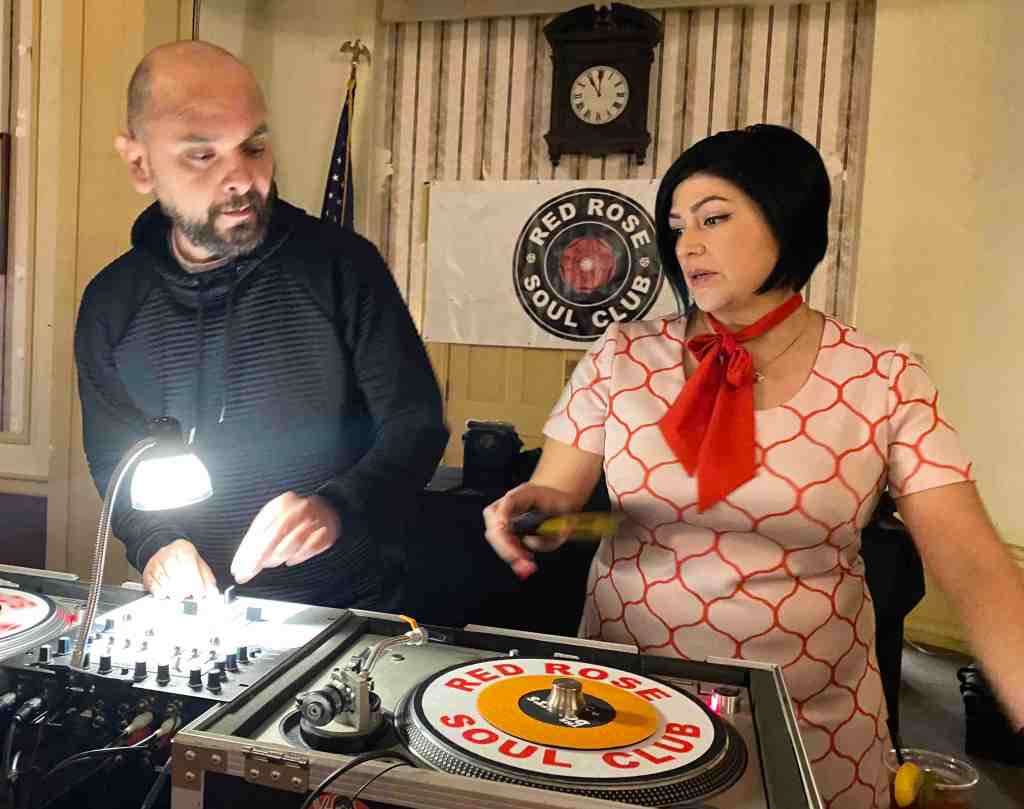
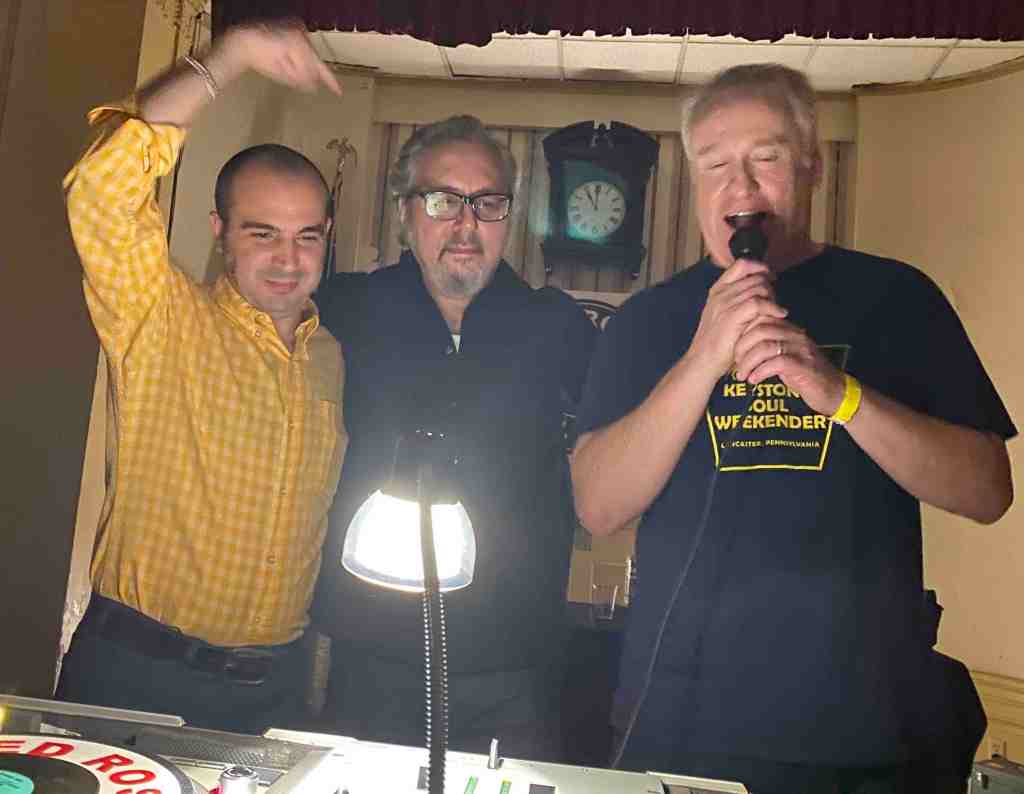
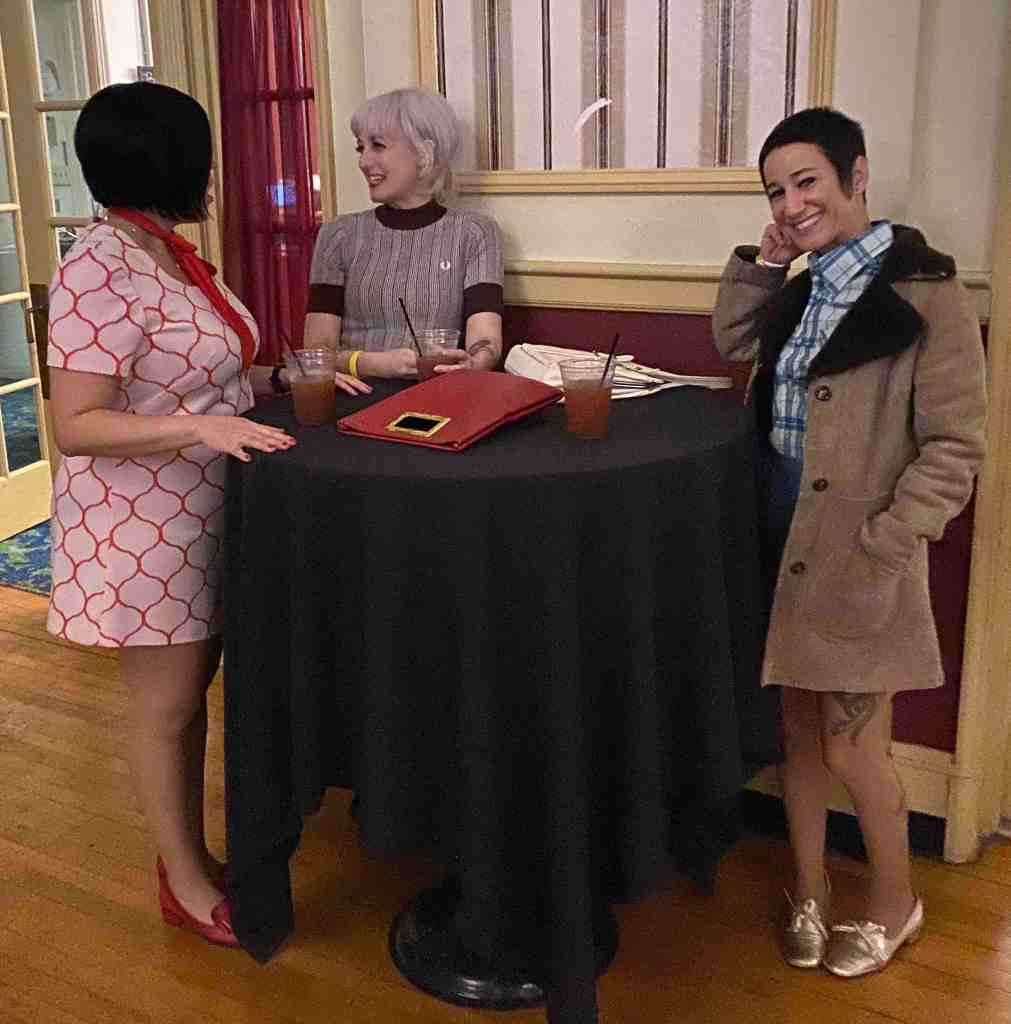
Miss Nancy and Phast Phreddie at 190DJ Pete Pop at 190
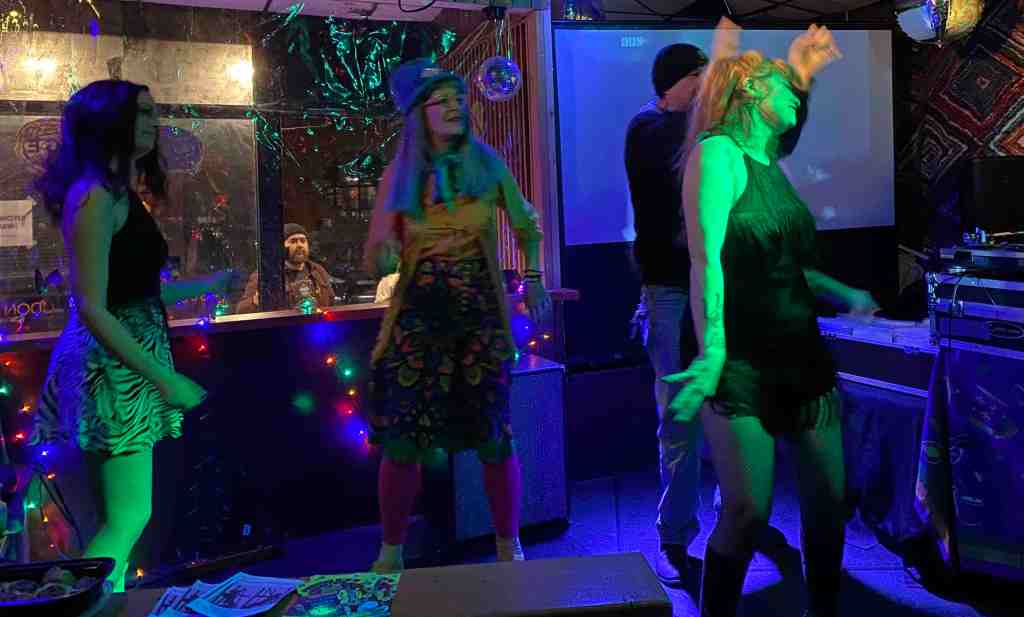
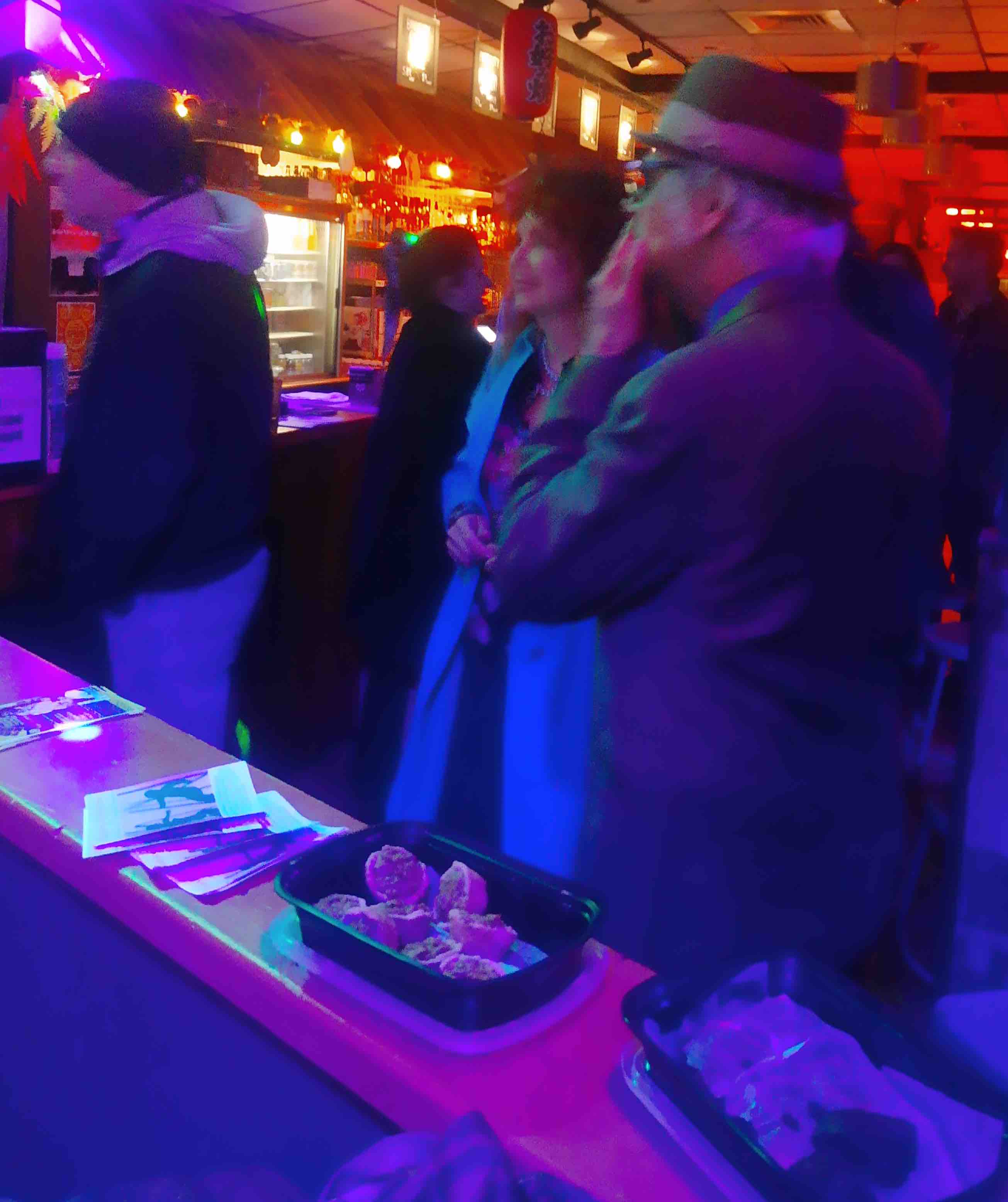
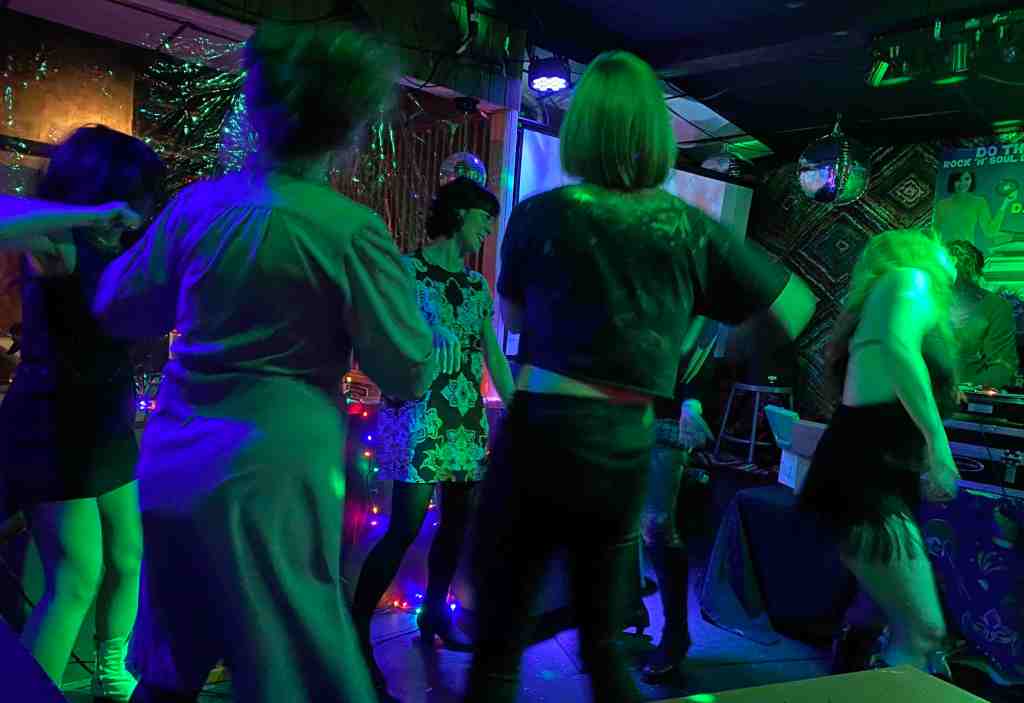
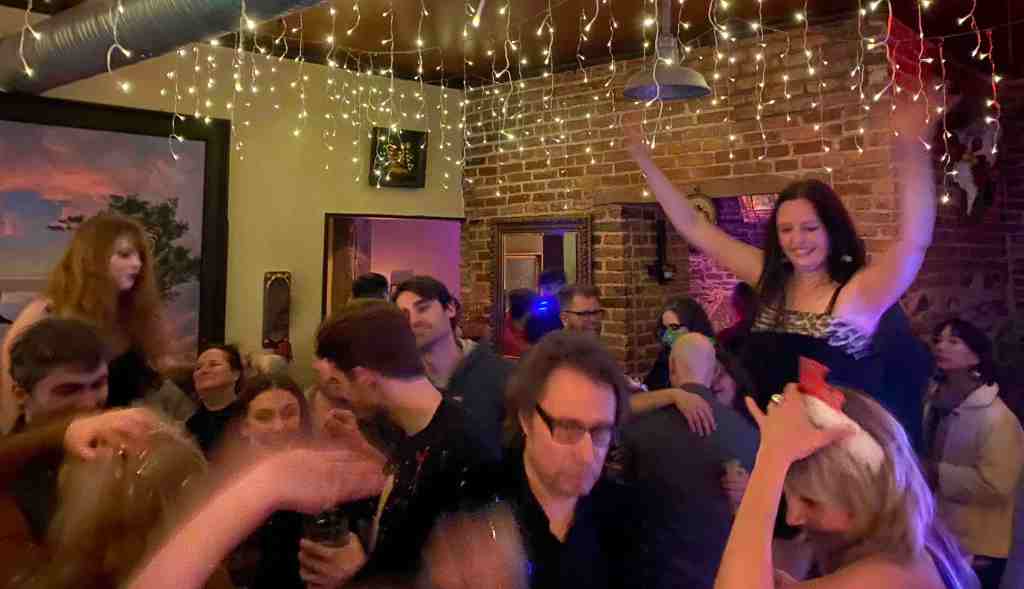
The music was originally meant to provide a soundtrack for the nice folks who get together at the club to socialize and swig frosty beverages, but a of couple hours into the night, these nice folks were dancing in the aisles, movin’ and groovin’. It wasn’t New Year’s Eve, but it was a gas.
Here’s a list of all the records played by Phast Phreddie the Boogaloo Omnibus:
This is The GO Mechanism—an audio Odyssey technically engineered and programed in the sub-state-of-the-art laboratory of Boogaloo Omnibus Productions by its host Phast Phreddie. The GO incorporates exclusive ultra-phonic techniques in order to present a show with the highest standards of standardness. The “G” stands for Groove—the fuel for the GO Mechanism. The “O” stands for O’Rooney, an intricate and complex impulse that is incomprehensible to those who possess standard-issue precepts. Dig it and you will know.
The GO Mechanism is presented whenever its producers get around to constructing a program. It is initially heard on the Luxuria Music web streaming hustle as a Saturday Night Special—this one to be initially aired on March 23. It will then be archived on the Luxuria Music website for a few weeks as a podcast before it is posted to the Mixclouds and down below here in the Boogaloo Bag.
In order to achieve total comprehension of The GO Mechanism, it is strongly recommended that this post be referenced while listening to the corresponding program. Songs and artists are not back-announced in order to keep the Groove Grooving and the O’Rooney O’Ronneying.
An hour into the GO Mechanism, the producers will present The Science Corner, a segment of the show where a subject of musical interest is discussed and several records are aired to illustrate the point. This show will feature three “frog” records.
Frog records are records with the popular amphibian as a subject. Often, as in the case of these three records, frog records refer to a dance, the Frog (no, not the Frug). The first one is “The Frog” by Bo Diddley. Bo Diddley is a legend and there is no need to go into his story here. Suffice it to say that he made a ton of great records, especially for the Checker Records company in the fifties and sixties and this is one of them. Nearly all of Bo Diddley’s records have a wicked beat and “The Frog” is no exception. It was recorded in May 1966 in Chicago. The drummer is Clifton James, who recorded with Bo Diddley extensively—he’s on Bo’s early hits, “Bo Diddley,”“I’m a Man,” etc. Bo Diddley’s foil and maraca player Jerome Green retired from music at the end of 1964. By the spring of 1965, Connie Redmon—also known as Cookie Vee—sort of took his place, but on tambourine. That’s her banging away on this recording. She would work with Bo Diddley for about ten years, as a back-up singer—sometimes with the vocal group The Bo-Ettes and/or The Cookies—as well as a percussionist.
Next up is “The Frog” by Sir Frog and the Toads. According to the garage rock bible, Teenbeat Mayhem!, Sir Frog and the Toads were from Las Vegas and also released a single as The Last Word. Both records were issued on the Downey label—known for its boss surf music records (Rumblers, Chantays). A likely scenario is that the band traveled to Los Angeles to play some gigs at the local clubs, came to the attention of Downey Records and cut six tracks (two were unissued until recently) then returned to Nevada. “The Frog” is the bossest of boss, with its very tuff fuzz guitar work-out.
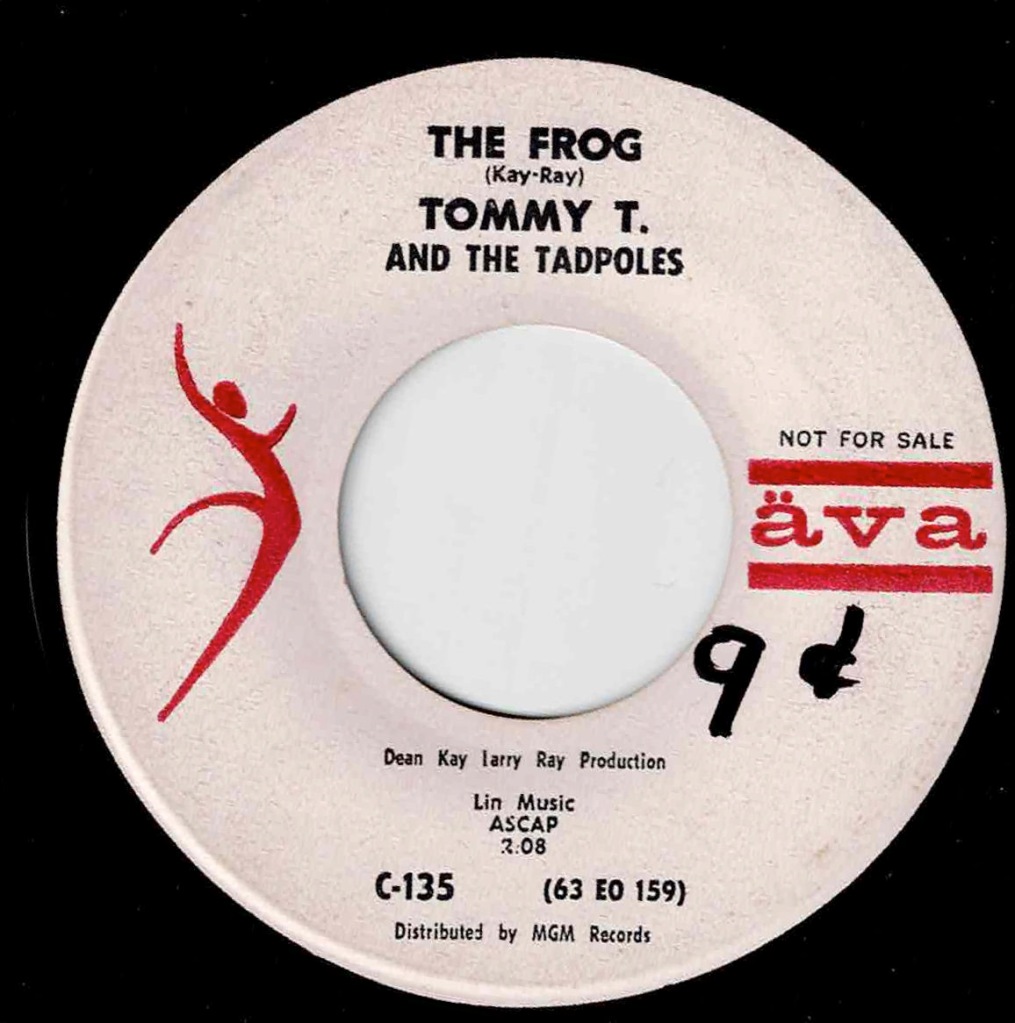
Our third frog record is “The Frog” by Tommy T and the Tadpoles. This record is interesting for a few reasons. To begin with, it was issued on Äva Records, a company that was co-owned by Fred Astaire! Another thing is the songwriting—co-written by Dean Kay and Larry Ray. Probably before the frog record was made, Dean Kay was in a teen vocal duo with a fellow named Hank Jones (not the jazz cat). The act had a sort of Everly Brothers vibe, appeared regularly on the Tennessee Ernie Ford TV Show and issued an album on RCA. A few years later, Kay would have a Number Four pop hit with his song “That’s Life” as sung by Frank Sinatra. Around 1971, Kay gave up songwriting to concentrate on the business end of the music industry—mostly dealing with music publishing.
The other songwriter, Larry Ray—who was a childhood friend of Dean Kay—co-wrote songs for the Hank and Dean duo. He would also go on to work in the music business, at Elektra, Dunhill, A&M and ABC Records before going into the publishing side of the industry.
The track by The Animals that appears in this program, “We’re Gonna Howl Tonight,” was recorded for a 1965 TV musical special called The Dangerous Christmas of Little Red Riding Hood. The show is a re-imagining of the Little Red Riding Hood story as told from the point of view of The Big Bad Wolf. It starred Liza Minnelli in the title role. The Animals played ‘The Wolf Pack,’ a gang that hangs out with The Wolf, played by Australian actor Cyril Ritchard. The show was conceived by the Broadway songwriters Bob Merrill and Jule Styne and they wrote all the songs, including this one, which actually suits the band fairly well, in spite of the fact that the show is less than fabulous.
The Animals as ‘The Wolf Pack’ with Cyril Ritchard as the Big Bad Wolf (dressed as gramma!)
“Dance Hall Brawl” sounds just like the title says—it’s one of the wildest records ever to be filed in the ‘calypso’ section! Sparrow’s Troubadours were the backing band for the Mighty Sparrow, who is arguably the greatest calypso singer of all time—certainly one of the most famous. On this record, his band let’s loose with a fantastic recording of folks bangin’ on shit and screaming!!! One of our favorite records.
The Zombies on Ready Steady Go!
The cool thing about The Zombies’ version of “Rip It Up” is that they don’t try to rock harder than the Little Richard original, they just play it as if they were, well, The Zombies; they add a jazzy touch and a dash of Ray Charles-style R&B in order to make it their own. It comes to us from BBC recordings.
The track “Abiana” by Ukonu is from his second LP, called African Nite Life (Imperial LP-9044, 1957). The artist’s full name is Anyaogu Elekwachi Ukonu and when he recorded his two LPs he was a pre-medical student at UCLA. His albums are among the earliest examples of African traditional (or traditional-like) music recorded in the U.S.A., even predating the fabulous records made by Olatunji for Columbia Records. Ukonu was a member of the Ibo tribe in Nigeria and the son of Chief Elekwachi. While in the U.S., he also appeared in a couple of films. After his studies in California, he returned to Nigeria to become the chief of his tribe as well as a television personality and executive.
“Soul Dance No. 3” by Carl Holmes & the Commanders is a fantastic, hard soul record that was apparently lifted for a song of the same title by Wilson Pickett. The Wicked Mister Pickett was fond of covering other’s songs—and he did it quite well, turning many of them into bigger hits than the originals. However, in those cases, proper writing credit was always given. The Carl Holmes version shows Holmes and Pervis Herder, who is the singer on this recording, as songwriters. The Pickett version credits Pickett as well as producer and Atlantic Records head Jerry Wexler as the songwriters.
Carl Holmes & the Commanders
The version by Holmes & the Commanders is a blasting, uptempo jam. Pickett’s version is slow and funky. The lyrics are nearly identical. Wexler may have been aware of Carl Holmes & the Commanders, since the group issued an LP and a single on Atlantic, plus a second album and a whole slew of singles on Atlantic Records in Italy, where the act was based during the early to mid sixties. The GO Mechanism producers speculate that perhaps Carl Holmes and his band needed money to return to the states and sold the songwriting credits to Pickett and Wexler. The Go Mechanism producers hate to think that Holmes was ripped off by people whom they admire.
Gougoush (also spelled Googoosh) is an Iranian pop singer and movie star who was vary popular in her home country. During the sixties she was a child actress and appeared several films. She released about a dozen albums between 1970 and 1978. In 1979, the Iranian Revolution brought the hard-core Islamic fundamentalists into power and they banned females from entertaining. Gougoush, whose real name is Faegheh Atashin, finally left Iran in 2000 and was able to perform again internationally to great success. Her track heard in The GO, “Nemiyad,” is from 1972 and has a subtle yet cool groove. It’s a song she still performs in concert for the Persian diaspora.
“Mister Moonlight” is a song most of us first heard when The Beatles recorded it and it appeared on Beatles 65 (or Beatles for Sale, depending on where you lived in the world). The original version is by the blues great Piano Red (Willie Lee Perryman), an African American albino who made nearly a 100 suburb records during the fifties. Around 1960, Piano Red reinvented himself when he formed a group and called it Dr. Feelgood and The Interns.
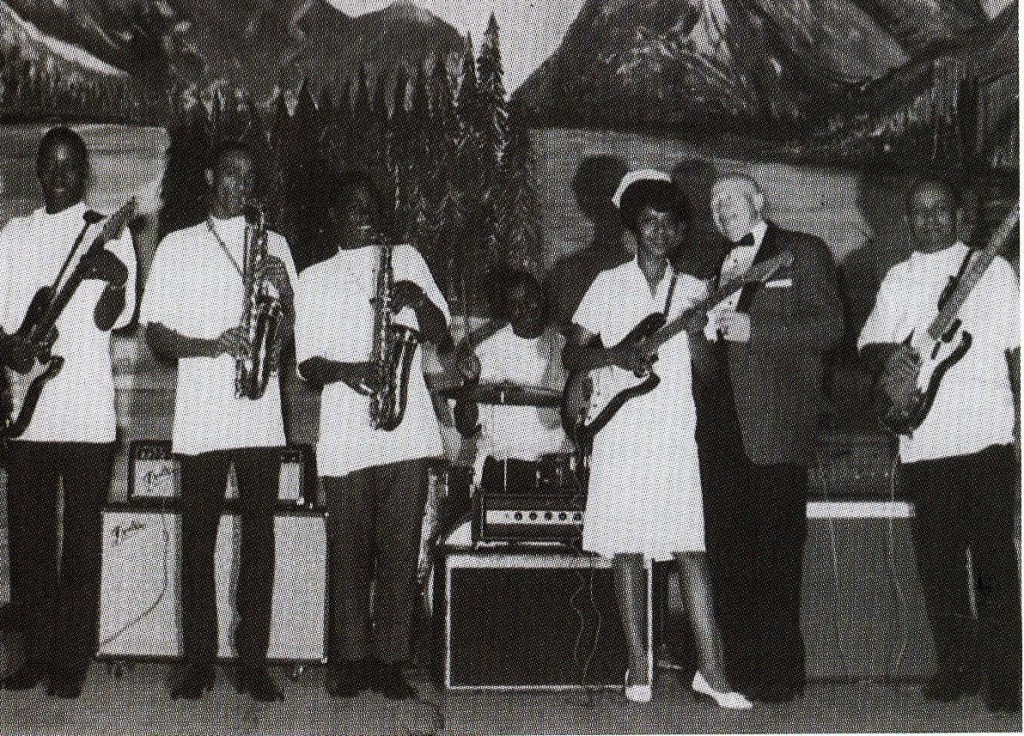
Doctor Feelgood and the Interns
For shows, the band members all dressed in white medical smocks and its female guitarist, Beverly Watkins, dressed as a nurse. The act was signed to OKeh Records and they recorded “Mister Moonlight” at their first session in Nashville on May 31, 1961. The singer on this version was Roy Lee Johnson, a guitarist in the band, who wrote the song. (For some reason, early copies of the single listed the songwriter as R. Stevens/R.C. Stevens, but later pressings and the subsequent LP credits Johnson.) “Mister Moonlight” was actually the B-side of the record—the A-side was “Doctor Feel-Good,” which was a minor pop hit in 1962.
Earl Hooker
In this GO Mechanism the producers kind of cheated. After presenting three “frog” songs during The Science Corner, a fourth one is heard later in the program: the instrumental “Frog Hop” by Earl Hooker. Hooker is hardly a household name, but among true blues music enthusiasts, Earl Hooker is a legend; one of the great masters of the slide guitar. He recorded quite a bit and for a variety of labels in Chicago, mostly as a sideman, but a lot of the recordings on which he was the leader remained unissued for many years. He was struck with tuberculosis at an early age and it haunted him until he died in 1970.
The Sci-Flies
The Sci-Flies are a surf-rock instrumental band from Kingston, NY. The GO Mechanism producers caught their act at The Jet Set in Newburgh a few weeks ago and quite enjoyed them. The band dresses up with fly masks, wings and fezes. “Oil Spill” is from their album Tomorrow We Die.
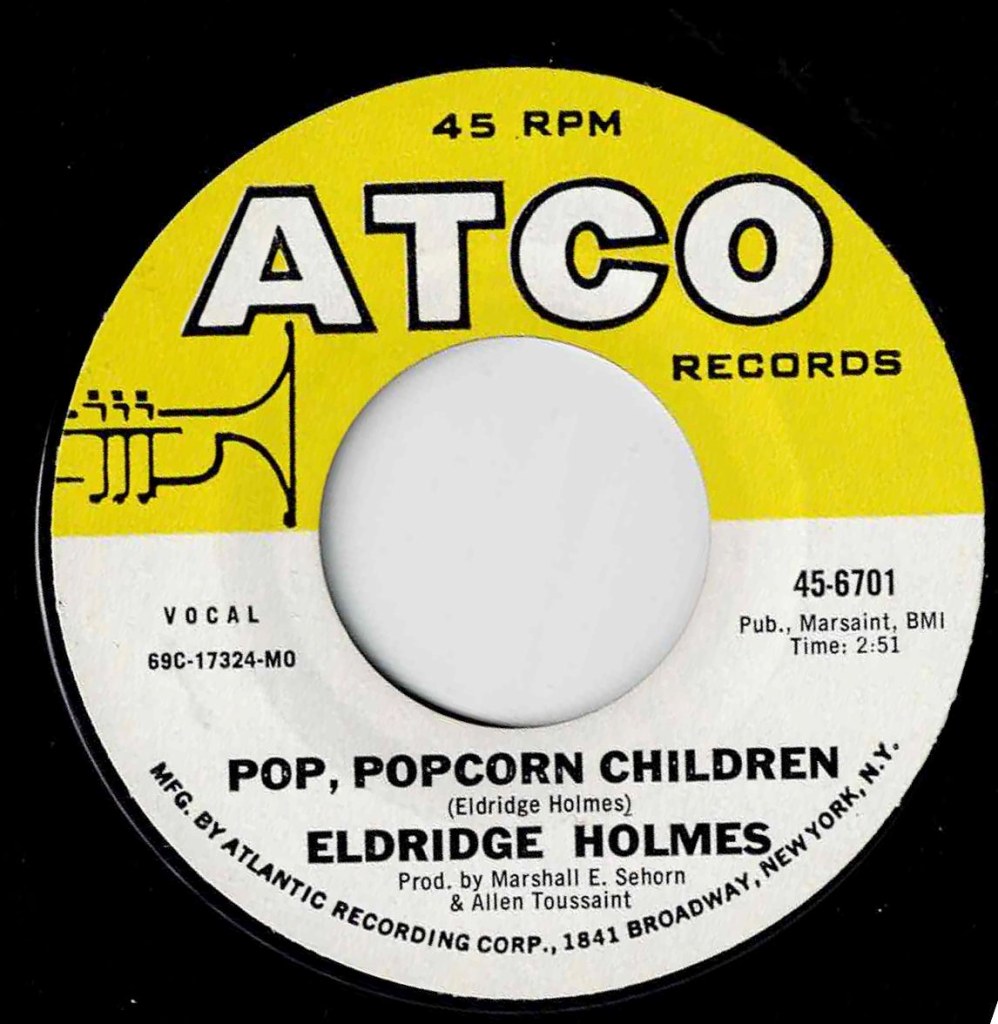
Eldridge Holmes (no relation to Carl Holmes above) was a New Orleans singer who worked closely with Allen Toussaint. He recorded less than twenty singles that were issued during the sixties, but by the early seventies he was mostly out of the music business. For some reason, none of his records became hits, in spite of the fabulousness of some of them. The GO Mechanism producers like his songs “Humpback” (1965) and “Popcorn Pop Pop” (1964). He revisited the popcorn theme in 1969 with one of the greatest funk records of all time, called “Pop Popcorn Children.” It is believed that The Meters are backing him on this record and it sure sounds like it; nobody else can play like that.
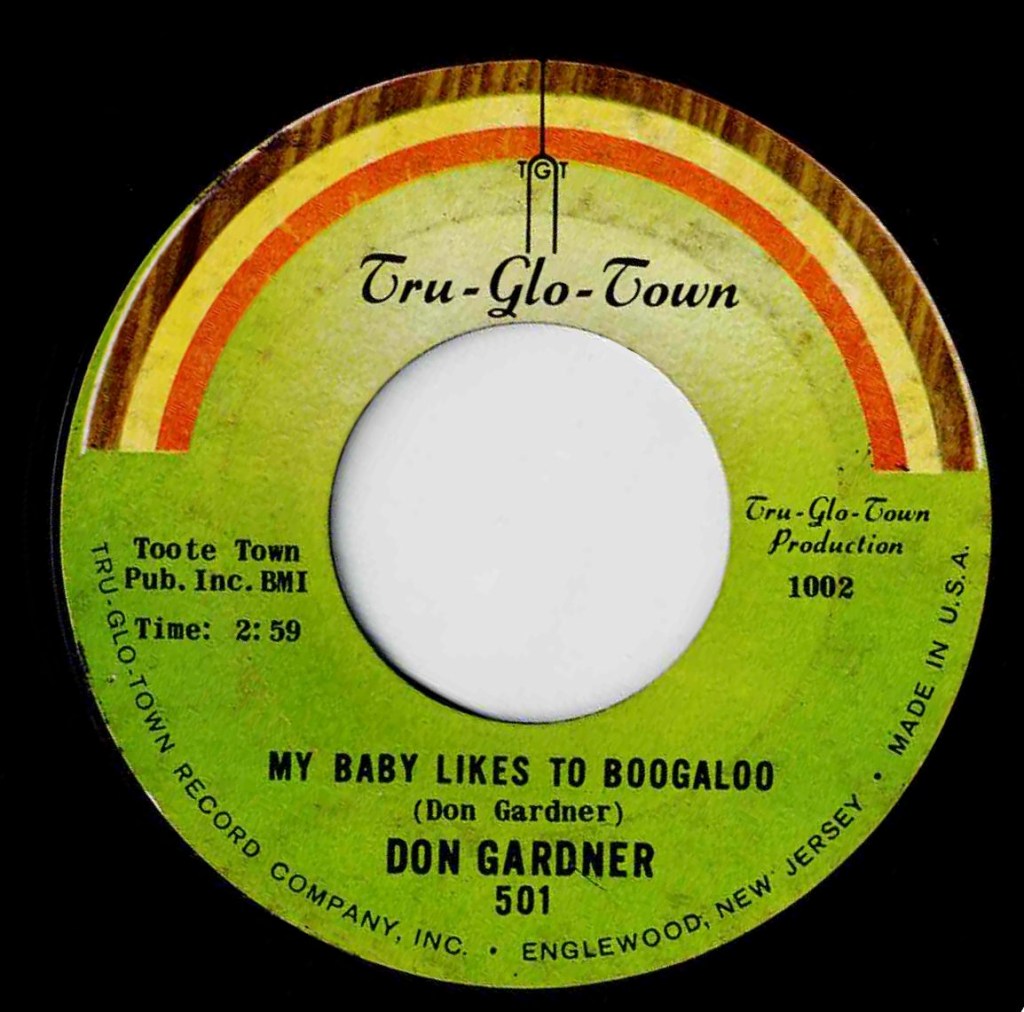
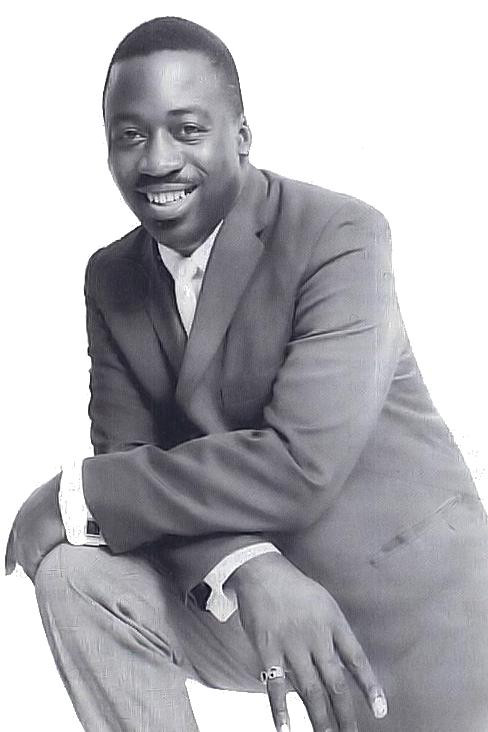
As usual, The GO Mechanism ends with one of the Greatest Records Of All Time. For this edition, the closing number is “My Baby Likes to Boogaloo” by Don Gardner from 1966. The record has a fantastic guitar riff—one that you would expect from a hot garage rock band. Also, the song has a very tough beat. It is one of the most rockin’est soul records you’ll ever hear. The song was covered by The Emperors, a soul group from Harrisburg, Pennsylvania and by Lewise Bethune as “Chi-Town Boogaloo.” In recent years, the song has been cut by the super-rock group The Woggles, bluesman Robert Cray, a French group called The Zemblas, the Dutch group Juicebox and others. Don Gardner was a drummer who led an organ combo called The Sonotones that featured first, Jimmy Smith, then Richard “Groove” Holmes (not related to any Holmes mentioned above) during the fifties. Gardner had his fifteen minutes of fame when he teamed up with Dee Dee Ford, an organ player who took Holmes’ place, and their gospel-drenched “I Need Your Lovin’” screaming duet was a Top Five R&B hit in 1962. The duo moved to Sweden for a while but when they returned to the States, they split up. She cut a single for ABC, then seemed to have disappeared. Don Gardner, however, made several excellent records, but achieved little success. The GO Mechanism producers were privileged to see Gardner in person at a fabulous Dig Deeper event in Brooklyn on June 28, 2008 where he sang “My Baby Likes to Boogaloo” twice!!
Don Gardner
The GO Mechanism is produced whenever we feel like it and it initially airs on the Luxuria Music interweb streaming hustle as a Saturday Night Special. The GO Mechanism producers sincerely thank the powers-that-be at Luxuria Music for continuing to invite The GO back again and again. Luxuria Music is a very independent entity that can use some monetary love. Please go to Luxuria Music and buy something from its store. Also, while you are there, check out the other fantastic programs it has to offer.
Legacy GO Mechanisms can be found on the Mixclouds and here in the Boogaloo Bag. After a while, the audio portion of this GO Mechanism will magically appear below…
Here is a list of all the tracks played during The GO Mechanism Number Twenty One:
Earl Bostic—Lester Leaps In (King)
Duke Ellington & His Famous Orchestra—Copout Extension (from LP Festival Session; Columbia) (Dylan Thomas recites “Love in the Asylum”)
Ramon Ropain, piano & ritmo—Plinio Guzman (from LP Grandes Exitos de Colombia; CBS; Colombia)
The Animals—We’re Gonna Howl Tonight (from soundtrack to TV show The Dangerous Christmas of Little Red Riding Hood; ABC)
The Fabulous Cyclones—Cyclone (Band Box)
Sparrow’s Troubadours—Dance Hall Brawl (RA; Barbados)
Dave Collins—Smooths and Sorts (Rhino; UK)
Counter Points—Come Together (JA-WES)
The Zombies—Rip It Up (from album Zombie Heaven; Big Beat; UK)
This year, Pete Pop’s spectacular rock’n’soul dance party takes place on the second Friday of the month at Quinn’s, the rock ’n’ ramen establishment on Main Street in Beacon, NY. On March 8, his guest DJs were Peter Aaron and Phast Phreddie the Boogaloo Omnibus.
Pete PopPeter AaronPhast Phreddie the Boogaloo Omnibus
Peter Aaron has been mentioned in the Boogaloo Bag before. Suffice it to say, after having been in a cool rock band (The Chrome Cranks) in the nineties, writing some books and hosting a radio show for several years, he’s got fantastic sense of what makes a party rock. Pete Pop asked him to bring some of his boss seventies and early eighties glam, punk and new wave records to spice up the night. Mission accomplished.
Pete Pop has incredible records and played them all night long. Folks were dancing; folks were falling down and drinks were spilled—a super successful party!
Go Go dancers Bella Bombora and Sheba Shake swing at Do The 45!
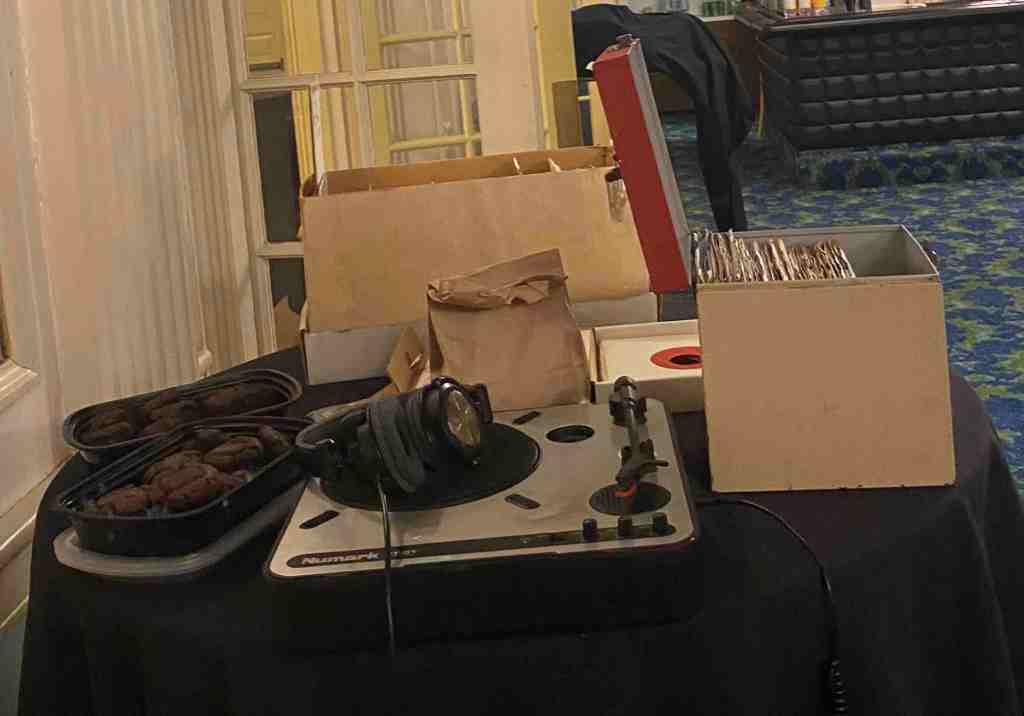
Also, this year, Do The 45 features two fabulous Go-Go dancers: Sheba Shake and Bella Bombora. Miss Sheba has been getting some dancing gigs down in The City and at local surf music concerts. Bella Bombora, when she’s not on stage, is the official photographer of the Boogaloo Bag as well as baker of treats for DJ gigs when Phast Phreddie the Boogaloo Omnibus is involved.
Speaking of the Phast One, here’s a list of all the records he played at the March 8 Do The 45:
On Saturday February 10, DJ Pete Pop and Phast Phreddie the Boogaloo Omnibus were invited to DJ at a Secret House Party held at an undisclosed location in Newburgh, NY. Bella Bombora and Sheba Shake were invited to Go-Go dance. For all intents and purposes, this event did not happen. Even if it did, the Boogaloo Bag writers would not be at liberty to discuss it.
Suffice it to say, the venue was indeed in the basement of someone’s house somewhere in Newburgh, in an unassuming building that was easy to miss. Everyone in attendance was asked not to take photos or discuss the details with anyone outside of those who were there. However, the Boogaloo Bag writers have been assured that posting such information as what a gas it was would be fine. The party room was full of folks and the two DJs had them dancing the entire time, encouraged by the two Go-Go dancers. As usual, DJ Pete Pop played some fantastic records and The Boog tried to keep up! In order to secure the privacy of the event hosts, no other information may be disclosed at this time.
The following is a list of records played by Phast Phreddie the Boogaloo Omnibus at this event. Shhhh… don’t tell anybody!!
This is The GO Mechanism—an audio Odyssey scientifically engineered and programed in the secret laboratory of Boogaloo Omnibus Productions by your host, Phast Phreddie. The GO incorporates copyrighted ultra-phonic techniques not available to other broadcast entities. The “G” stands for GROOVE and there is plenty of GROOVE in every GO Mechanism. The “O” stands for O’ROONY, an intricate and complex impulse that is incomprehensible to those who possess standard-issue precepts. Listen and you will hear.
The GO Mechanism is first aired on the Luxuria Music web streaming hustle as a Saturday Night Special—this one to be aired on February 3. It will then be available as a podcast on the Luxuria Music website for a few weeks before being posted in the Mixclouds and down below here in the Boogaloo Bag.
In order to achieve total comprehension of The GO Mechanism, it is strongly recommended that this post be referenced while listening to the corresponding program—GO Mechanism Number Twenty.
At the beginning of the second hour The GO presents The Science Corner, a portion of the show where a subject of musical importance is discussed and several records are played to illustrate it. This one will feature Barbara Lynn.
Barbara Lynn
Barbara Lynn Ozen was born in 1942 in Beaumont, a small city in Texas near the south-east border with Louisiana. She became musically inclined as a young girl, learning to play the piano, then later the guitar, which she plays left-handed. She started a band called Bobby Lynn and Her Idols that played in clubs in the area, including nearby Houston and Lafayette, Louisiana. She came to the attention of the record producer Huey Meaux, who worked with talent around the Texas/Louisiana region. Meaux, known as The Crazy Cajun, liked a song Ms. Lynn wrote called “You’ll Lose a Good Thing.” He took Lynn to New Orleans where the song was recorded with New Orleans musicians and was able to sell it to Jamie Records. The song became a Number One R&B hit in the summer of 1962 and even broke into the Pop Top Ten. This success allowed her to tour the country and appear on American Bandstand a couple of times. Follow-up singles did not result in the same success, but they are mostly great records. One song, “Oh! Baby (We Got a Good Thing Going,” didn’t even crack the Top Forty R&B chart but was recorded by The Rolling Stones and appears on one of their early albums. Jamie Records must have had high hopes for Barbara Lynn, as the company released fifteen singles and an album by her, but further success did not come. She recorded for Meaux’s Tribe label, then Meaux licensed some tracks to Atlantic Records; enough for an album and a handful of singles. Three of those tracks are presented in The Science Corner: “This Is the Thanks I Get,” “You’re Losing Me” and “Until Then I’ll Suffer.”
Her appearance on The !!!! Beat show—a variety TV program filmed in Dallas that featured many of the top R&B artists of the period, 1966—is especially inspiring, as she plays what may be called a rhythm guitar solo.
During the mid seventies and early eighties, Ms. Lynn set her career aside to raise her children, but began performing again by the mid eighties. Her recordings for Bullseye (1994) and Antones (2000) are worth seeking out. Barbara Lynn is still alive and performing. The GO Mechanism producers have witnessed her shows on several occasions and can attest to the fabulousness of Miss Barbara Lynn.
Eddie Lockjaw Davis
Eddie Davis—dubbed Eddie “Lockjaw” Davis sometime after this recording—was a fabulous tenor saxophonist whose extroverted style lent itself well to rhythm & blues records of the forties and early fifties. However, early in his career Mr. Davis travelled with the beboppers, as is witnessed by this recording, “Hollerin’ and Screamin’.” The trumpet player is the great Fats Navarro, a bebop legend. The pianist on this recording is Al Haig, who worked with Charlie Parker and appears on Miles Davis’ Birth of the Cool recordings. Bebop purists don’t seem to appreciate Davis’ solos on the two sessions he cut for Savoy Records. It seems the only reason they’ve been reissued is because Fats Navarro is on them. But The GO Mechanism producers dig Lockjaw’s sound. His tough, blues-drenched tone is exciting on this record and we look at the recording as an early fusion of modern jazz and rhythm & blues. Fats Navarro died of tuberculosis in 1950. Eddie Davis had a long career. He started it in the big bands of Cootie Williams and Andy Kirk; worked with other beboppers, including Miles Davis and Sonny Stitt; was an early practitioner of the sax/organ jazz combo—mostly with Shirley Scott; and made well-regarded records with the saxophonist Johnny Griffin. Late in his career he returned to the big band scene when he worked with the Count Basie Orchestra. Davis died of Hodgkin’s lymphoma in 1986 at the age of 64.
The Strawberry Alarm Clock’s “The World’s on Fire” has a very cool bass riff and a super boss groove. The GO Mechanism producers thought that the vocal detracts from the riff so they cut that part out! This is a GO Mechanism exclusive edit. The Strawberry Alarm Clock perform an even more severe edit of the song in the movie Psyche-Out, with groovy hippy dancing people and Jack Nicholson (!!) on guitar.
The Flintstones were a fledgling British beat group who, in 1962, cut an instrumental with producer Joe Meek. Meek released the record as by The Stonehenge Men. The next year, The Flintstones were the opening act and backing band for a UK tour headlined by The Everly Brothers. Also on the bill was Little Richard, Bo Diddley, The Rolling Stones, Mickey Most (an aspiring teen idol a few years before he became a successful record producer) and pop singer Julie Grant. The Flintstones backed The Everly Brothers, Little Richard and most likely Mickey Most and Julie Grant, too. Bo Diddley’s act was augmented by the presence of his guitarist The Duchess (Norma-Jean Wofford) and maraca player Jerome Green. Apparently, Bo Diddley took The Flintstones under his wing and wrote this instrumental, “Safari,” for them. The Flintstones also made friends with The Everly Brothers. Flintstones guitarist Terry Slater moved to Los Angeles to play in The Everly’s band and he wrote some songs that they recorded, including “Bowling Green” and “Lord of the Manner.” Slater became a record producer but eventually moved back to London where he was a music executive.
Part One of Little Anthony & the Imperials’ “Limbo” is basically a limbo-rock song, but a cool one. Part Two, as played in The GO, is a little more manic, with The Imperials coxing Little Anthony to go “down, Tony, down” over and over as Anthony screams out ad-libs while the wild limbo rhythms play out. It’s pretty boss and you may not hear this record anywhere else!
Pigmeat Markham was a comedian who had a surprise hit in 1968 with his catch phrase, “Here Comes the Judge.” He was a comedian who worked in vaudeville, performed in major concert houses, acted in movies and appeared on television. He cut some blues records for Blue Note—covers of songs by Ma Rainy and Leroy Carr—in 1946. During the sixties he cut a string of comedy albums that were released on Chess Records—a label known for blues, jazz, R&B and soul records. His “Here Come the Judge” routine was set to a funky beat and became a popular record; it is often noted as a precursor to rap music. Probably about ten years before that, he cut some jump blues records: “Let’s Have Some Heat”/“Your Wires Have Been Tapped” for the Cosmopolitan label and “(Wanted-Wanted-Wanted) A Healthy Baboon” for Wig Records. The flip side of “Baboon” is “Roberta,” heard here in The GO Mechanism.
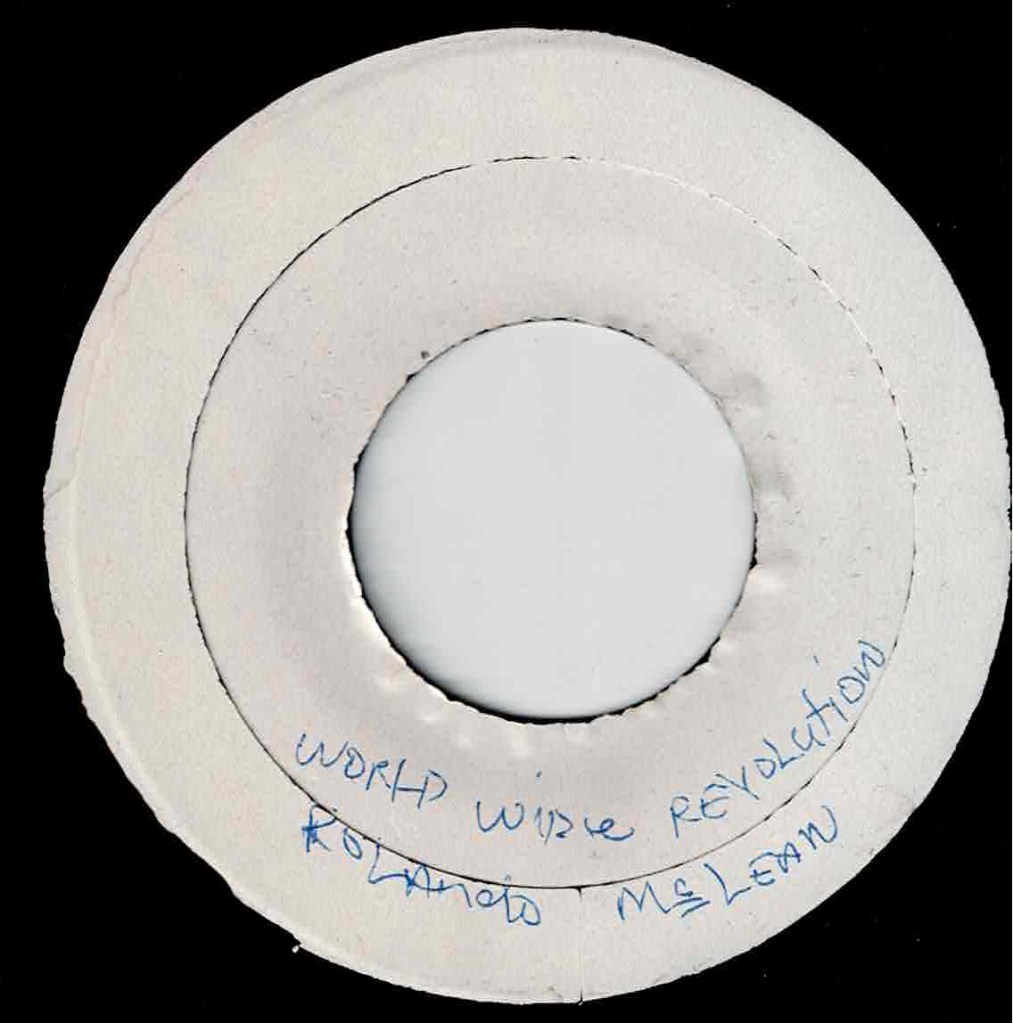
“World Wide Revolution” by Rolando McLean is on a Jamaican blank label record, with only the title and artist hand-written on it. “Version,” the side we play in The GO, is all that is written on the flip side. Roland McLean is the real name of Yami Bolo. The A-side appeared on Yami Bolo’s Put Down the Weapons LP from 1997. There seems to be no evidence of the single ever having been released, thus, the “version” played on The GO may be an exclusive!
Tropical Tigers is a contemporary Italian record company that has been issuing fantastic Latin Boogaloo songs on 45 RPM. Only a limited amount of these records are pressed and often they are numbered. Most of the recordings come from Central or South America. The record heard in GO Number Twenty is “Pow Wow” by Los Melódicos, a group from Venezuela. It is a cover of a fantastic record by Manny Corchado. The version by Los Melódicos was only ever released as an LP track and this marks its first appearance on the seven-inch format—thus making it an ideal record for DJs who work only with 45 RPM records.
During the early nineties, The GO Mechanism producers were employed to catalog several hundred reel-to-reel audio tapes at a major music publishing company. This was an excellent job for him, as he was able to identify most of the recordings, thus making the end results fairly accurate. Every once in a while a song that seemed interesting was transferred onto a cassette tape for further inspection. One such recording is “Where Does It Lead.” A song with that title is listed in the publishing company’s database noting that it was written by Al Kooper and Irwin Levine. This makes sense as several other Al Kooper and/or Irwin Levine songs were included on some of the tapes. The GO Mechanism producers met Al Kooper once (backstage at Madison Square Garden when Dave Alvin opened for Bob Dylan) and asked him about the song. Kooper said that he remembered the song and that it was written as a follow-up to “This Diamond Ring,” the Gary Lewis & the Playboys hit that Kooper had co-written. He did not remember if it was ever released by anyone. Thus, it is quite possible that “Where Does It Lead” is a GO Mechanism exclusive!
GO Mechanism Number Twenty concludes with one of the greatest records of all time: “Block Buster” by Boots Brown and His Blockbusters. The GO Mechanism producers discovered this record when hanging out with Jeffrey Lee Pierce around 1978. They were scouring thrift stores in South Central Los Angeles searching for groovy records, and a 78 RPM copy of “Block Buster” was obtained by Mr. Pierce. They took it—and other finds—back to Phast Phreddie’s Hollywood pad and played it. The excitement the record generated had them jumping around the living room. They thought it was one of the greatest honking rhythm & blues records of all time, with its wild beat and wailing saxophones; much like the records of Big Jay McNeely or Joe Houston.
In 1986 the truth of this record came out. Eight tracks by Boots Brown and His Blockbusters (including “Block Buster”) were used to fill out a Little Richard reissue album in Europe. In the liner notes it stated that The Blockbusters was actually a group of West Coast cool jazz musicians led by the trumpet player Shorty Rogers. These were cats who had worked in the big bands of Woody Herman and Stan Kenton and, at the time, were based in Southern California: Bud Shank, Jimmy Giuffre, Shelly Manne, Dave Pell, etc. The music they made under their own names was much more restrained—some of it has been referred to as chamber jazz. But here they were, in 1952, rockin’! One could even consider this record as an early example of white people playing rock’n’roll—perhaps predating attempts by Bill Haley & His Comets, and certainly more rockin’.
In the mid-eighties, Jeffrey moved to London. Before he did, he gave the Boots Brown 78 to Phast Phreddie (although now it had a crack!). It is pictured above.
Resident GO narrator Oweinima Biu.
At various critical moments during the program, resident narrator Oweinama Biu recites several adages and sayings attributed to the guitarist Jimi Hendrix. Alec Guinness recited a poem by e.e. cummings entitled “The moon looked into my window” with music by Chip Kinman from his album of electronic music called The Great Confrontation.
The graphic image employed to illustrate this edition of The GO Mechanism is a collage by the great soul and reggae DJ Yana Lil’ Jerk. Most of her collages are assembled to provide visual excitement to the posters announcing her DJ nights, such as Bangarang and Living for Kicks. Some of her spectacular collages can be seen on her instagram site.
The GO Mechanism is produced whenever we feel like it and it initially airs on the Luxuria Music interweb streaming hustle as a Saturday Night Special. The GO Mechanism producers sincerely thank the powers-that-be at Luxuria Music for continuing to invite The GO back again and again. Luxuria Music is a very independent entity that can use some monetary love. Please go to Luxuria Music and buy something from its store. Also, while you are there, check out the other fantastic programs it has to offer.
Legacy GO Mechanisms can be found on the Mixclouds and here in the Boogaloo Bag. After a while, the audio portion of this GO Mechanism will magically appear below…
Here is a complete track listing for GO Mechanism Number Twenty:
Earl Bostic—Lester Leaps In (King) (GO Mechanism opening theme)
Eddie Davis—Hollerin’ and Screamin’ (Savoy)
Mothers of Invention—Uncle Meat: Main Title Theme (Bizarre)
Manuel “Loco” Valdez y Conjunto Louis Gonzalez Perez—El Blob (La Burbuja) (RCA Victor; Mexico)
The Strawberry Alarm Clock—The World’s on Fire (exclusive Boogaloo edit) (from LP Incense and Peppermints; Uni)
The first Do The 45!of the new year took place on January 12 at Quinn’s—the rock ’n’ ramen joint in Beacon, NY. This was an especially exciting Do The 45! because host DJ Pete Pop added another Go-Go dancer: Bella Bombora. She and Sheba Shake were up on the dance floor doin’ the watusi nearly all night. Man, those girls can move!
Another thing that made this Do The 45! special was the addition of DJ Benny Trokan. Mr. Trokan has played in such bands as Spoon, Reigning Sound and The Jay-Vons. Plus, he’s toured the world as a member of Lee Fields’ band. He’s got some pretty darn good records and at the Do The 45!, he showed everybody that he knows how to play them. Phast Phreddie the Boogaloo Omnibus was invited along for the ride; he started each of three sets with “The Batman Theme.”
DJ Pete Pop played his usual assortment of garage, R&B and Latin stuff that always keeps the party going. Miss Nancy baked some banana cupcakes with peanut butter icing and these almond-flavored, star-shaped things that were excellent.
Above: Benny – Phast – Benny – Pete Pop
Phast Phreddie the Boogaloo Omnibus played these records at the Do The 45!:
The expectations for a New Year’s Eve party are always very high. People expect the event to be so totally fabulous that you’ll be talking about it for the rest of the year. On the New Year’s Eve that went from 2023 to 2024, our friend Sterling Knight put together one swingin’ affair. The Boogaloo Bag writers met her when she was the guiding light of Mama Roux, the fabulous eatery in Newburgh, NY—now defunct. She has recently taken her Mama Roux brand and become a professional event planner in the greater Newburgh area. 190 Bar, a new joint in Newburgh, came to her and asked her to produce a New Year’s Eve happening, the first for the fledgling club. Ms. Knight knows how to swing. She enlisted a tarot card reader; a tattoo artist; Go-Go dancers Sheba Shake and Bella Bombora and the Hudson Valley’s bossest DJs, Pete Pop and Phast Phreddie the Boogaloo Omnibus.
“Magnificent revelry” was promised… and delivered!!
190 Bar, as noted above, is a brand new establishment and it is located at 190 Broadway. It is beautifully appointed with artful paintings on the exposed brick walls and sparkling lights hanging from the ceiling.
DJ Pete PopPhast Phreddie the Boogaloo Omnibus
The hero of the evening was DJ Pete Pop. Earlier that day, he DJ’d at the Jet Set for the monthly drag brunch. Then, by 6:00 PM, he was setting up his equipment at 190 Bar and soon after started playing records as folks were already showing up.
Sheba Shake!Bella Bombora!
Phast Phreddie and Miss Nancy dropped by around 9:00 PM or so—still dragging a bit themselves; recovering from the Funky Kingston the night before. But Pete Pop’s records were so boss that rejuvenation was instant. Sheba Shake showed up and Miss Nancy got into Bella Bombora mode and the two Go-Go danced on the groovy platforms that were built just for the occasion. Soon the club was filled to the brim, with folks dancin’ and jumpin’ around and drinkin’ and making merry in all sorts of ways.
Miss Nancy’s yummy treats!
How fun was this New Year’s Eve? Pete Pop called it the best New Year’s Eve he’s ever experienced. The Go-Go dancing of Sheba Shake and Bella Bombora inspired everybody to watusi and frug! Folks were boppin’ to every record played—even “Egyptian Shumba!” At one point, a fellow showed his phone to Phast Phreddie and it said, “Stooges?” So a record by The Stooges was played! Best song request ever!!! The Boogaloo Bag writers were so enjoying the evening that few good photos were taken! Hostess Sterling Knight sure knows how to throw a wing ding! The merriment didn’t stop until the wee hours!!
HAPPY NEW YEAR!
Sometime after four in the morning, the exhausted 190 Bar staff pleaded with the DJs to cut the jams. They had such a good night that some of them even helped Pete Pop carry his equipment out to his car!
Here’s a list of all the songs played by Phast Phreddie the Boogaloo Omnibus at the 190 Bar New Year’s Eve Party:
The Bat Signal at the Salt Box signifies that Funky Kingston is happening!!Stuart Millman of The Greyhounds and Miss Nancy dig it!
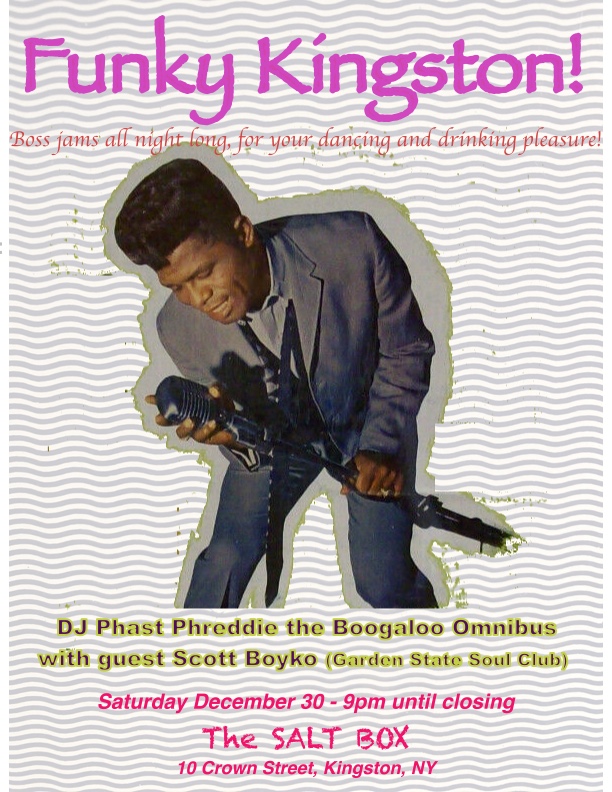
In 2023, the last fifth Saturday of the month fell on December 30—the day before New Year’s Eve! It was the perfect time for folks to celebrate the New Year without dealing with amateur drinkers. Some folks took advantage of that by attending Funky Kingston at the Salt Boxin Kingston, NY.
Phast Phreddie the Boogaloo Omnibus and Scott Boyko swing at Funky Kingston!
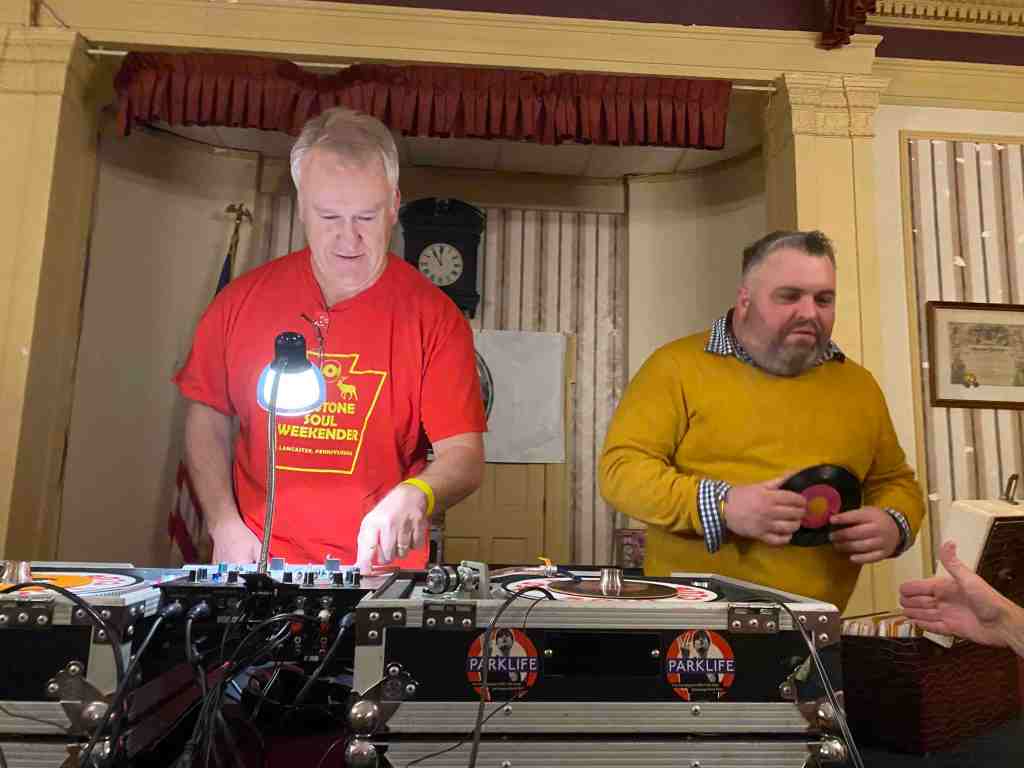
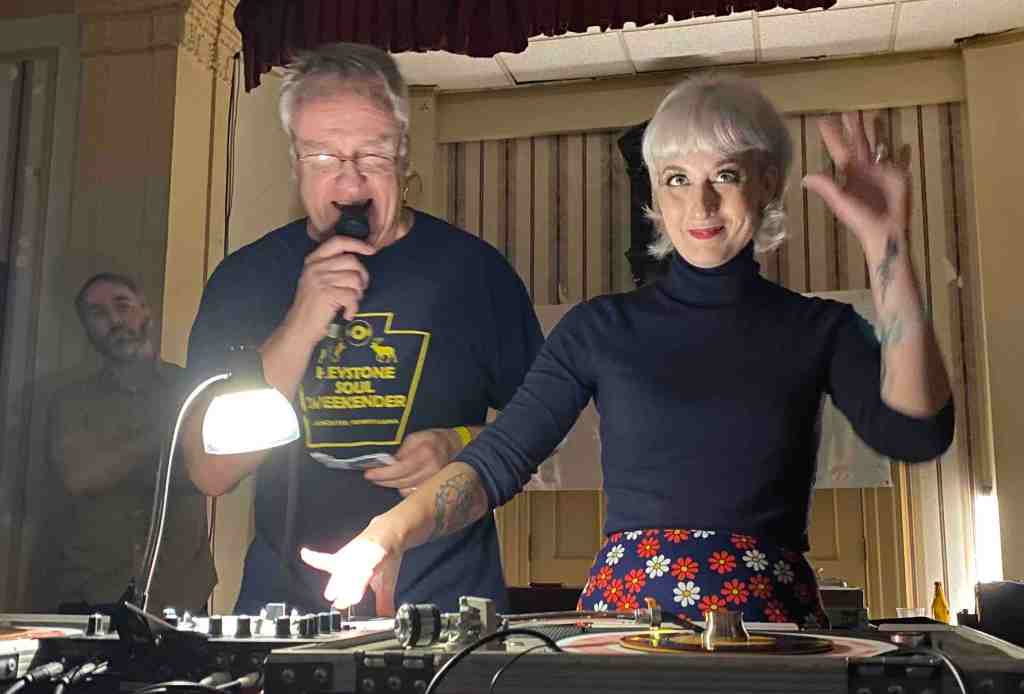
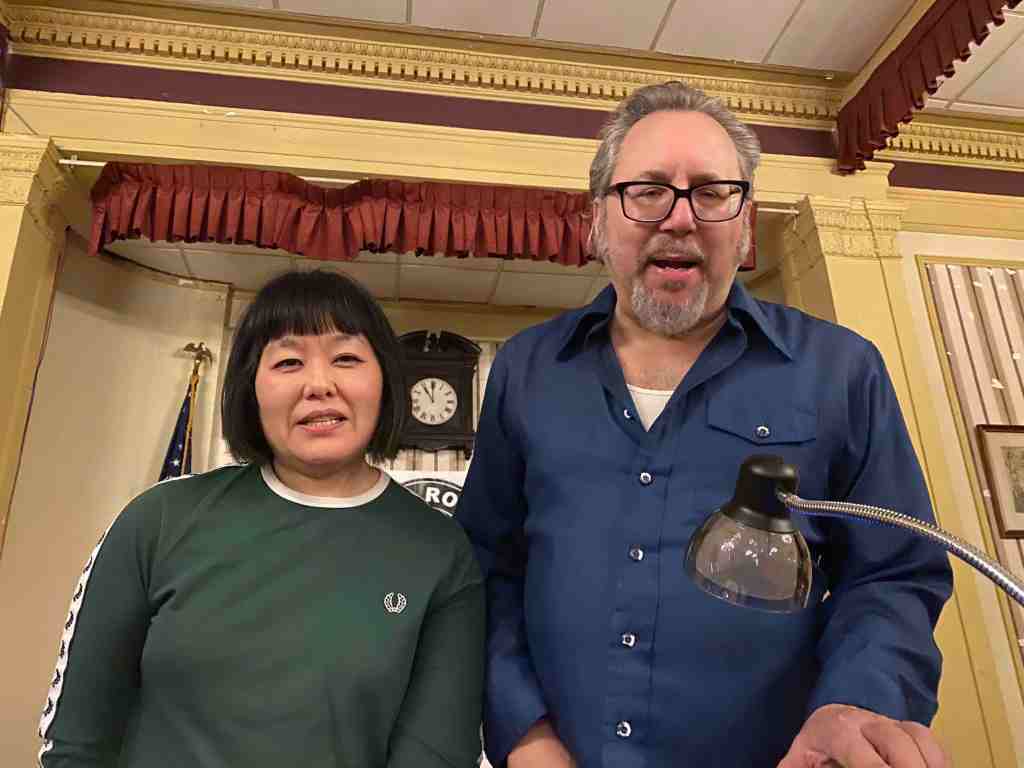
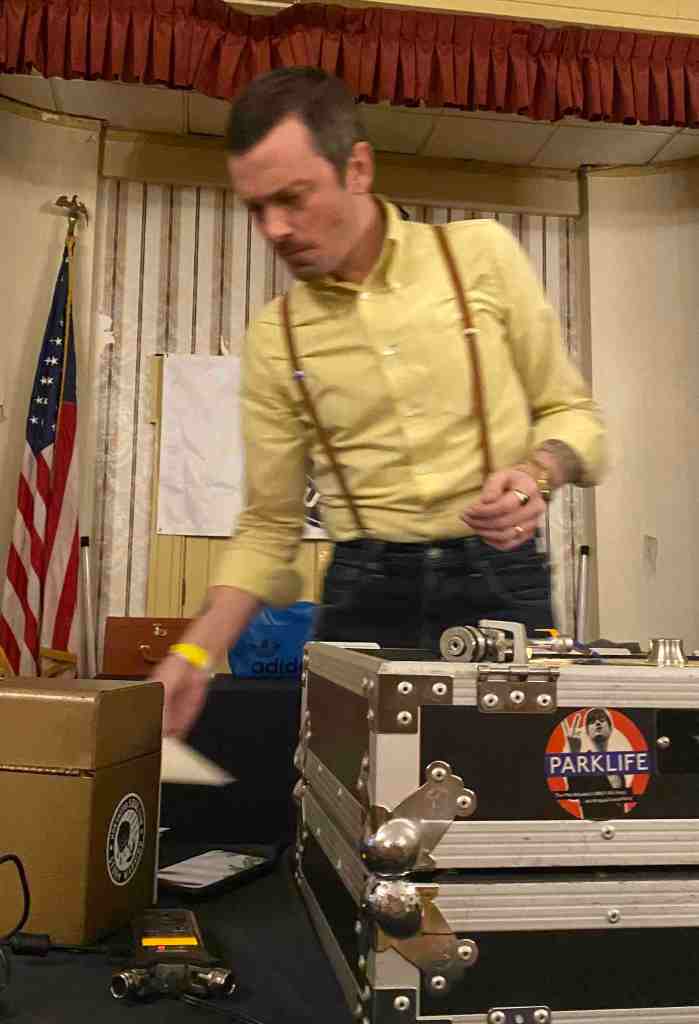
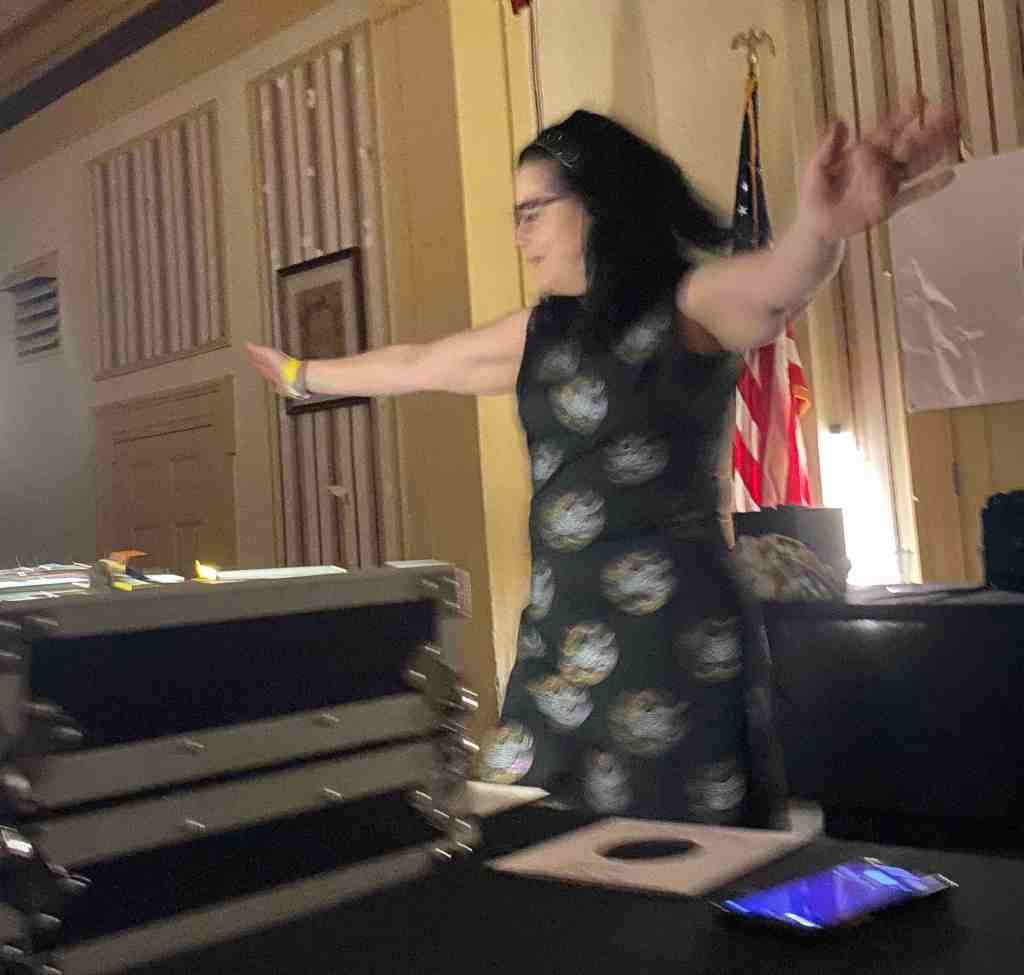
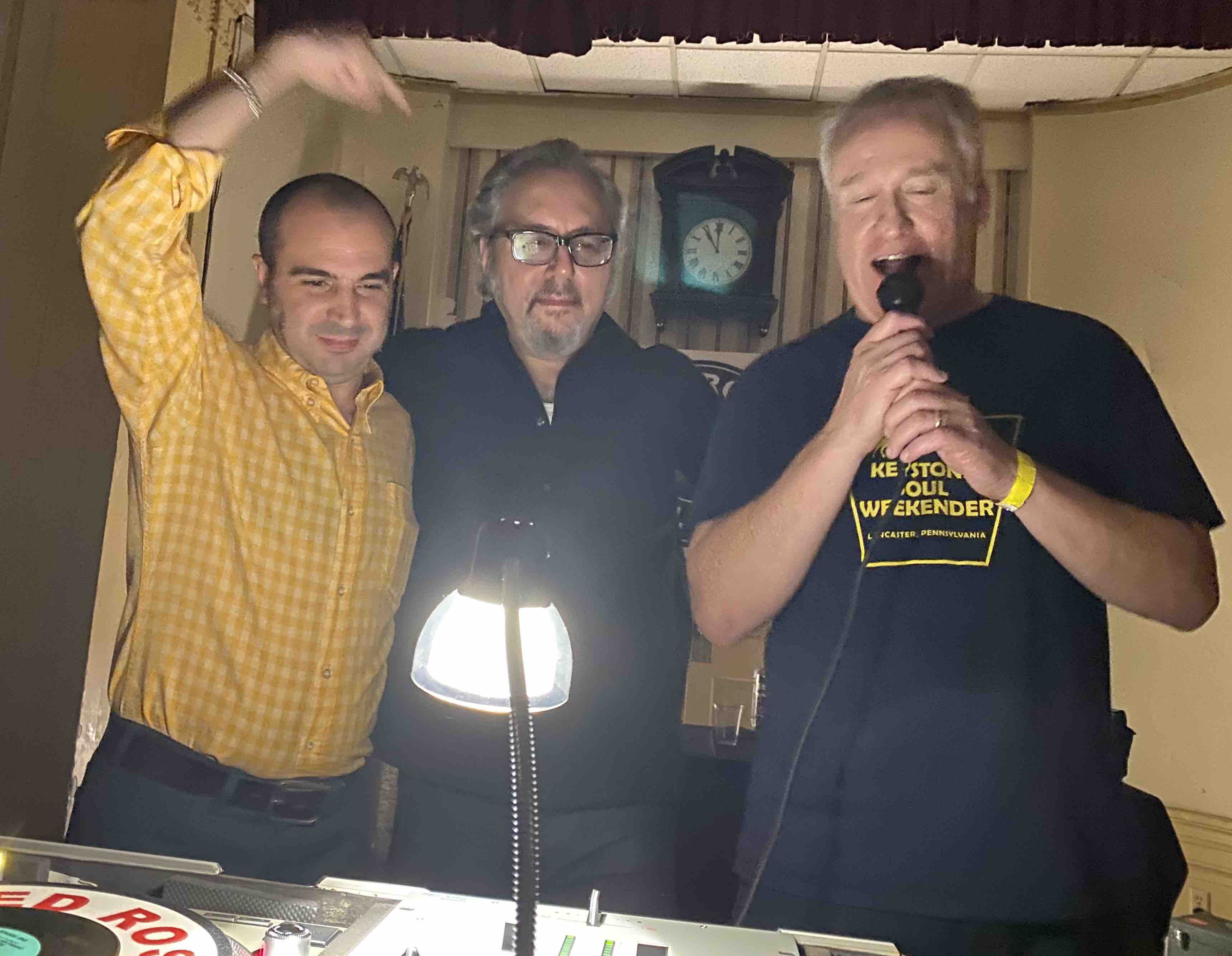
Funky Kingston is the groovy new DJ night hosted by Phast Phreddie the Boogaloo Omnibus. It features all sorts of funky music (see list below) as well as special guest DJs. For this occasion, we were able to fly in Scott Boyko from south central Pennsylvania and he dropped some heavy, heavy funk and really righteous reggae jams. Mr. Boyko is a serious record collector and has been sharing his sounds at DJ events for more than 20 years. He once was a host of the Garden State Soul Club. Now he guests all over the place: Keystone State Soul Weekender (Lancaster, PA), Soul Finger (New York City), etc.
Scott Boyko in action!Scott Boyko keeps the action going!
This particular Funky Kingston event went swingin’ly—with all sorts of friends showing up. Some friends even insisted on making this a sort of a late birthday party for Mr. Phreddie as he turned 70 two days before! 70! Wow! That means Phast Phreddie has been DJing for folks for about fifty years—since the early seventies when he worked at keg ’n’ Quaalude parties in San Pedro and Carson, California. Those were the days: trying to play records with one Garrard turntable hooked up to somebody’s guitar amplifier!!
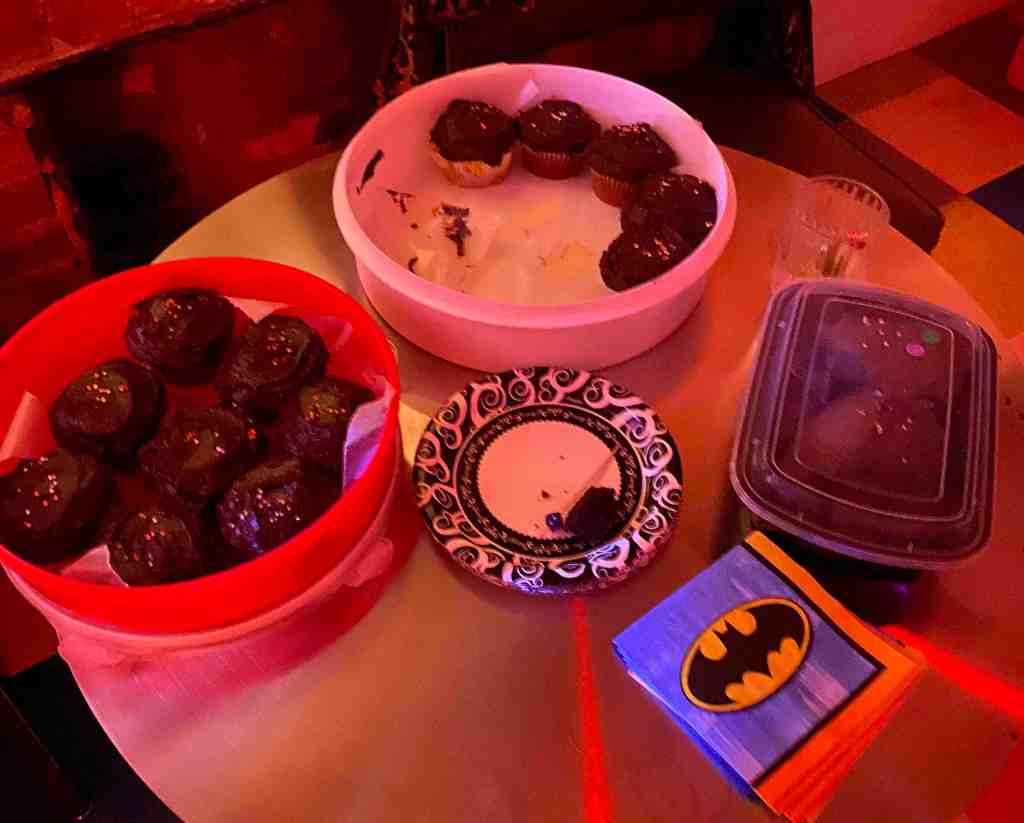
Birthday cupcakes at Funky Kingston!
Anyway, the Funky Kingston had folks funkin’ all over the place. The historic stone building that houses The Salt Box could barely contain the fantastic rhythms that Mr. Boyko and The Phast One were letting loose! Miss Nancy baked some pumpkin/chocolate birthday cupcakes that were devoured pretty quickly.
These Funky Kingston happenings take place on the fifth Saturday of the month, when there is one. The next one will be March 30. Start planning now to make the scene for this fabulous party.
Here’s a list of records played by Phast Phreddie the Boogaloo Omnibus at the Funky Kingston:
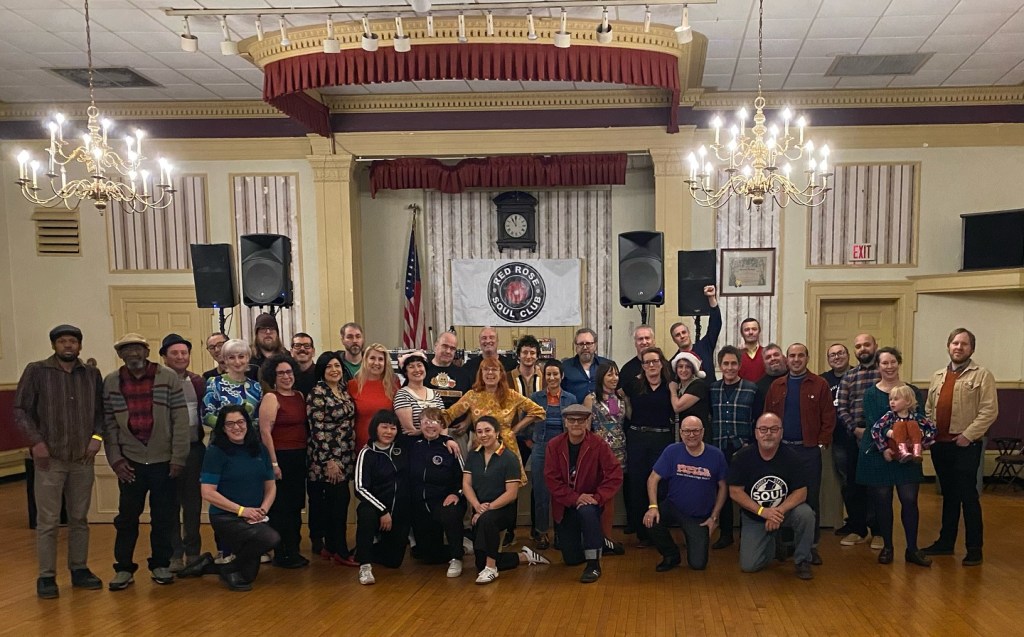
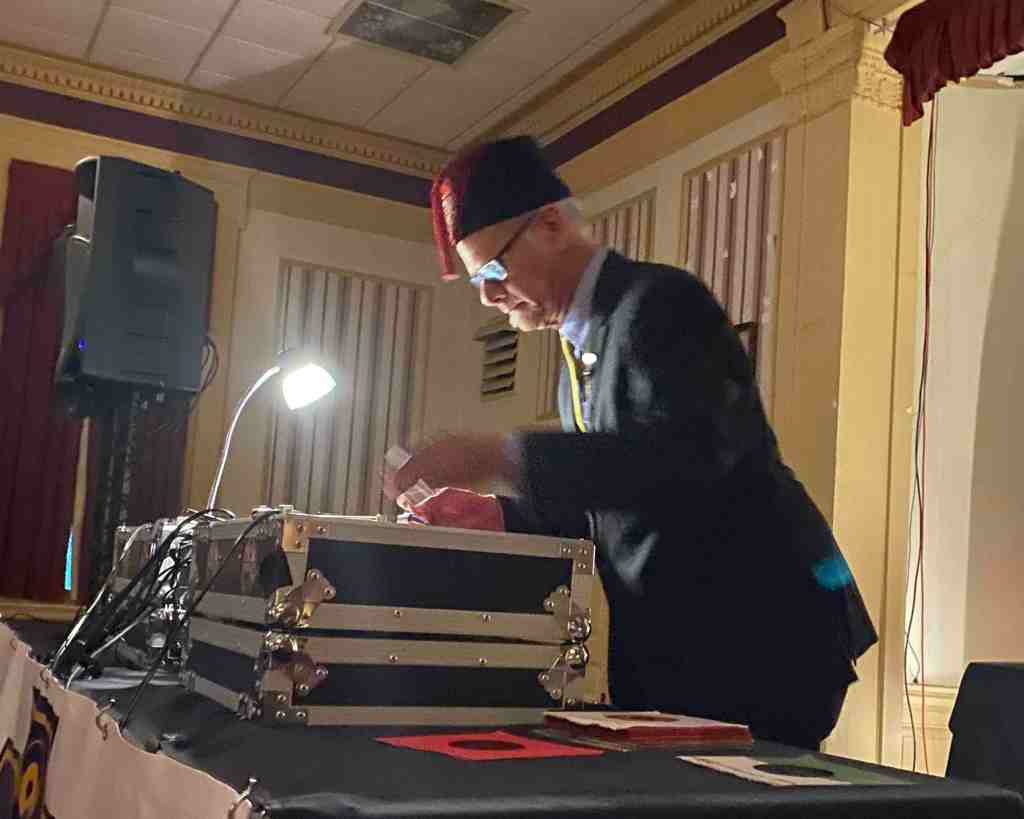
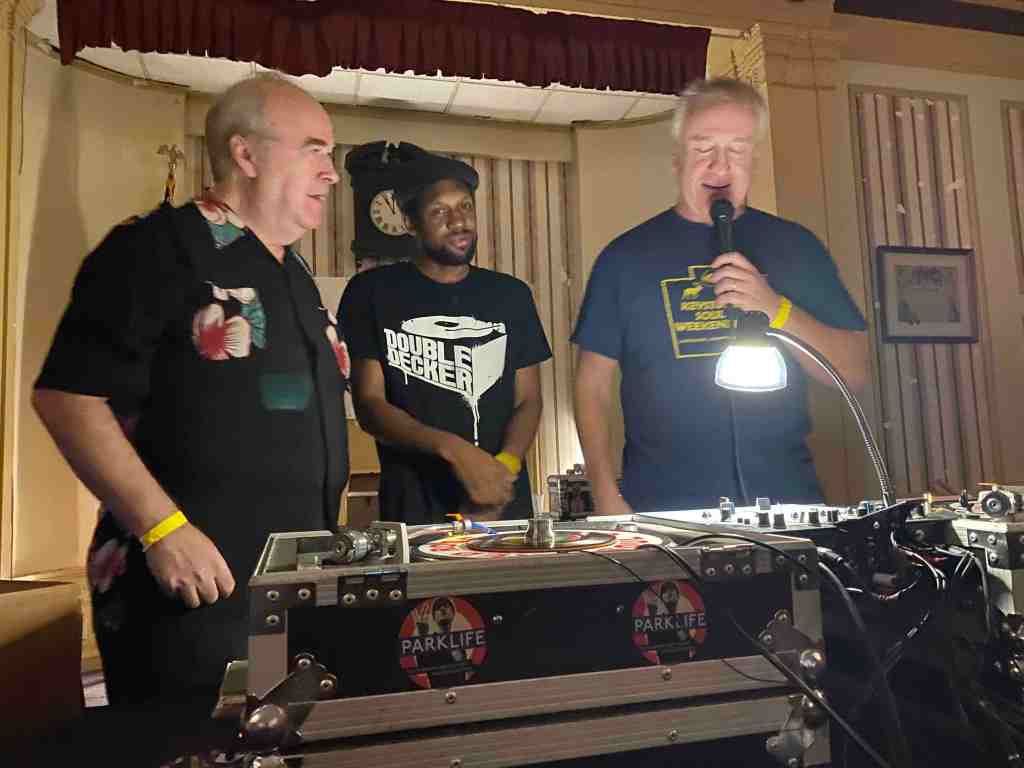
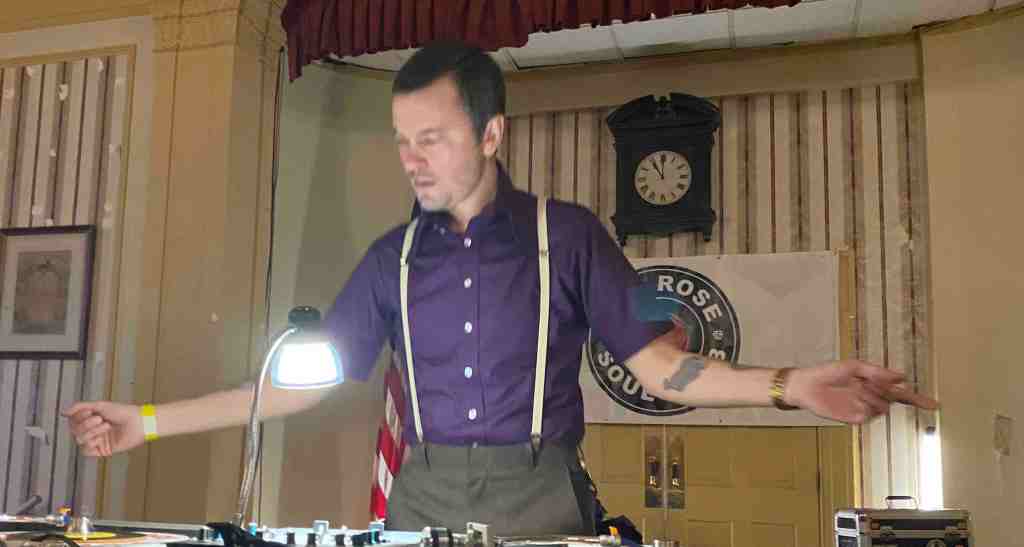
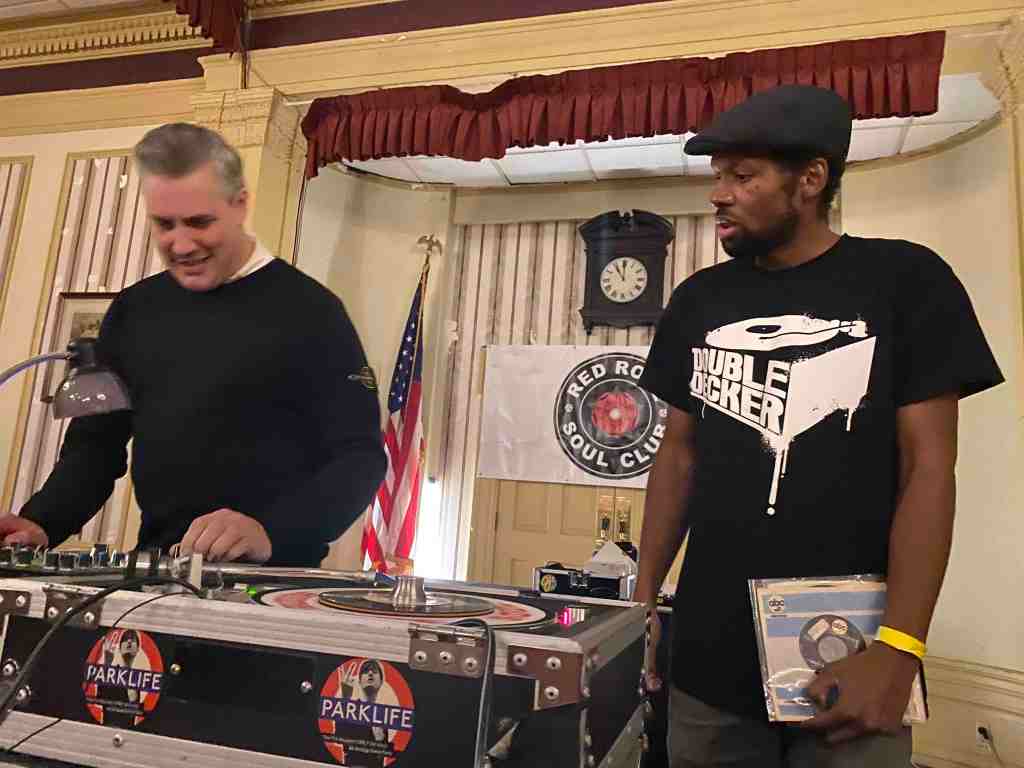
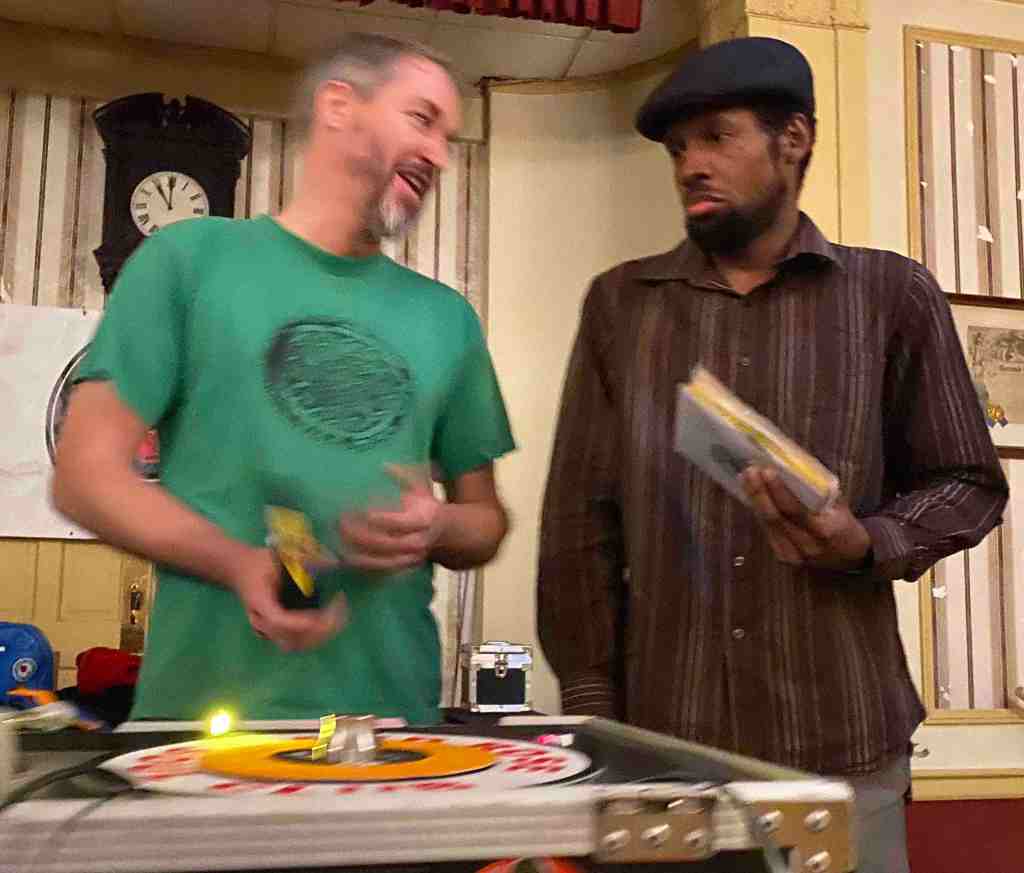
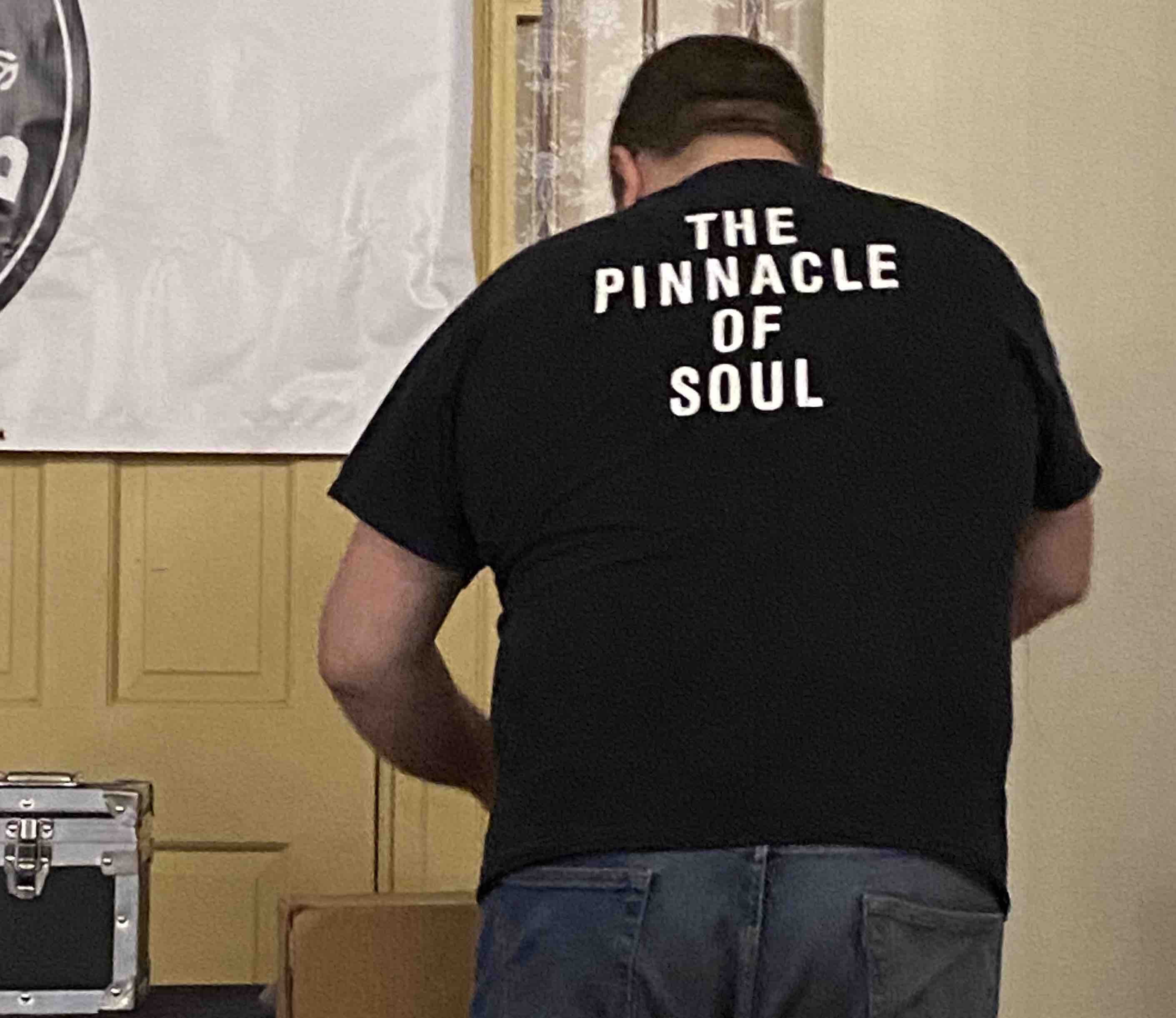
The Keystone State Northern Soul Weekender is perhaps the premier soul music dance party in the United States—certainly east of the Mississippi River, anyway. Every year for the last eight years (skipping 2020 because of the pandemic) a bunch of world class soul music DJs (and Phast Phreddie the Boogaloo Omnibus, for some reason) are rounded up and together they present a high class event at the Elks Lodge in Lancaster, Pennsylvania. In previous years it was held in November, but this year—the seventh in the series—it took place on December 8, 9 and 10 (2023).
Julio Fernandez is a Spaniard who now lives in Lancaster and he is the chief architect of the event. He produced another excellent experience.
Folks came from all over the east coast to dance and to dig. We’re always happy to see the contingent from New York City. We understand that folks also came from California, Maryland and Virginia and probably places we’ve never been. Plus, record dealers from around the area–and even Georgia!–were on hand to sell records—mostly 45s— and folks—mostly the DJs—dropped some heavy, heavy loot on them. Not only that, but this year KSNSW corresponded with the monthly record show hosted by the Keystone Record Collectors. More records!!!
There were a bunch of new faces selecting records this year: Ed Maruscello (Sweet Side Records, Glens Falls), David McDaniel (Nor’Easter Soul Club, Albany), David John (DJ) Bywell (an English fellow now living in Southern California), Sean Connors and Eric Zimmerman (both of the Philly Soul Club), Debbie Benjamin-Koller (Heart of Chicago Soul Club) and Mr. Finewine (Down Town Soulville, WFMU). Returning for more action were Tony Chackal (Atlanta), Chey Frazier (Easton), Mikey Post (Daptone), Eric Svirida (Long Island), Paula Carrillo (Minneapolis), George Rodriguez (Hipshaker, Minneapolis), Cher Gingras (Slow Fizz, Toronto), Big Al Aitchison (Soulfinger, NYC), Yana Lil’ Jerk (Soul, Soul, Soul, NYC), Scott Boyko (Garden State Soul Club), and the tag-team of Chas Gibson & Ivy A. Gogo (New Paltz). Plus, there was an unexpected extra DJ when Kenny McDonald, a fellow from Scotland who is associated with the Emerald City Soul Club, tag-teamed with his friend George Rodriguez on Saturday night.
The DJs played fantastic records all weekend long and the Elks Lodge’s fabulous wooden dance floor was crowded nearly the entire time. With so many DJs on hand, Mr. Fernandez had to ‘double deck’ them during the afternoon sessions—that is, two DJs split the 30 minute slots. Some approached this by each DJ taking 15 minutes. Others took turns spinning a disc. Phast Phreddie took the latter approach when he double decked with Mikey Post during the Saturday afternoon gig and with Chey Frazier on the Sunday Soul Day. Brother Weems, once a member of the legendary Empire State Soul Club organization, was the MC on Friday and Saturday nights and he did a splendid job.
Miss Nancy was on hand with double-chocolate cookies and her signature vegan brownies. Here’s a list of all the records played by Phast Phreddie the Boogaloo Omnibus at the Seventh Keystone State Northern Soul Weekender:
This is The GO Mechanism, an audio Odyssey that will take you to the empty place in your fire engine. It is conducted by Phast Phreddie, who is inclined to share musical discoveries with those whose minds are open and mouths are shut.
The GO Mechanism first airs as a Saturday Night Special on the Luxuria Music interweb streaming hustle—this one will air (aired) on November 18—and will hang there as a podcast for a few weeks until The GO Mechanism producers get around to mounting it on the mixclouds and here in The Boogaloo Bag.
In order to achieve a complete GO Mechanism experience, the listener is strongly urged to read this post before, after or during the time that you listen to the show in order to understand what’s happening. We don’t stop for red lights, nor do we stop the action in order to back-announce records. A complete track listing of the songs heard in the GO is here in The Bag.
An hour into the trip there will be a Science Corner where we discuss some interesting musical matters. For some reason, this Science Corner will feature the song “Night Train.”
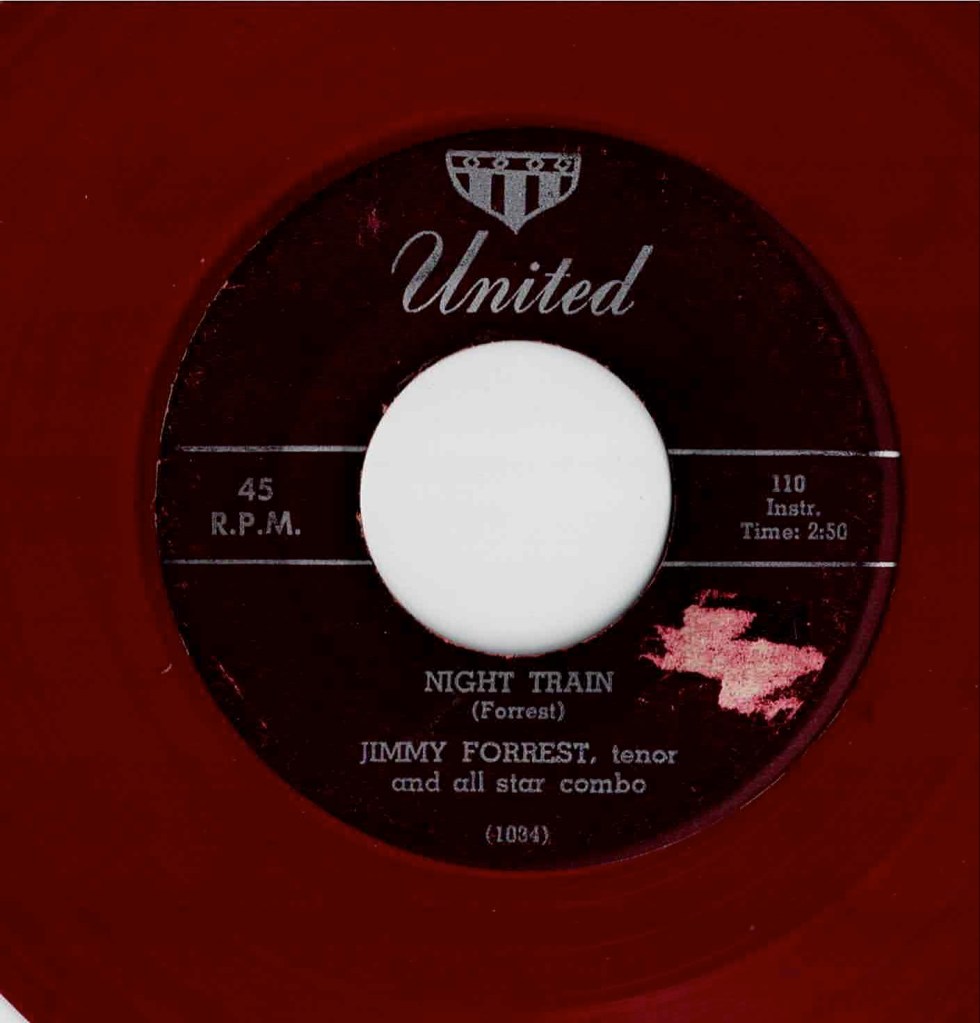
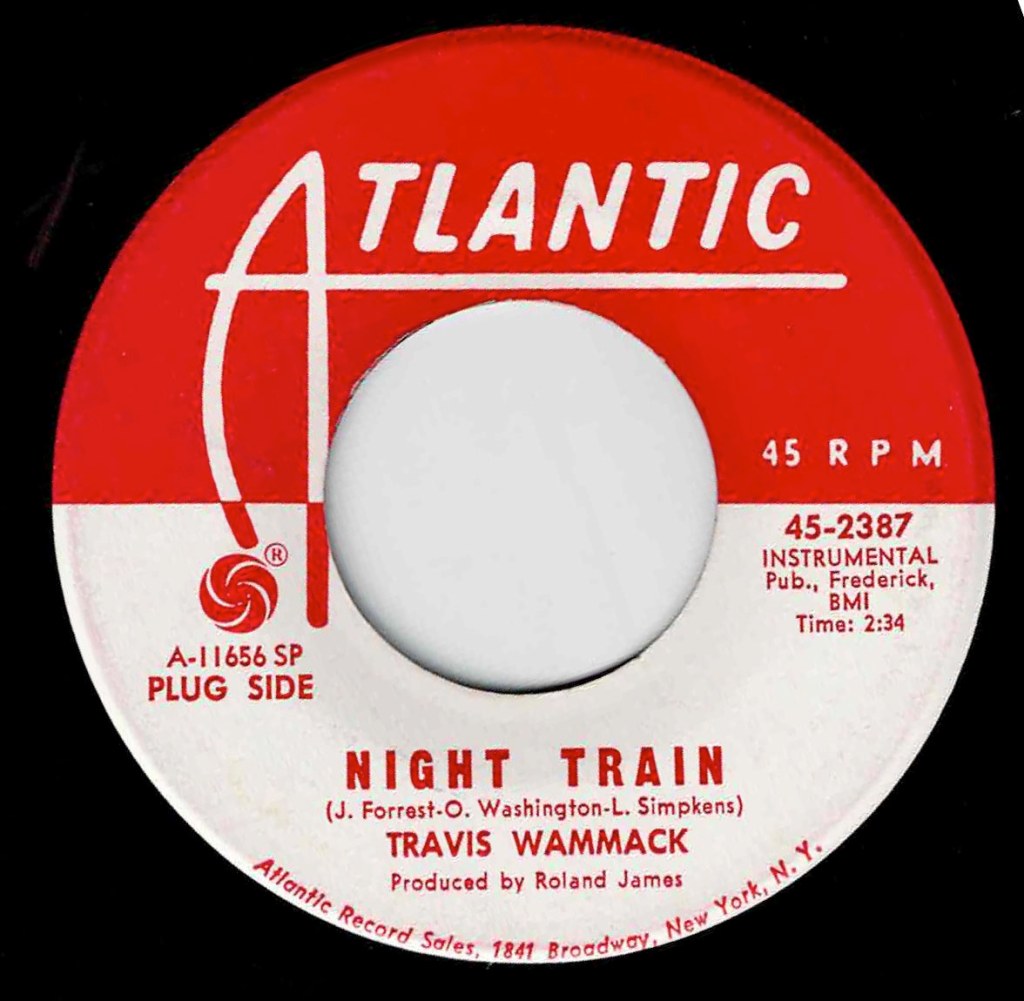
Original 45 RPM pressing with red vinyl!
“Night Train” is a song that was derived from a Duke Ellington composition called “Happy Go Lucky Local.” That composition was part of a four part larger composition by Ellington known as “The Deep South Suite,” as heard in The Science Corner. As per Ellington, “The Happy Go Lucky Local” refers to a slow moving train that travels through the South picking up passengers along the way in towns no one has ever heard of. The original composition is about six minutes long, but was cut in two—Part 1, Part 2, to fit on each side of a 10” 78 RPM record. It was recorded on November 25, 1946—two days after the entire “Deep South Suite” was performed at Carnegie Hall. Part 1 is rather abstract and modern sounding, without a distinctive theme, but with some very cool playing by the members of the Famous Orchestra—the horns squawk and go ‘wah wah’ as the train goes by. In Part 2, the musical theme that we all know as “Night Train” appears and is heard through the rest of the composition.
The Ellington Orchestra employed a series of fantastic tenor saxophonists, including Ben Webster, Al Sears, Jimmy Forrest, and Paul Gonzalves. Forrest was the lead tenor soloist only for about six months or so, from the summer of 1949 to January 1950. When he left he formed his own group and soon scored a recording contract with United Records, a Chicago-based label. His first session produced “Night Train,” incorporating the melody he must have heard when he was working with Ellington. This version of “Night Train” was a Number One R&B hit in early 1952. Its moody and greasy feel made it a favorite in jukeboxes all over the country. It would receive many cover versions, including one by Buddy Morrow—a swing-era trombonist whose recording was a pop hit internationally.
There is also a vocal version, with lyrics written by Lew Simpkins—who was a co-owner of United Records—and guitarist Oscar Washington and it was first sung by an early R&B vocal group called The Four Blazes which also recorded for United Records. Although the song is almost always performed as a an instrumental, the names of Simpkins and Washington have since been attached and thus they share in the songwriting royalties. The vocal version heard in The Science Corner is by Wynonie Harris. He was a great blues shouter who had more than a dozen major R&B hits through the last half of the forties. Somehow, he was not able to transfer this success into Rock’n’Roll stardom the way others, like Big Joe Turner, did. Harris’ career floundered after about 1953. His version of “Night Train” has been a favorite of The GO Mechanism producers ever since they found the 78 way back in the seventies.
About ten years after Jimmy Forrest cut “Night Train,” James Brown re-worked the melody—he sped it up, messed with the rhythm and, contrary to Duke Ellington’s initial concept, shouted out major cities as destinations that the “Night Train” was taking him to. It was a big hit for him in 1962. The music behind the Science Corner narration is a James Brown version of the song, but without the cities shouted out. It is only found on the album Mighty Instrumentals. The J.B. version continues to be the most popular recording. It has inspired a lot of cover versions by garage bands and R&B combos. Some of our favorites include versions by Buddy Lucas, Paul Revere & the Raiders, The Champs and especially the Travis Wammack version that ends this episode of The GO Mechanism.
What did Duke Ellington think about “Night Train.” Not much. Read an account of it in All About Jazz.
The Willows were a girl group from Canada. Originally called The Girlfriends, they appeared regularly on a local TV show. In 1966, they were signed to M-G-M records and cut two singles with producer Tom Wilson. “Outside the City” is our favorite.
Ambrose Brazelton was a physical education teacher who recorded several albums of workout programs. Some of them have been kept in print by Smithsonian/Folkways. Presented here he directs the listener for a workout to the tune of The Beatles song “Ticket to Ride.” The Go Mechanism producers encourage all listeners/readers to exercise regularly in order to maintain good physical and mental health.
“Nuttin’ Out Jones” by the Elvin Jones/Jimmy GarrisonSextet features a solo by Sonny Simmons on the English horn—a double-reed instrument usually heard in symphony orchestras, not post bop jazz combos. It is the perfect background for Danny Weizmann’s recitation of his “For Jack Jones” poem.
When The GO Mechanism producers briefly lived in Hermosa Beach, California (circa 1973), Terry Riley’s “In C” was often on the turntable when they were discussing matters of great importance with roommates. Thus the track was referred to as “the talking record.” It is incorporated here as the bed music for resident GO Mechanism narrator Oweinama Biu to read the tortoise parable from the novel Things Fall Apart by the African writer Chinua Achebe.
Captain Beefheart with Zoot Horn Rollo in a photo taken by one of my high school chums at a gig we were at during the early seventies
Ya gotta like box set anthologies and deluxe edition reissues. Sometimes, in order to fill them out, the compilers will add weird in-studio recordings that didn’t make it to the real record or album during its natural life. We have two examples in this GO. The first is The Yardbirds studio recording of “Here ’Tis” in an instrumental version. The song was previously available as a live recording on the Having a Rave Up album. This version comes to us via the Train Kept a Rollin’ box set that Charly Records of England issued a bunch of years ago. The second example is “Big Eyed Beans From Venus” by Captain Beefheart and The Magic Band—but without Captain Beefheart!! It appears on a deluxe, two-disc version of Clear Spot that came out last year.
Guitar Ray’s version of “You’re Gonna Wreck My Life” is a mind blower. The song was written and first recorded by Howlin’ Wolf in his inimitable style. Guitar Ray took the track into a smooth, seventies soul territory. Ray—real name Raymond Washington—was a New Orleans cat, but this song sounds like some of the cool Tyrone Davis records that were recorded in Chicago around this time. The record is very rare and highly desired; original copies on the Shag label have fetched more than a thousand dollars! Luckily, we have a cheap reissue!!!
Juan Virginio Rodriguez Acosta is the real name of Willie Baby—who also recorded as Willy El Baby and as Willie (Baby) Rodriguez. He was born in Cuba and once sang for the legendary mambo/salsa band La Sonora Matancera that included Celia Cruz early in her career. Who knows how this hot “Hot Buns – Part 1” record was recorded and released—with distribution by Atlantic Records! It’s a great, drum-heavy, boogaloo that drives folks nuts. The flip, “Hot Buns – Part 2,” is even crazier and we will feature it in a future GO.
Willis Jackson
Willis Jackson was a great tenor saxophonist who worked in R&B as well as jazz fields during his career, which began with a stint in the Cootie Williams Orchestra. He then cut several early R&B records for the King and Atlantic labels and was married to Ruth Brown for a while. He is a GO Mechanism favorite—many of his singles are in the library of the GO Mechanism producers. In this GO we present “Goose Pimples,” a Mod jazz raver that, for some reason, Jackson forgot to solo on. Instead, the track features the organ playing of Butch Cornell, a little known keyboard player who also made records with Boogaloo Joe Jones and Stanley Turrnetine. Why wouldn’t he be featured on the composition, since he wrote it! Cornell’s playing on this track is excellent so we’d like to ask him to stand up and take a bow!
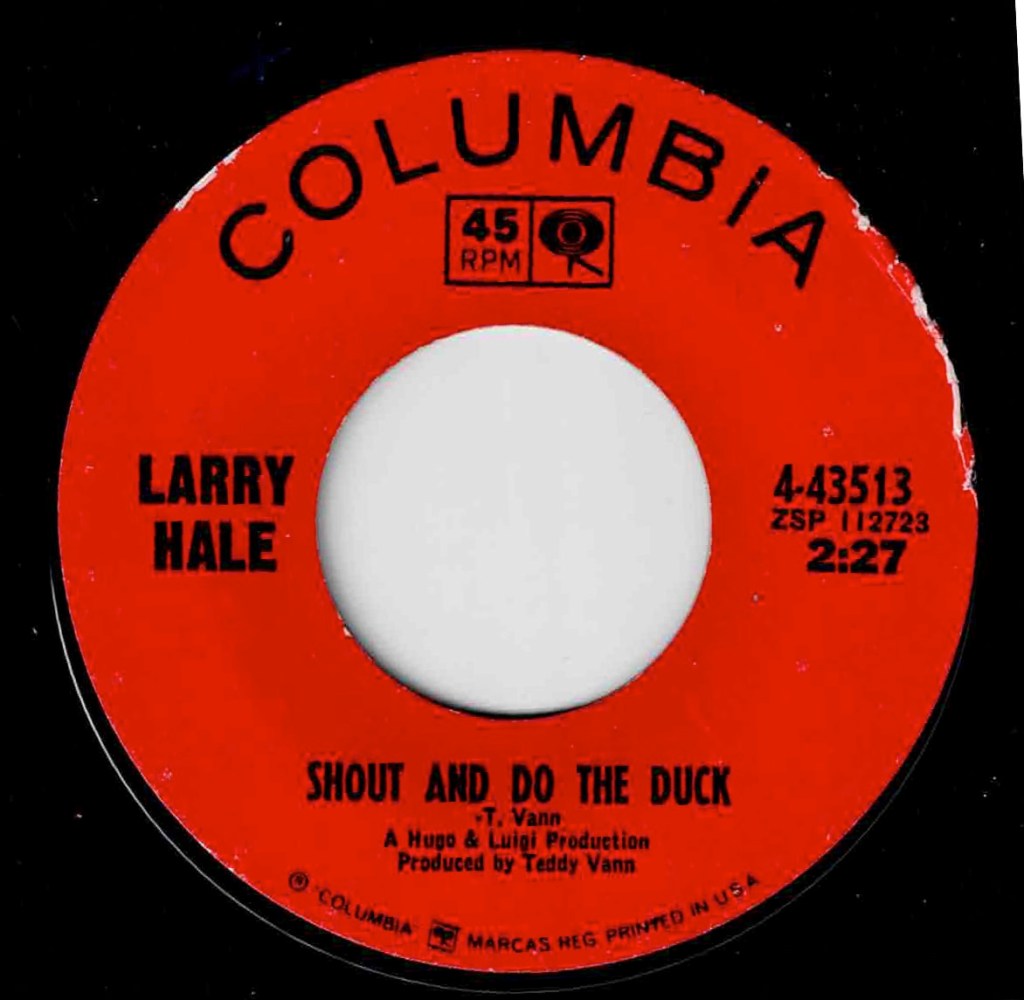
Larry Vivo Cappel was an excellent but way underrated, gospel-influenced soul singer who cut records as both Larry Hale and Tony Fox (dig his “I Dream One Day” in GO Mechanism Number Seven). He was also the lead singer for The African Beavers, a soul group that has been mistaken for The Isley Brothers with Jimi Hendrix recording under another name; that’s how good the records are. “Shout and Do the Duck” is a fantastic duck record that puts his gospel influences on full display.
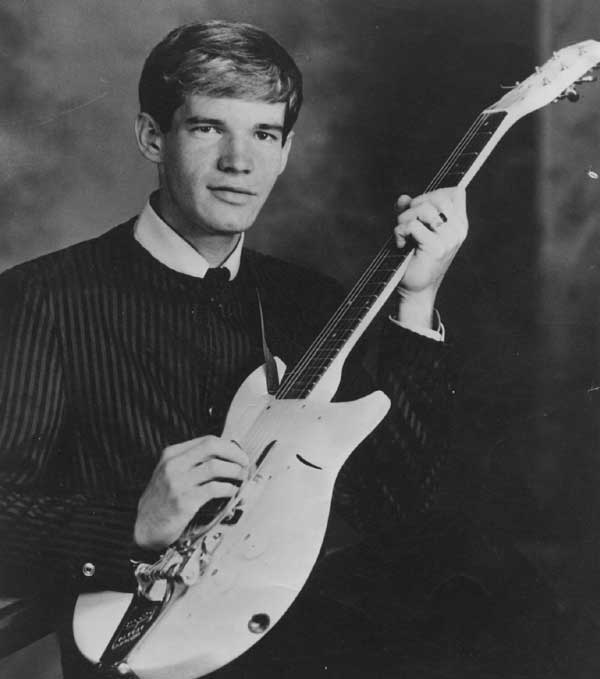
Travis Wammack
This GO closes out with another version of the subject of this Science Corner—“Night Train.” This one is by Travis Wammack, a Mississippi-born guitarist who made his mark in Memphis. When he was about 17, he had a hit record with “Scratchy,” a wild guitar workout instrumental that is not too loosely based on “Comin’ Home Baby.” Wammack was a pioneer in distorting his guitar and using unusual effects. His version of “Night Train” is another wild guitar workout. He upped the tempo to punk rock speed and just whammed the heck out of his guitar for about two and a half minutes. It is one of the greatest records of all time and it closes out this edition of The Go Mechanism.
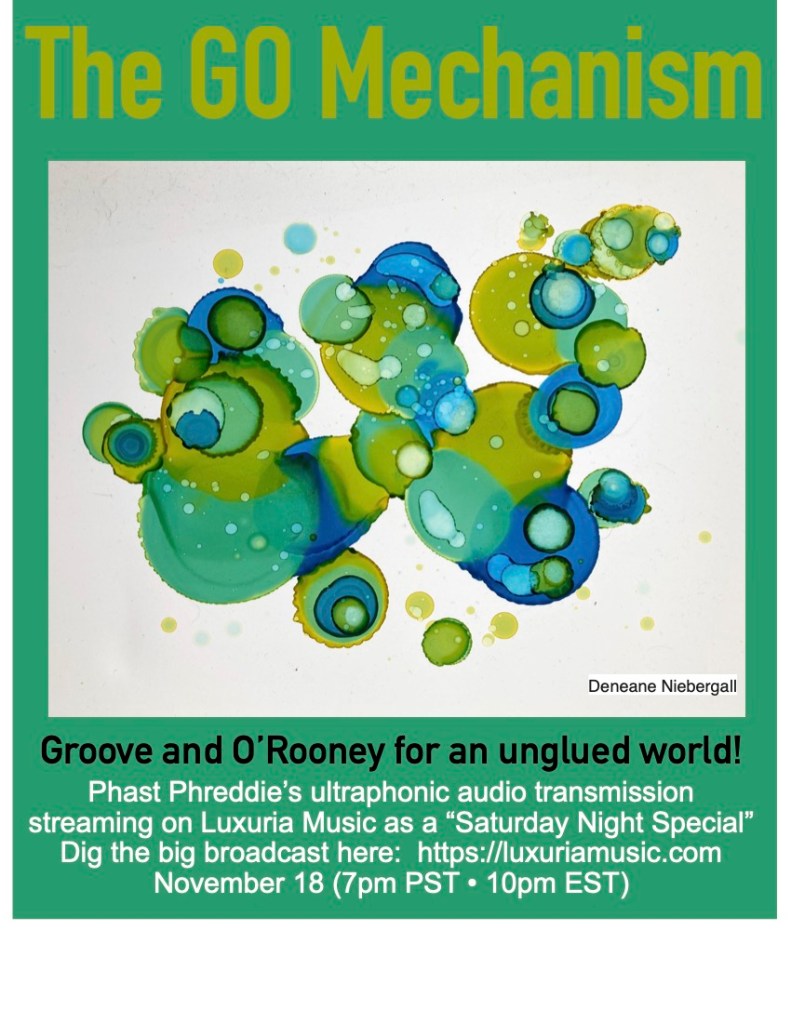
The graphic image employed to represent this GO Mechanism is a painting by our friend Deneane Niebergall. The piece is titled “Cool Orbs” and we display it here sideways. Miss Deneane is a Kingston, NY artist who has exhibited her work in San Francisco, as well in galleries around the Hudson Valley. Also, she has worked in film and even appeared as a zombie in Jim Jarmusch’s The Dead Don’t Die. The Boogaloo Bag writers have an unwritten agreement with her—she comes to our DJ gigs and we go to her art openings!
The GO Mechanism is produced whenever we feel like it and it incorporates exclusive, copyrighted Vitaphonic, Ultra-sonic and Quasi-Tonal methods in order to provide a higher standard of standardness. Legacy GO Mechanisms may be found on the Mixclouds as well as here in The Boogaloo Bag.
Dig the show here:
The GO Mechanism originates on the Luxuria Music interweb streaming hustle as a Saturday Night Special. We thank the Luxuria Music powers-that-be for giving us the opportunity to present this program over their deluxe electronic audio delivery system for your edification. Please support Luxuria Music any way you can. We suggest you get as much money as you can—preferably unmarked tens and twenties—load it all into a shoe box and send it to Luxuria Music. Or just go to the Luxuria Music web site and buy something from the store.
Here is a complete list of all the songs played on GO Mechanism Number Eighteen:
Earl Bostic—Lester Leaps In (King—opening theme)
Bud Powell—Bouncing With Bud (from album Complete Blue Note and Roost Recordings; Blue Note)
Jon Thomas—Tizzy (Junior)
The Willows—Outside the City (M-G-M)
Les and Larry Elgart—The Garbage (Columbia)
The Quartet Trés Bien—Caravan (from LP Bully!; Atlantic)
Ambrose Brazelton—Ticket to Ride with narration (from LP And The BEATles Go On and On—Hits of The Beatles; KBH Productions)
Enoch Light—Over Under Sideways Down (from LP Enoch Light’s Action; Project 3 Total Sound)
Elvin Jones & Jimmy Garrison Sextet featuring McCoy Tyner—Nuttin’ Out Jones (from LP Illumination!; Impulse)
—Danny Weizmann—For Jack Jones
Stereophonic Space Sound Unlimited—Phantom Rider (Sheep; Switzerland)
Terry Riley—In C (excerpt) (from LP In C; Columbia Masterworks)
—Oweima Biu recites the tortoise story from “Things Fall Apart,” a novel by Chinua Achebe.
Orlando Julius—Wakalole (from LP Super Afro Soul)
Howlin’ Wolf—Mr. Airplane Man (Chess)
Sounds Incorporated—Taboo (Decca; UK)
Toussaint McCall—The Title Escapes Me (Ronn)
Terry Snyder & the All Stars—Mambo Jambo (from LP Persuasive Percussion Vol. 2; Command)
The Yardbirds—Here ’Tis (from album Train Kept a Rollin’; Charley; UK)
The Kingston Trio—Parchman Farm (Decca)
Oscar Peterson Trio, vocal by Clark Terry—Mumbles (Mercury)
Son House—Death Letter Blues (from LP Father of Folk Blues; Columbia)
Guitar Ray—You’re Gonna Wreck My Life (Shag)
Duke Ellington & His Famous Orchestra—Happy Go Lucky Local – Part 2 (Musicraft)
James Brown—Night Train (from LP Mighty Instrumentals; King)
Jimmy Forrest—Night Train (United)
Wynonie Harris—Night Train (King)
Bettini & His Orchestra—Tequila (from LP Cha-Cha-Chas, Mambos, Rhumbas; Vox)
Willie Baby—Hot Buns Part 1 (Ding Dong)
Willis Jackson—Goose Pimples (Cadet)
The Dee Felice Trio—In Heat (Bethlehem)
Chuck Edwards—Bullfight #2 (Rene)
Steel Pulse—Babylon Makes the Rules (Island; UK)
Johnny Otis & His Orchestra—Boogie Guitar (from LP The Original Johnny Otis Show; Savoy)



























































 boogaloobag