Back in early 1992, we were getting ready to move from Albany, NY to Brooklyn, so we decided to sell some records at a local record show in order to lighten the load. We moved some units, made a little money, but the thing we remember most was a bunch of folks running around the room, looking through old 45s, wearing T-shirts with “Empire State Soul Club” emblazoned on them. “What was this?” we thought.
A couple months after the move, we noticed an advertisement in the Village Voice for The Empire State Soul Club—a sixties soul dance night at the Irving Plaza. Intrigued, we made the scene. It was a gas, with DJs playing some great soul records: hits, non-hits, obscure stuff, not-so-obscure stuff. The place was packed and everyone was dancing. For some reason, it was a while before we were able to find out when the next one was. Soon we discovered that The Empire State Soul Club was holding events monthly at a downtown joint called the North River Bar, so we attended whenever we could. We also met some of the key players: Brother Weems, W. Lee, Jeff the Chef and Connie T. Empress, the Empress of Soul.
Before the end of the decade, Weems and the Chef moved out of town. A newcomer, Mister Fine Wine, was added to the DJ roster, and he was excellent. But soon after, Mister Lee and the Empress must have lost interest in keeping it all together because ESSC seemed to have fizzled out. It left a void that others tried to fill, including Greg Tormo’s Solid Hit Soul Club; as fabulous as it was, it never got off the ground. Unfortunately, W. Lee passed away in 2019. It wasn’t until the Subway Soul Club started in late 2001 that a new scene emerged—but that’s another story.
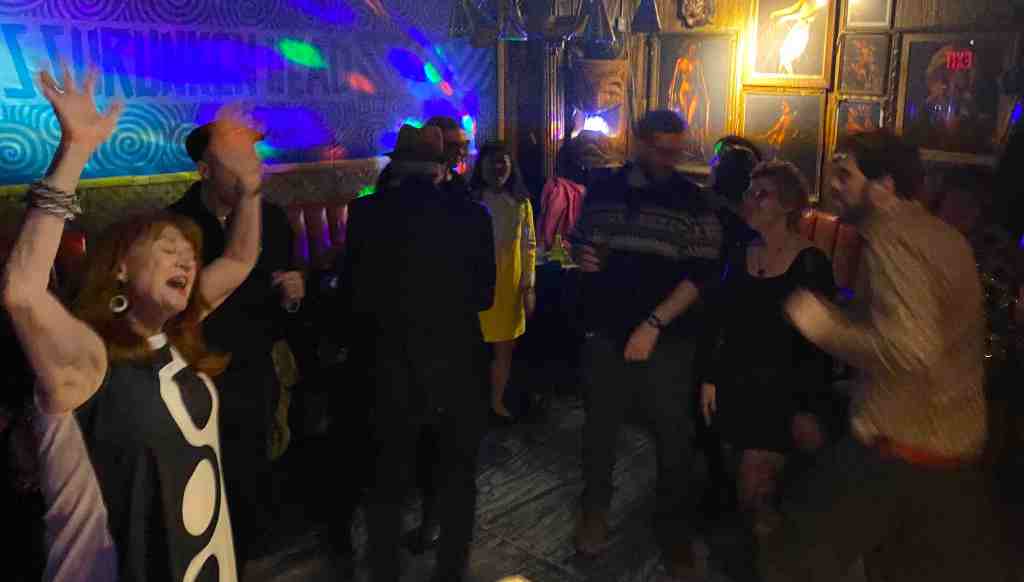
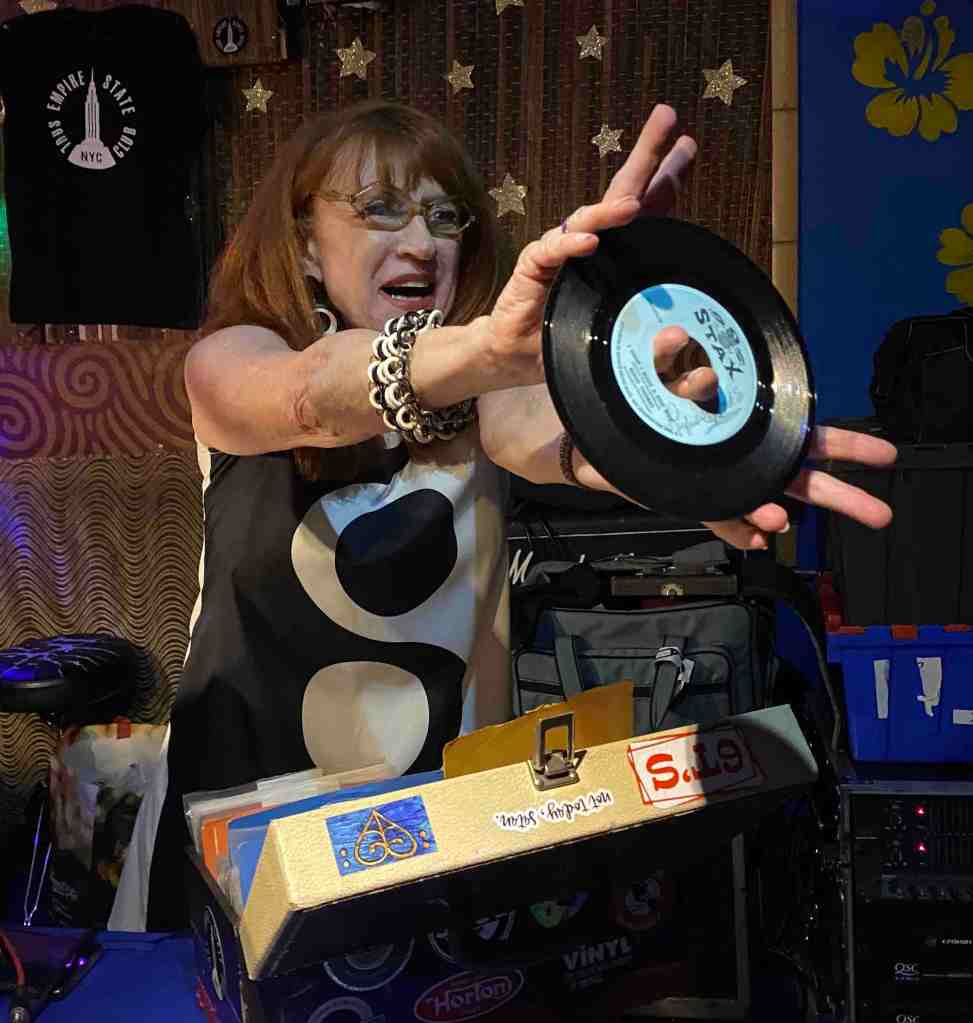
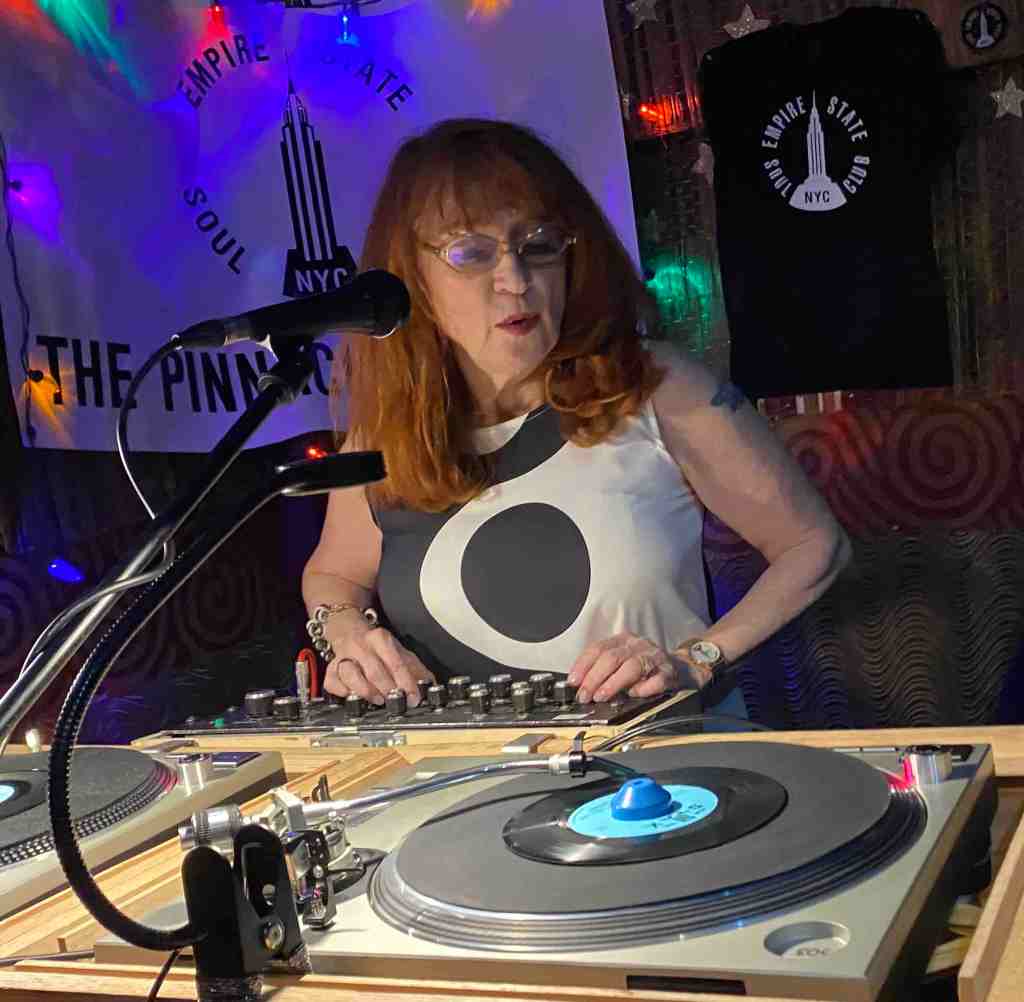
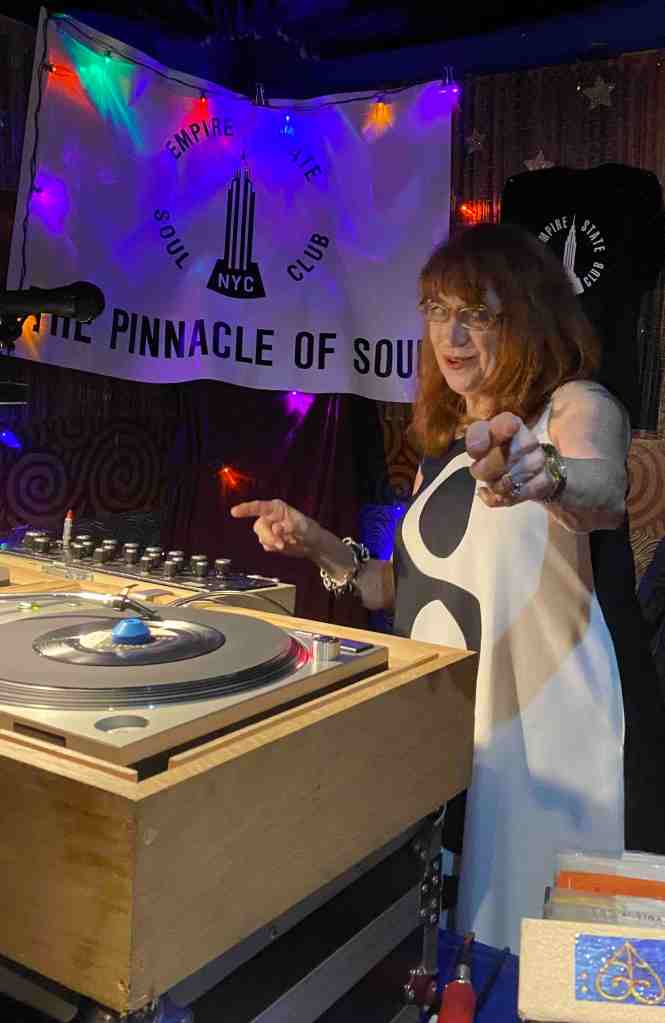
Over the last several years, The Empress has tried to keep the Empire State Soul Club name alive: passing out buttons, selling T-shirts, etc. A few years ago she started Soul Finger, another soul music dance night. Last year she decided to resurrect the Empire State Soul Club brand and brought it into Otto’s Shrunken Head on East 14th Street in Manhattan. Every month she would send out word about the new ESSC and it made us feel crummy because we now live about two hours north of The City, making attendance difficult.
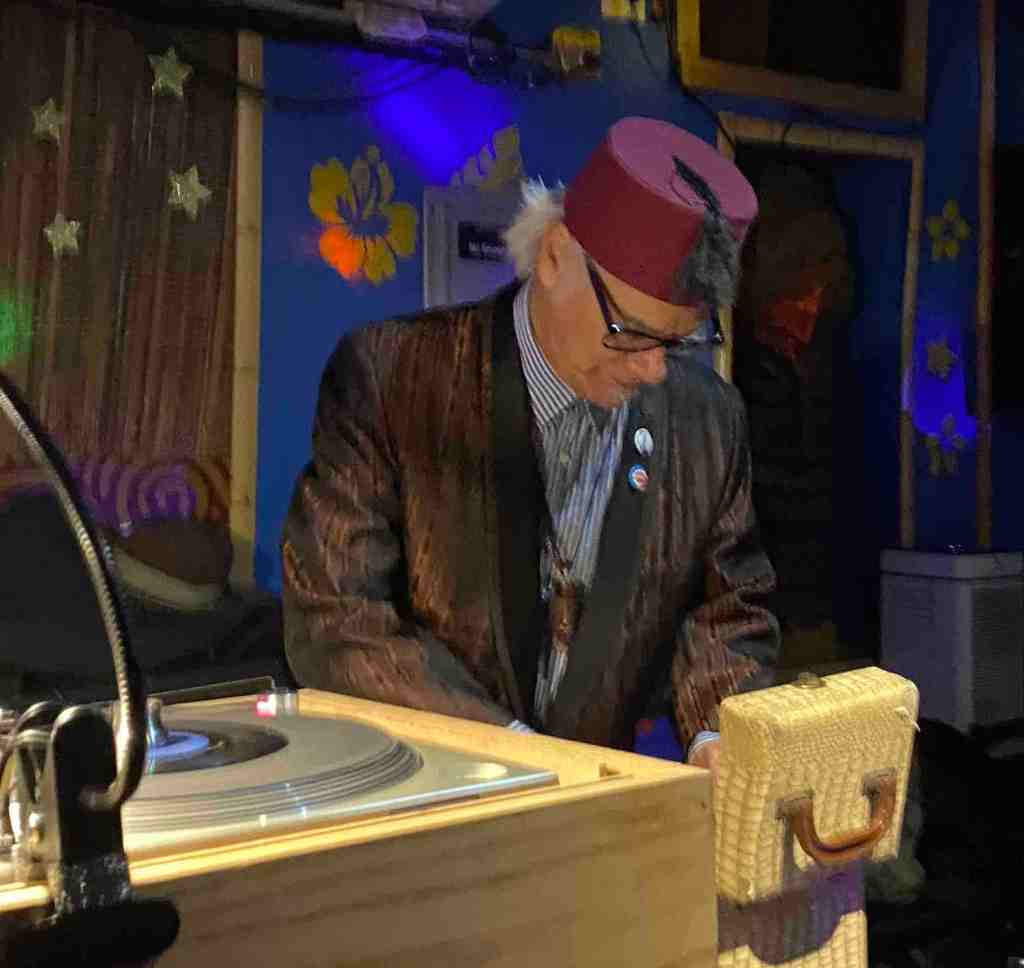
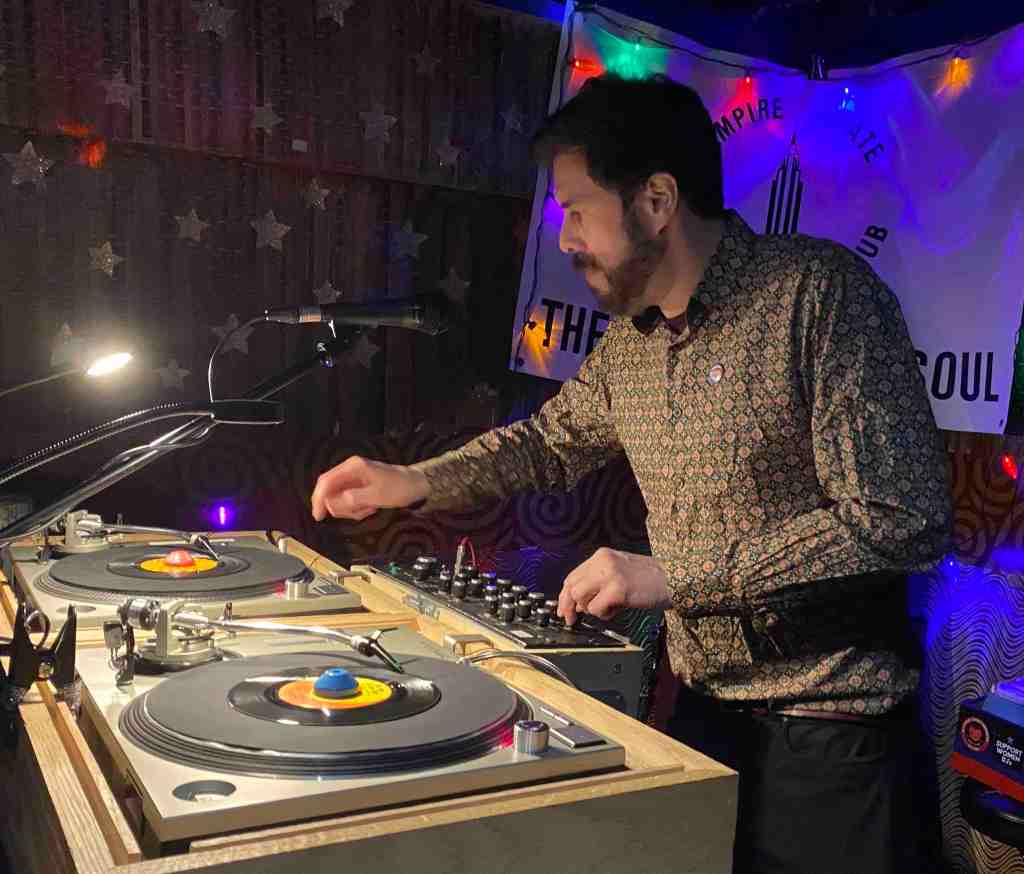
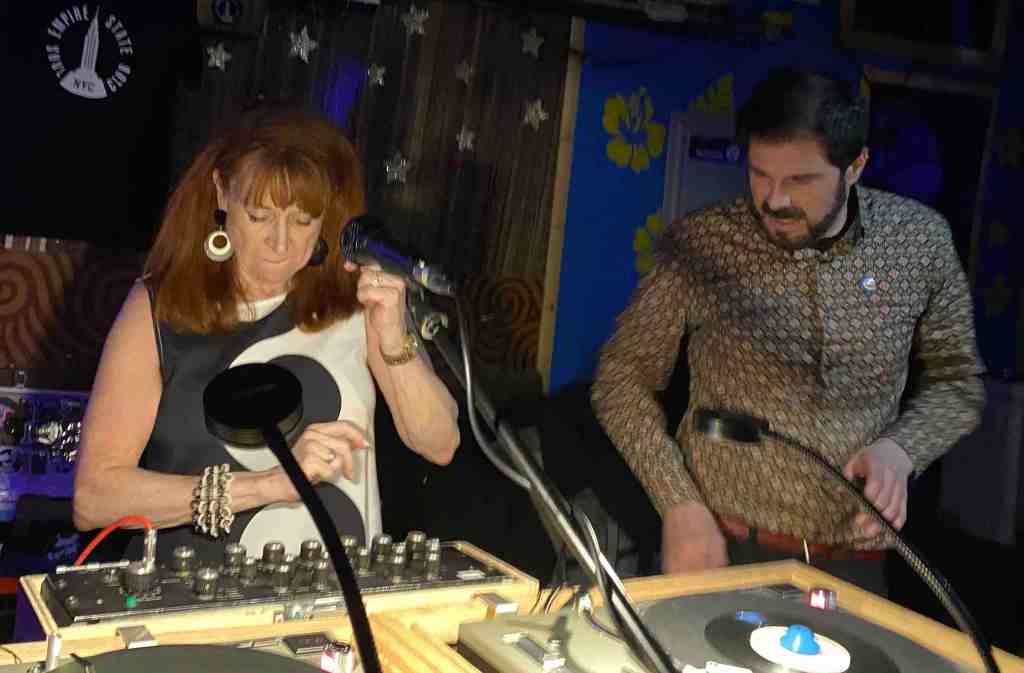
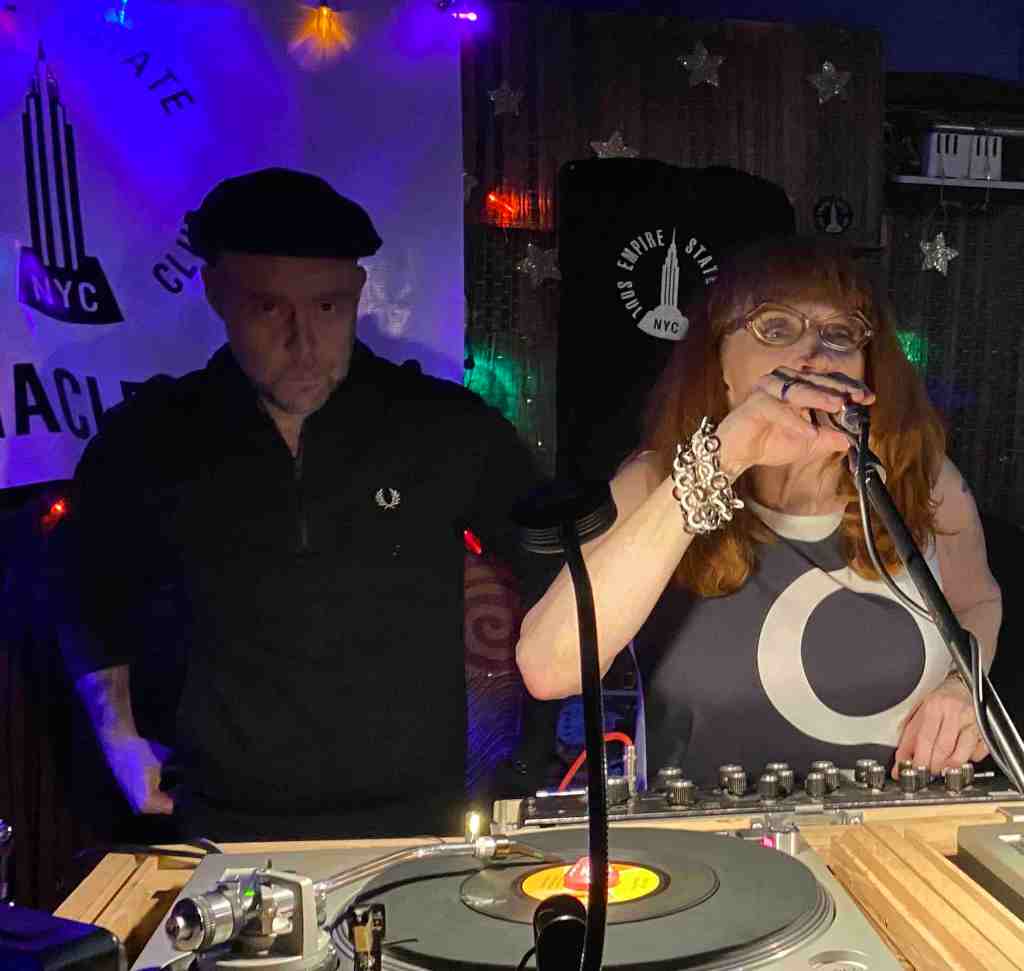
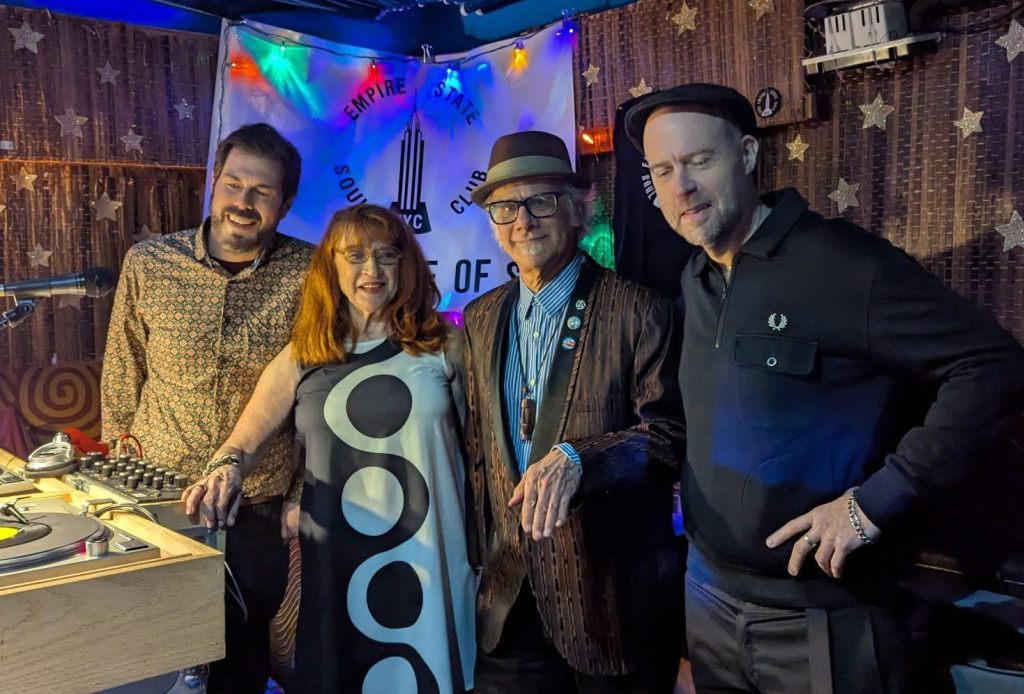
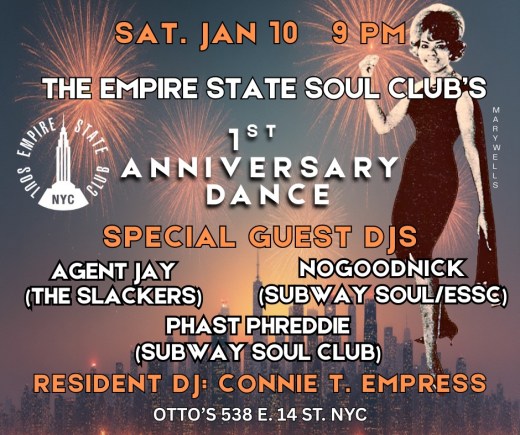
However, when the new Empire State Soul Club celebrated its first anniversary, The Empress turned to Phast Phreddie the Boogaloo Omnibus to be one of its guest DJs. As much as this was very important to him, it took a while to figure out if he could actually do it. After all, he was scheduled to work a Do The 45 in Beacon, NY on the night before. Would he have the stamina to do them both?
“IT’S THE EMPIRE STATE SOUL CLUB, DUMMY, JUST DO IT!!” his conscience screamed at him.
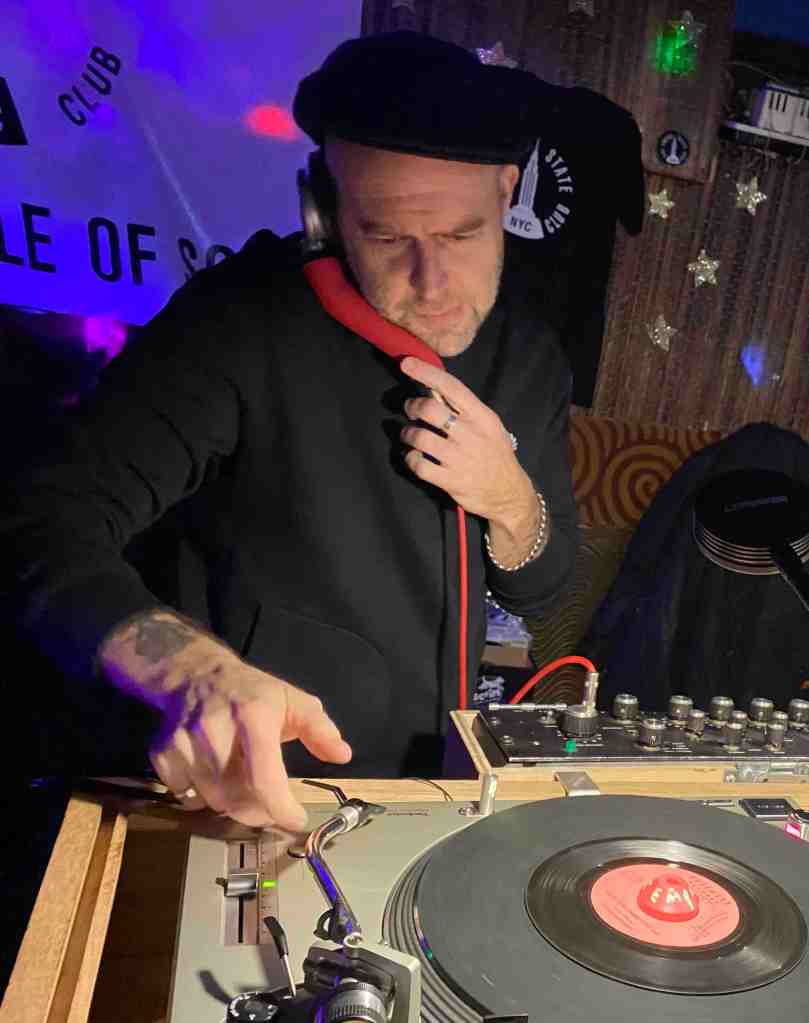
So he did it, along with two other fine guest DJs, and of course, the lovely, talented and gracious Connie T Empress. The other DJs were Nogood Nick and Agent Jay. Nick is a person we’ve known forever—he’s been a guest at the Subway Soul Club, Dynagroove, Wham-O-Watusi and recently Funky Kingston. The Boog has guested at Nick’s fabulous Rip Rig + Panic events. Agent Jay is someone we don’t know as well, but he’s a good guy and he played some really cool records. He’s the guitarist for the groovy, hip NY ska band The Slackers. We know him a little bit, but this is the first chance we had to DJ with him.
The Empress, of course, was the Empress of Soul! Miss Connie played some fantastic records. She rounded up the DJs thusly: She worked from about 9PM until nearly 10. The Boogaloo Omnibus was next and swung for about 45 minutes, then Agent Jay played his selections followed by Nogood Nick. After that, The Empress returned to the turntables and remained there until the very end. She played the best records of the night—at least the few we heard were the best. We had a long drive ahead of us, so we ditched out a little early.
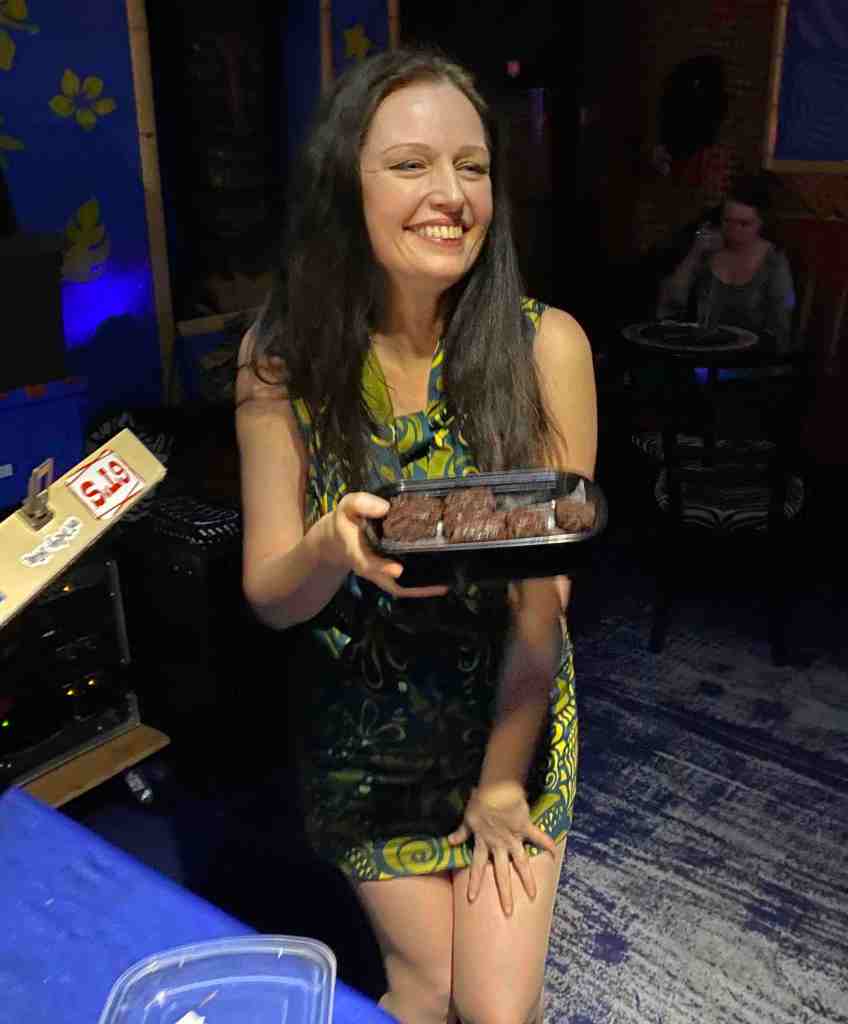
To sweeten things up, Miss Nancy made some brownies that were devoured pretty quickly. A special nod goes to DJ Kojak, Connie’s friend who brought an excellent DJ set up, including a big sub-woofer, that made the music sound like magic. A shout out here to our pal DJ Pete Pop who accompanied us down to The City. He enjoyed the Empire State Soul Club scene immensely and we discussed it all the way up the Taconic State Parkway on the way home. Also, a cat from AM New York was on the scene and wrote a little article about The Empress and her Empire. Dig it here!!
Thank you, Miss Connie T Empress for inviting us down to swing with you. We’ll invite you up for a Funky Kingston some time this year.
Here’s a list of all the records played by Phast Phreddie the Boogaloo Omnibus at the Empire State Soul Club one year anniversary party, held on January 10.
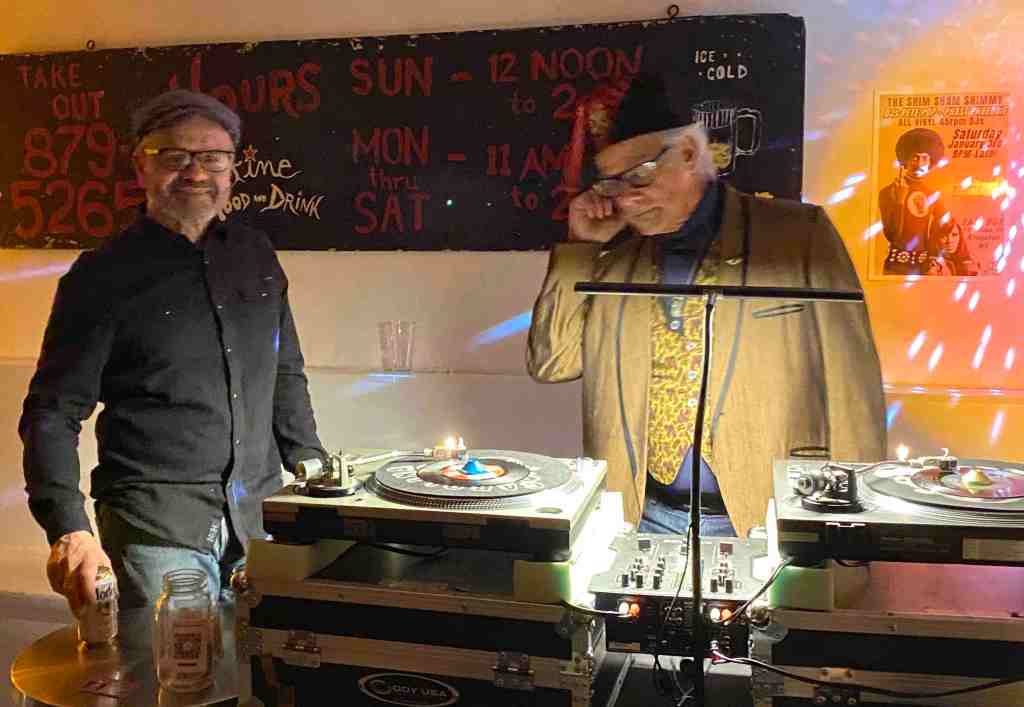
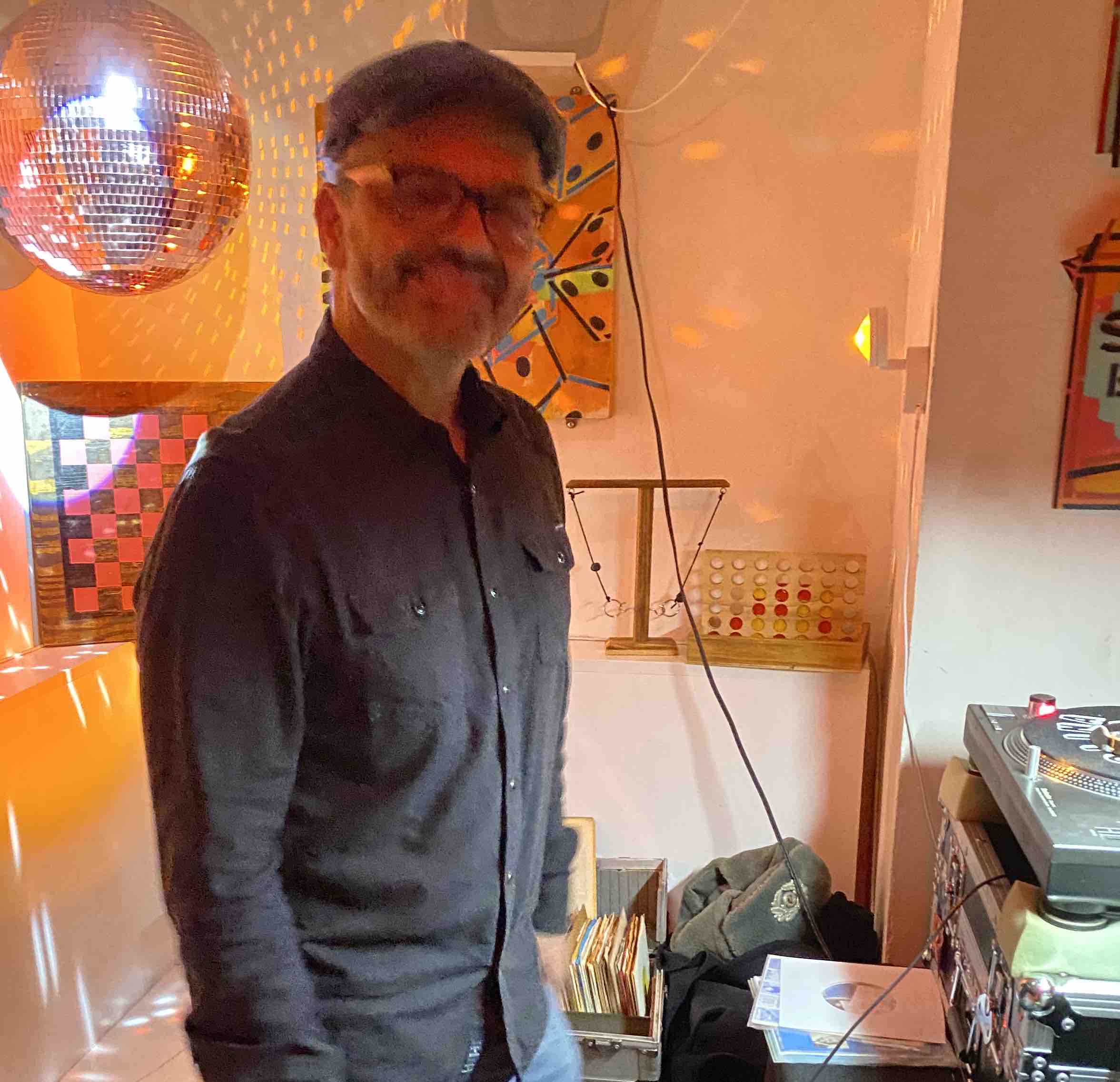
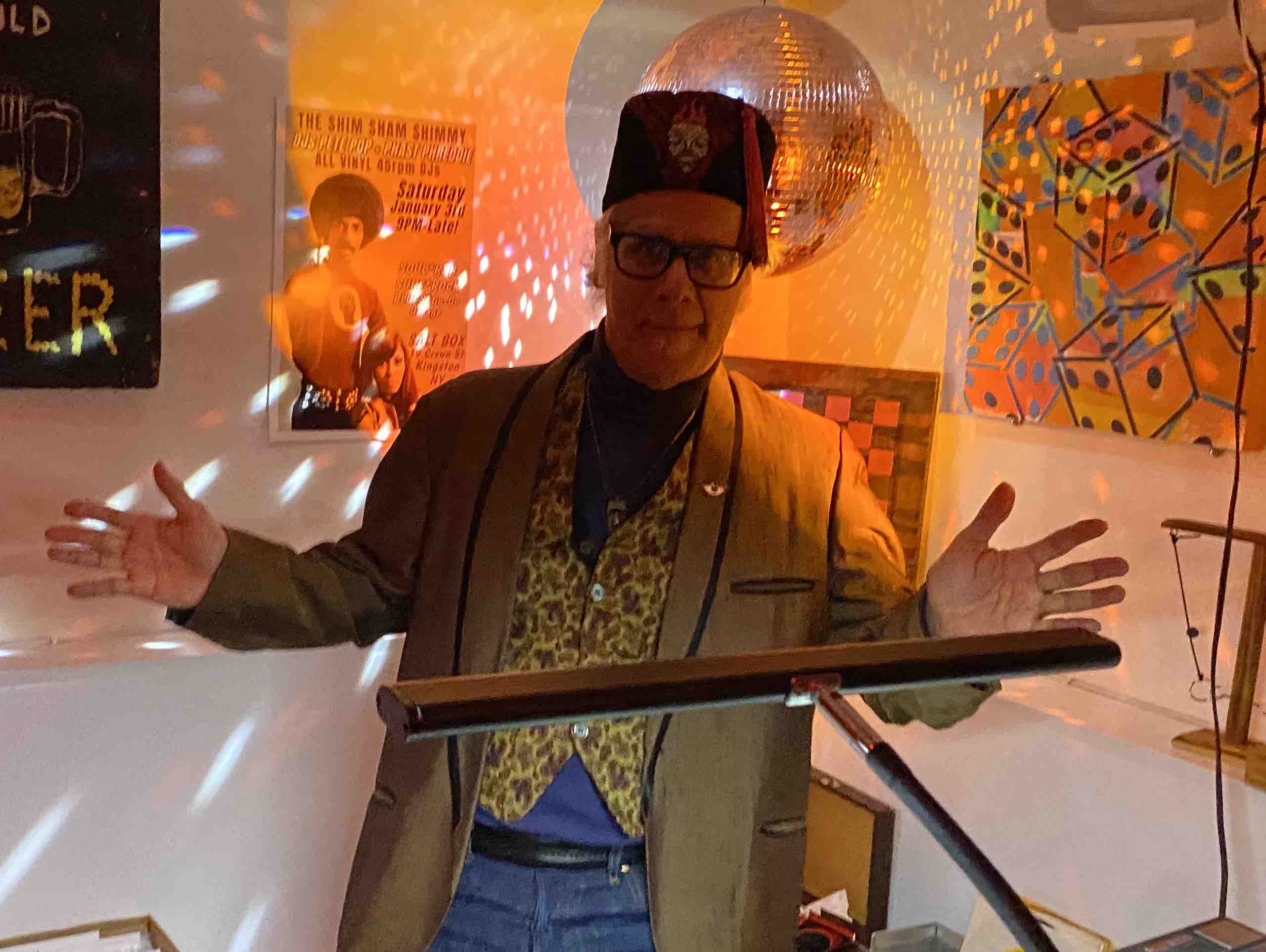
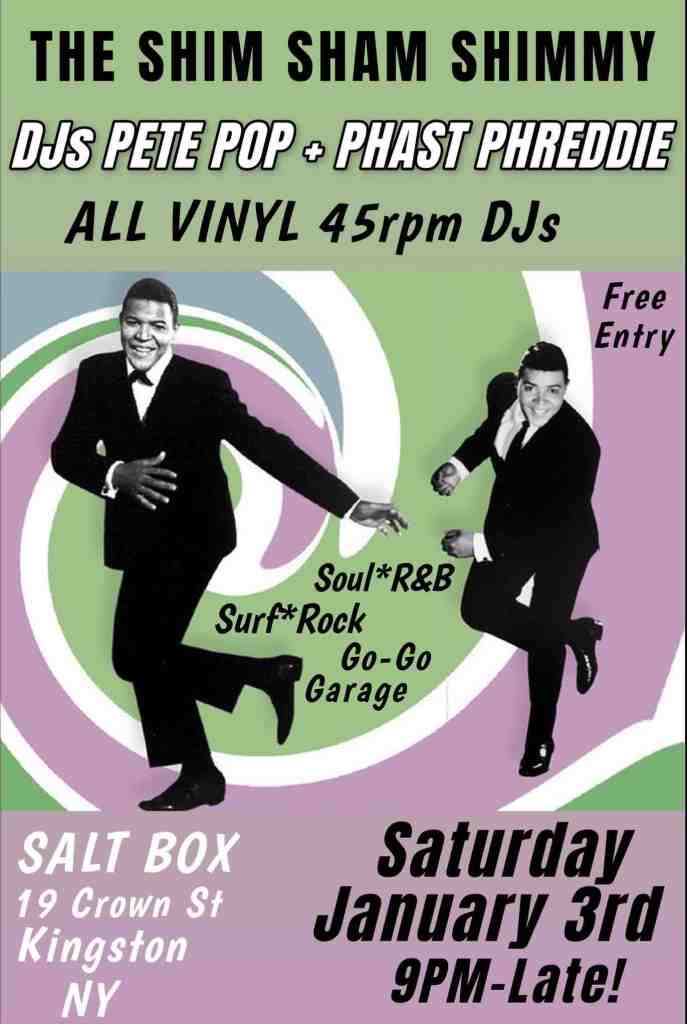
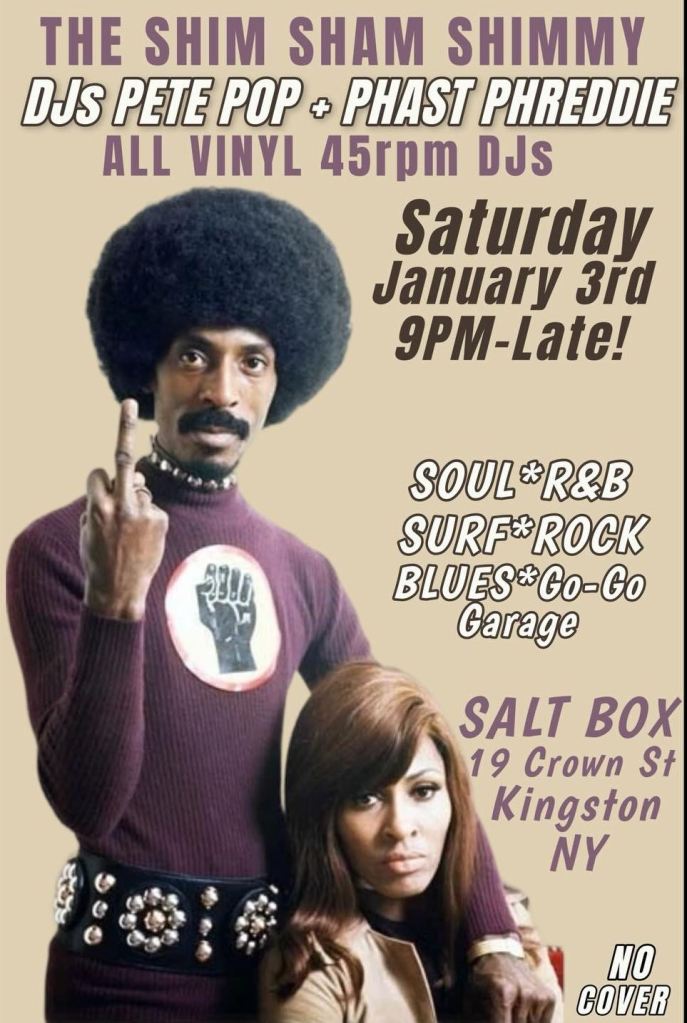
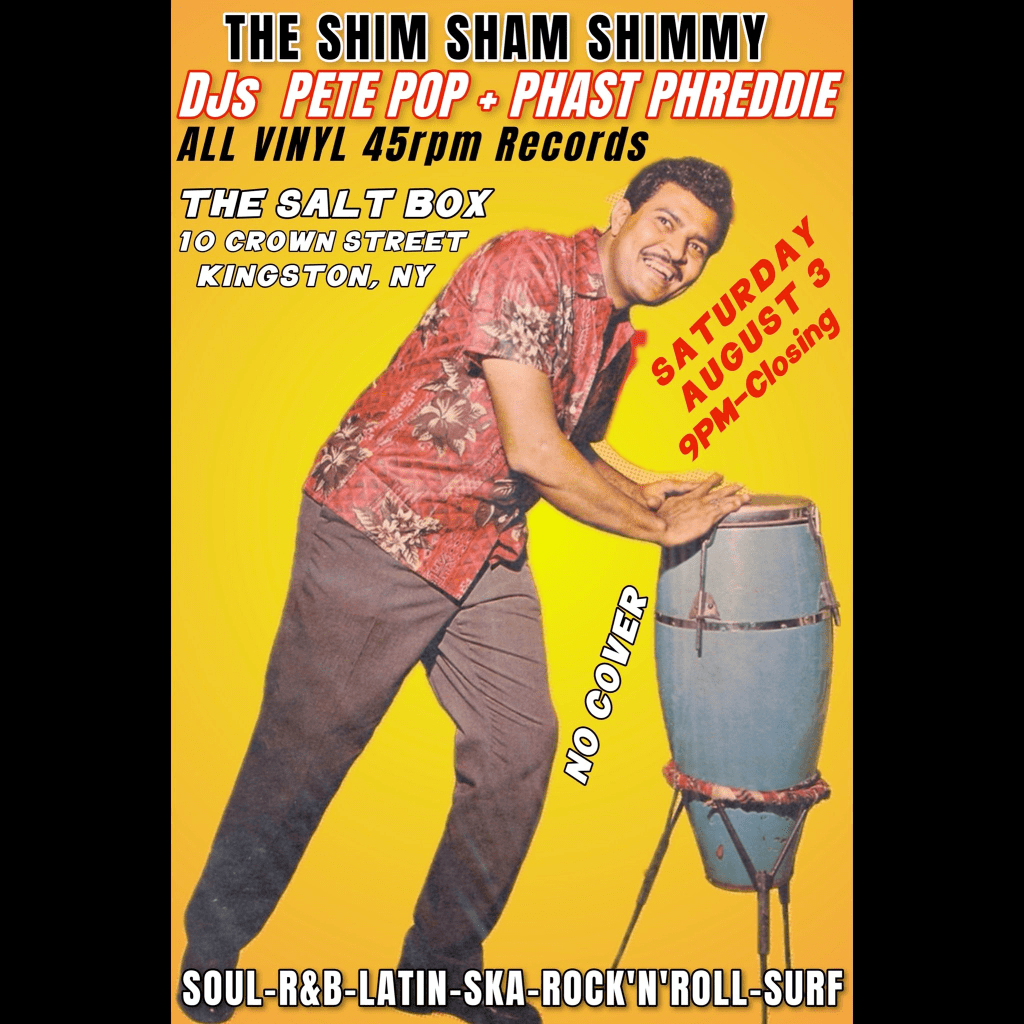
The first Shim Sham Shimmy of the year was held on January 3, as always, at the great, stoned building called The Salt Box in Kingston, NY. It was cold outside—REALLY cold! However, DJs Pete Pop and Phast Phreddie the Boogaloo Omnibus brought the heat in the form of some wild and rockin’ 45 RPM records. Pete Pop was so excited about the Shimmy that he made two posters for it (see below.)
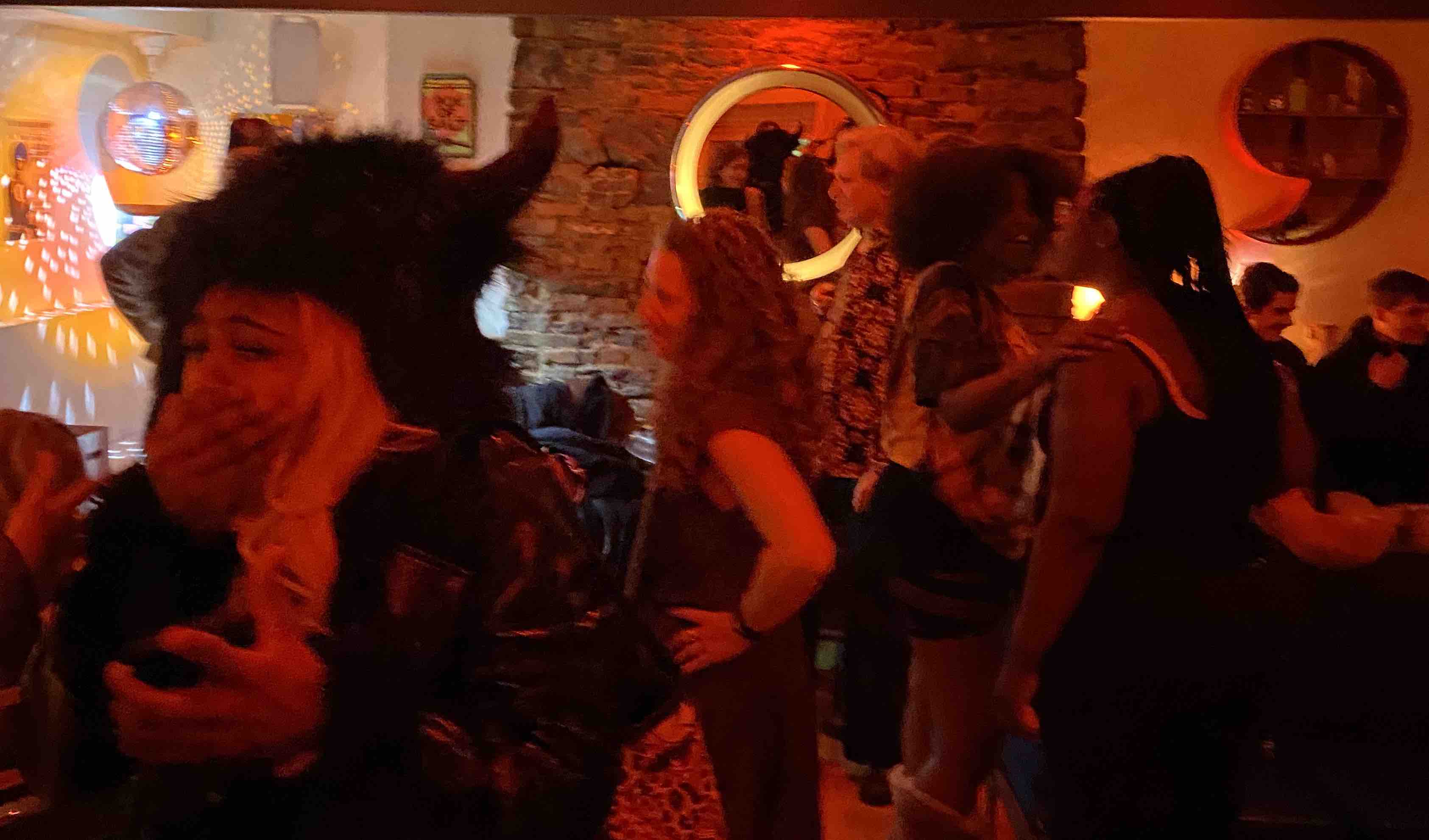
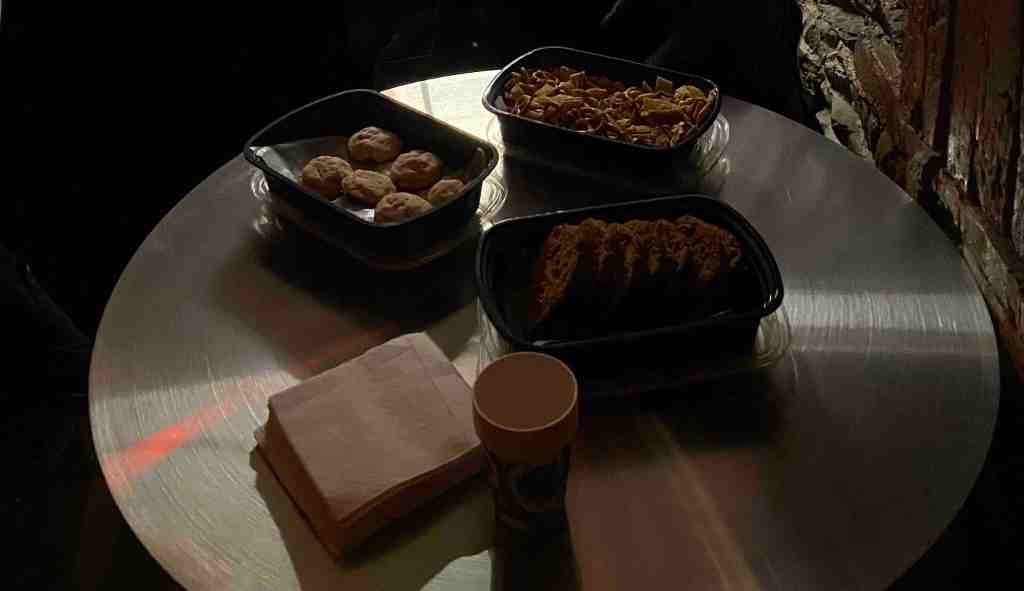
Since the event was so close to New Year’s Eve not much was expected, but folks came out—lots of folks came out—to dig the boss sounds that the DJs were puttin’ down. Miss Nancy baked some Spanish cinnamon cookies, pumpkin bread and chex mix. Needing something a little more substantive, Phast Phreddie ordered some French fries from the adjacent food truck. That was good.
Here’s a list of all the records played by Phast Phreddie the Boogaloo Omnibus at the January Shim Sham Shimmy:
Santio’s Premiers–Doggin’ the Twine (Candi)
The Yorkshires–Switch Time Part I (Mammoth)
Jerry Cole & His Spacemen–Movin’ Surf (Capitol)
Elliott Shavers and His Blazers–Scratch That Itch (King)
This is is the program notes for the corresponding GO Mechanism Number Twenty Six as it premiers on the Luxuria Music web-O-net as a Saturday Night Special on January 18 (or, as a podcast the next day). The GO Mechanism is an audio Odyssey that is hosted by Phast Phreddie. It is scientifically engineered and programed in the secret laboratory of Boogaloo Omnibus Productions incorporating ultra-phonic techniques not available to other broadcast entities. The G stands for GROOVE, and there will be plenty of GROOVE in each GO Mechanism. The O stands for O’ROONY, an intricate and complex attitude that is incomprehensible to those who possess standard-issue precepts. Listen and you will hear.
Half way through the program, there is a segment called The Science Corner in which a musical subject is explored and illustrated with three songs. For this Science Corner we have featured three songs written or co-written by George Clinton but performed by other artists.
The Parliaments
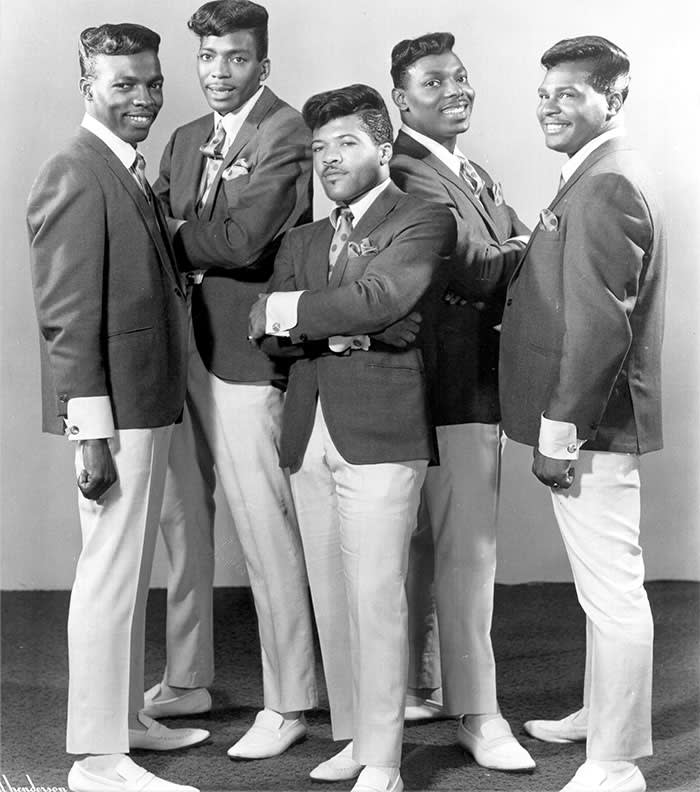
George Clinton is known internationally as a pioneering funkateer. His acts, Parliament, Funkadelic, solo recordings, and other assorted side projects, have all been devised to move funk music forward. In the late fifties, George Clinton formed a doo wop group in Plainfield, New Jersey and called it The Parliaments. They cut a few records that went largely unnoticed. At some point, in the mid sixties, Clinton was hired to write songs for Motown. The arrangement didn’t work out, but while in Detroit, he connected with other fledgling Motor City record companies, such as Golden World (who issued a Parliaments single), Ric Tic and Solid Hit. Some of these seemed to share ownerships. Revilot Records signed The Parliaments and were rewarded with a hit called “(I Wanna) Testify.”Clinton wrote and/or produced several records by other artists on these labels and we have a few of them here in The Science Corner.
The first song is “Hey Mama, What’cha Got Good for Daddy” by The Flaming Embers, a local Detroit rock group that first recorded for the legendary Fortune Records Company. This was the first of six singles they issued on Ric-Tic Records in 1967 and 1968. The following year the group signed to Hot Wax Records, a company owned by songwriters Brian Holland, Eddie Holland and Lamont Dozier after they left the Motown fold. In 1970, the group would score a Top Thirty pop hit with “Westbound #9.”
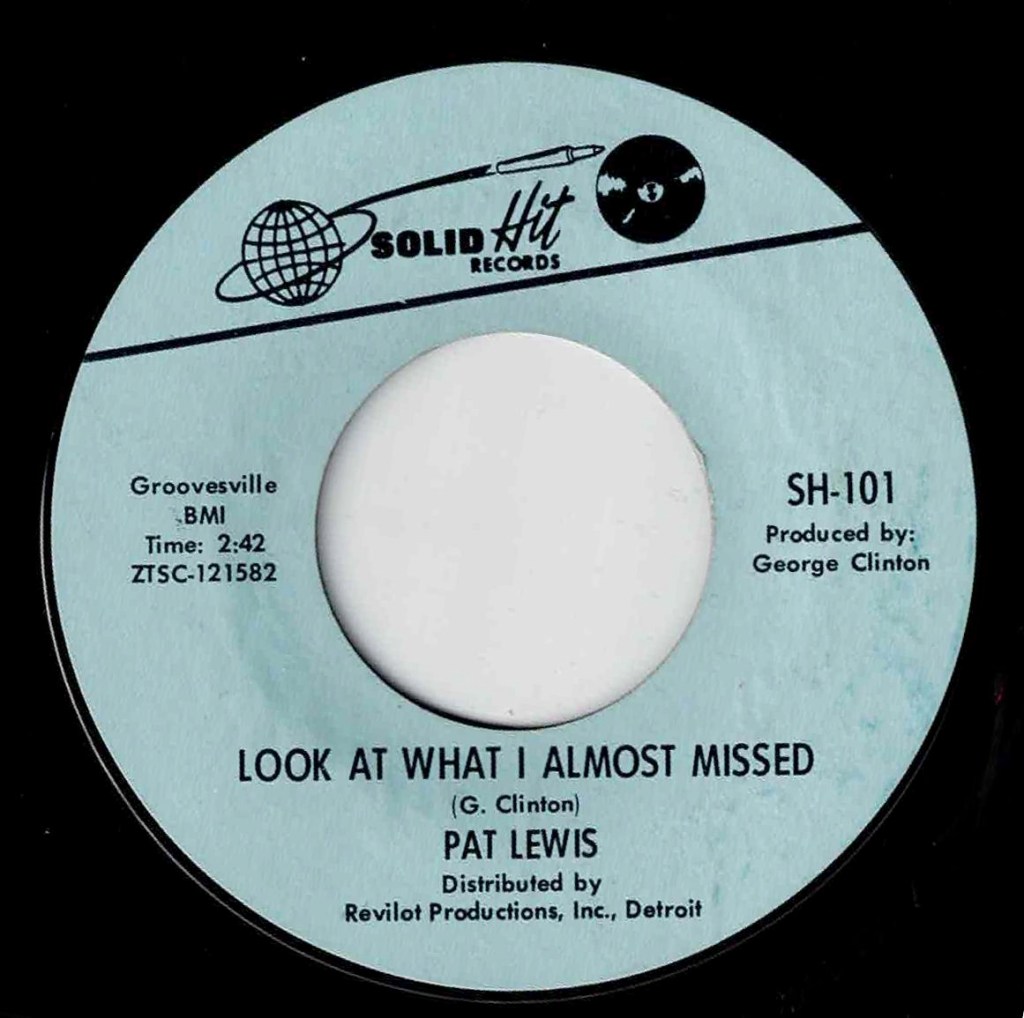
Pat Lewis started her career as a member of Detroit girl group The Adorables that recorded for Golden World. When she went solo, her first five singles featured a song written or co-written by George Clinton. We picked “Look At What I Almost Missed” from 1966. By 1967, she was a back-up session singer at Motown, then worked on the road with Aretha Franklin before becoming a member of Hot, Buttered & Soul, a vocal group that worked with Isaac Hayes. In the eighties, George Clinton enlisted her for several projects that he worked on, including his solo records and an album by The Red Hot Chili Peppers. In 1968, The Parliaments released their own version of “Look What I Almost Missed.”
The last song we have is highly significant in the George Clinton sphere of influence. It’s called “Whatever Makes My Baby Feel Good” by Rose Williams and it marks Clinton’s first use of the word Funkadelic—the record was issued on Funkedelic Records (it’s only release) and shows the backing band as George Clinton and the Funkedelics (note the spelling!). This was released in 1968, when Clinton was in a legal battle over the Parliaments name and the Funkadelic concept was just forming. During the seventies, Rose Williams would join Pat Lewis in Isaac Hayes’ backing band.
During this period, Clinton was also recording his own group—still called The Parliaments—and those records are really good examples of non-Motown Detroit soul music. In 1969, Clinton formed Funkadelic, a sort of separate entity whose music was different from Parliament. Both groups would tour together and become very popular during the seventies.
Liquid Liquid was a product of the art/punk scene of lower Manhattan during the early eighties. Here at The GO Mechanism we enjoy presenting works of folks banging on shit and screaming. The screaming part on this is a bit subtle, but the banging-on-shit is perfect!
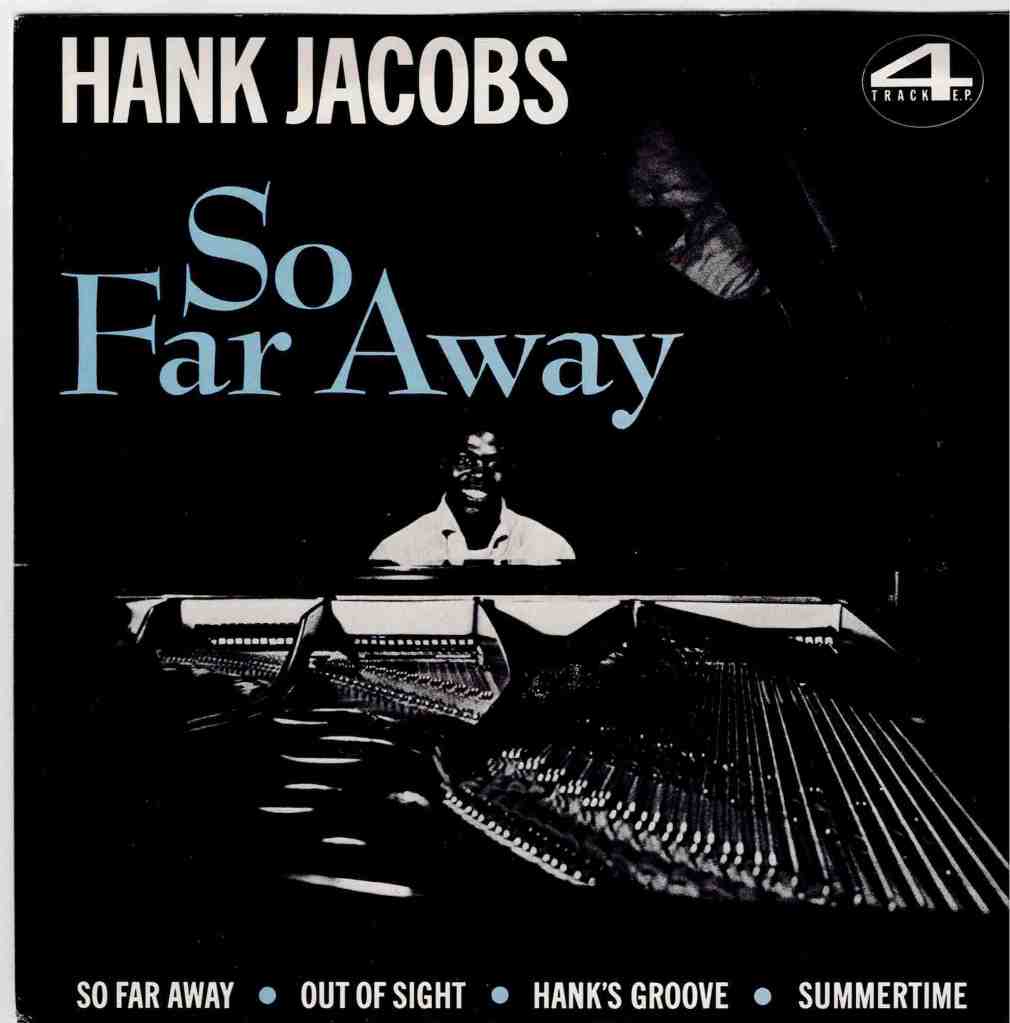
Hank Jacobs was a Los Angeles keyboard player who cut some cool records for Sue Records and the Call Me label. He also did some arrangements for artists for Money Records (“Doin’ the Thing” by The Question Marks is a fave.). He cut an album for Sue called So Far Away and that’s where we found his fantastic rendition of “Summertime.” Obviously a talented individual, it’s a shame that he didn’t record more.
Los Sirex was a rock band from Spain, based in Barcelona. Here we have the band’s take on “Train Kept A’Rollin’,” a song first recorded by the R&B bandleader Tiny Bradshaw. In 1956, the song was reworked as a rockabilly raver by the Johnny Burnette Trio. That version became the template for the rendition by The Yardbirds in 1965. Los Sirex version, called “El Tren de la Costa,” also comes to us from 1965, and it is possible that they never heard the one by The Yardbirds or they surely would have copped the boss riff that Jeff Beck came up with—just as every garage rock band has done ever since. Still, Los Sirex delivers an exciting and unique rendition of Tiny Bradshaw’s fabulous tune.
Jon Hendricks came to prominence in the late fifties with his jazz vocal group, Lambert, Hendricks and Ross. He would write lyrics to famous jazz compositions, including the solos, and the group would sing them. In GO Mechanism Number Twenty Two, he was heard singing the Thelonious Monk composition “In Walked Bud.” “No More,” his song selected for our program today, was only released as a single on Verve in England in 1968. Hendricks must have had a fond attachment to the song, because he re-recorded it for albums in 1975 and 1982.
Freek’s Garage
Freek’s Garage is a band made up of musical mechanics who perform mostly organ-driven instrumental music: a sort of cross between Booker T & the M.G.’s and The Meters. They hail from the Kingston/Woodstock area in the Hudson Valley of New York State and they’ll play at any setting they’re allowed to set up at. We’ve seen them at a beer garden in Kingston, a restaurant up in the Catskills and a tavern in Bearsville. The group has also performed at concert venues in Woodstock and at car shows. Recently, Freek’s Garage recorded a few tracks and “Meter Made” is a fair representation of what this band can do.
If you only know about Andy Griffith from watching The Andy Griffith Show, then his appearance as Lonesome Rhodes in the movie A Face in the Crowd will be a revelation. On the TV show he is a warm, good-hearted country sheriff who is kind and thoughtful. In the movie, Griffith plays a clever country bumpkin who becomes mean-spirited and obsessed with power once his schtick becomes popular. “Mama Guitar” is a song from the film—probably re-recorded for single release.
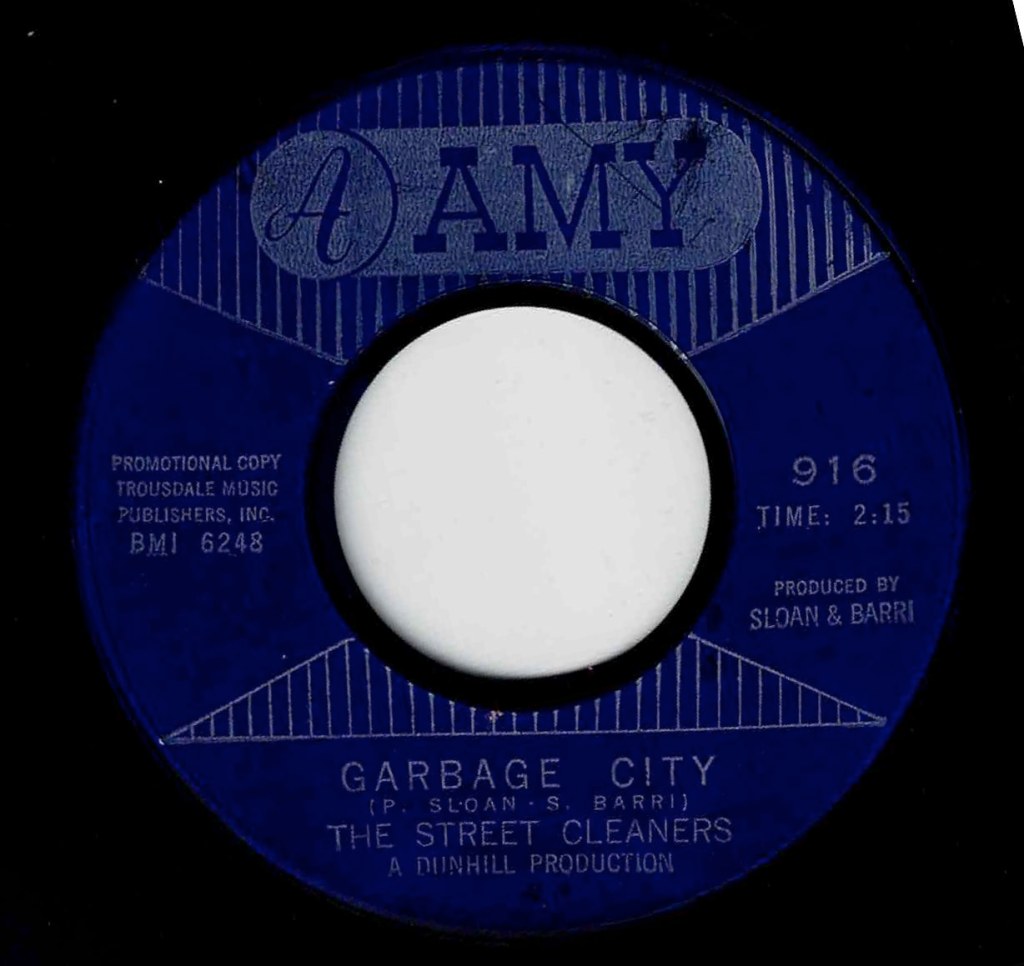
The Street Cleaners were a one-off project by songwriters/producers P.F. Sloan and Steve Barri. Around the same time (1964) they were enjoying a little success as The Fantastic Baggies with a song called “Tell ‘Em I’m Surfin.”The GO Mechanism presents “Garbage City” by The Street Cleaners, the flip-side and remixed instrumental version of “That’s Cool, That’s Trash.” The latter is used as the opening theme song for one of our favorite Luxuria Music programs, No Condition Is Permanent. Hosted by Count Reeshard and his dog Le-Roy, the show is an eclectic mix of rock and rhythm and is produced in an original manner. The show first airs weekly immediately after the Saturday Night Special (which presents The GO Mechanism, when there is one) and it is highly recommended by The GO Mechanism producers.
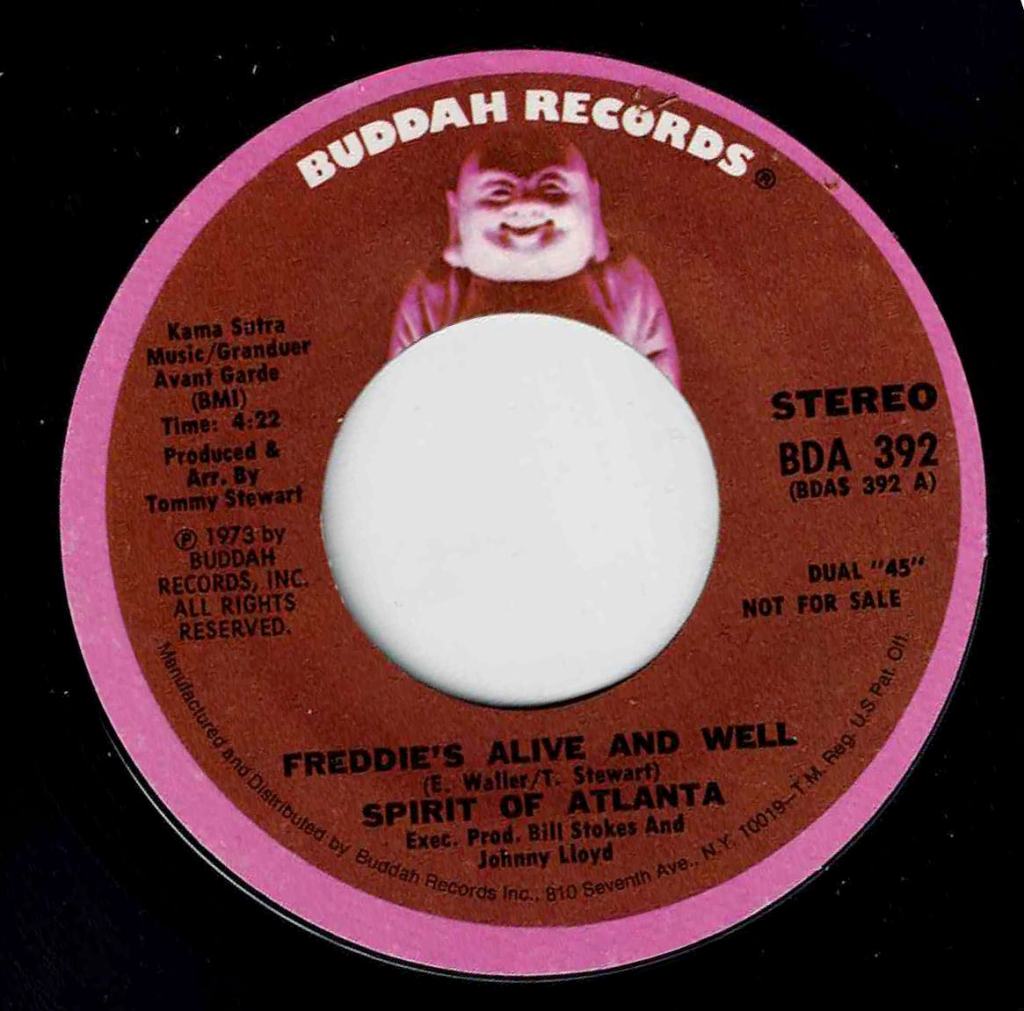
The GO Mechanism closing theme has always been “Freddie’s Dead” by Curtis Mayfield—a hit song from the movie Super Fly. The GO Mechanism producers recently uncovered an answer song called “Freddie’s Alive and Well” by an obscure funk group called Spirit of Atlanta. So, because The GO Mechanism producers are wisecrackers, they put it in the show preceding the closing theme.
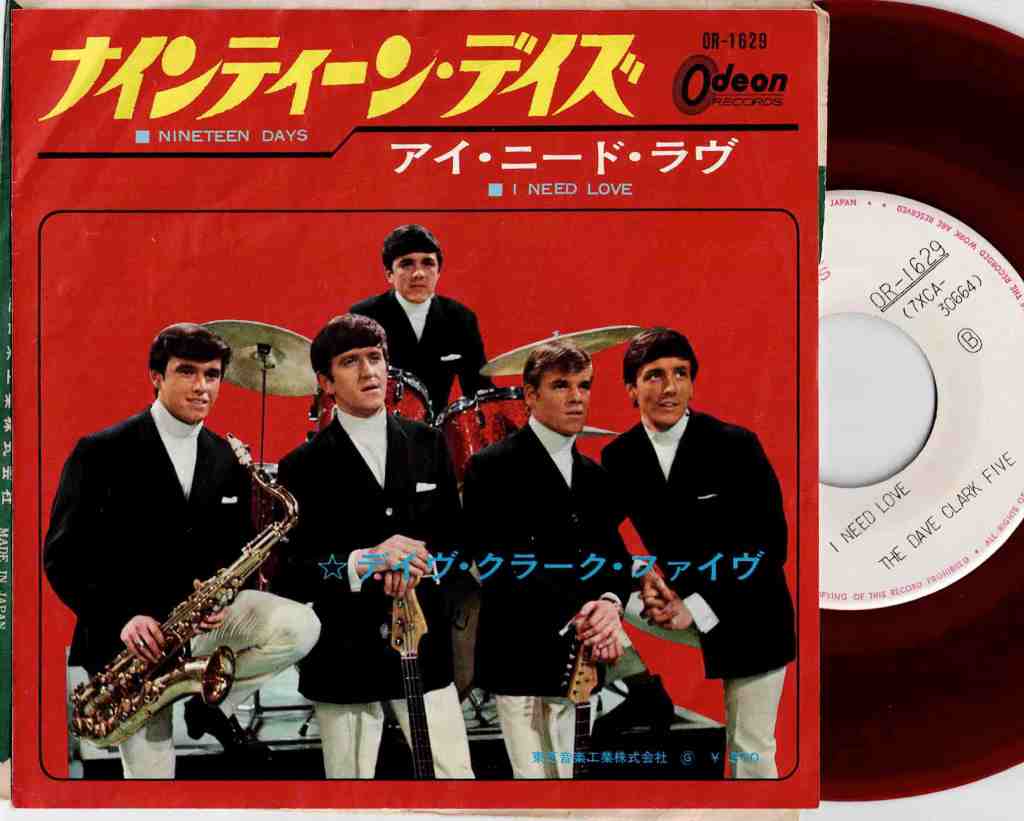
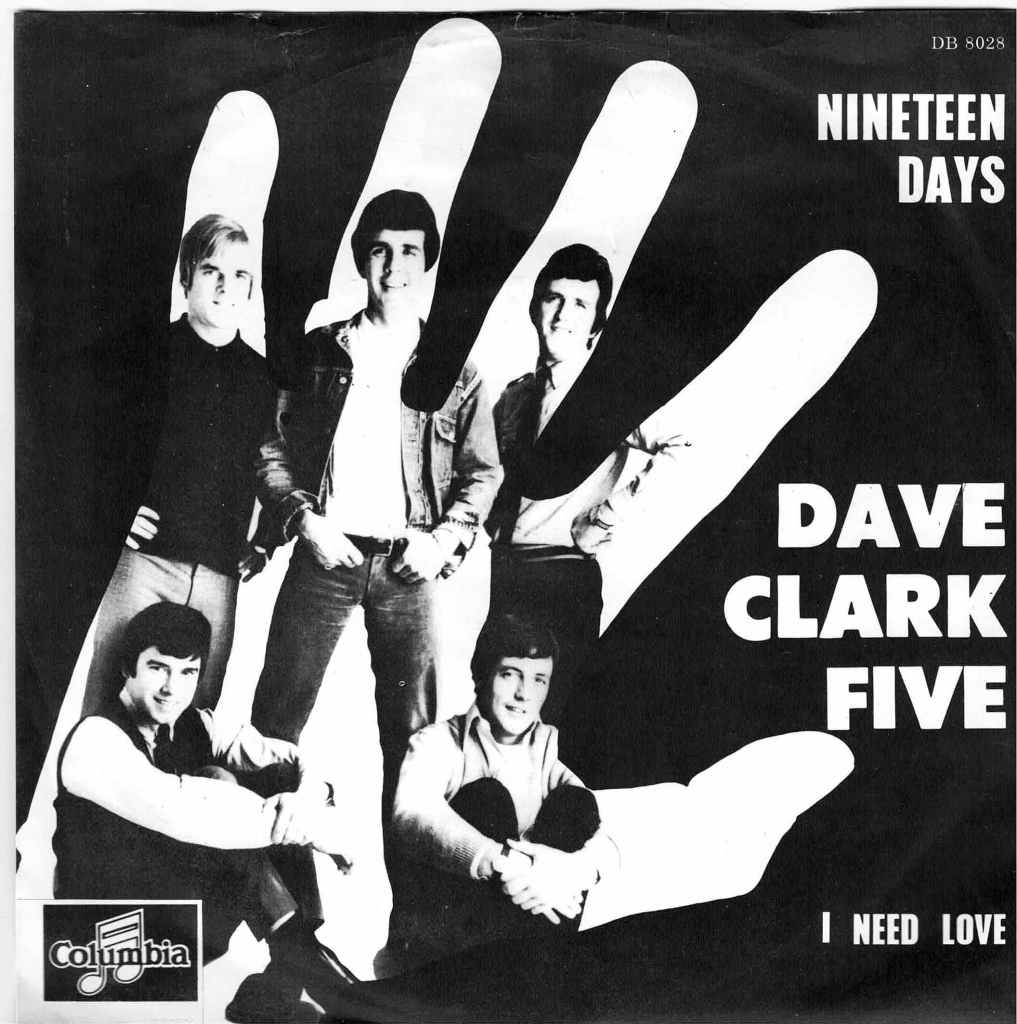
The Dave Clark Five often get lumped in with the so-called British Invasion rock groups of the mid-sixties. Indeed, they are British and their popularity peeked during that period, but to think of them as just another band would be doing a disservice to yourself for not paying attention. The DC5 made a lot of fantastic, exciting records and we close this GO Mechanism with one of them, “I Need Love.” This song was issued as a flip-side to “Nineteen Days” in European and Asian territories, but never in the U.S., where it only appeared on the I Like It Like That album. The song has the same amazing, pounding rhythm that the best DC5 records are known for, thus The GO Mechanism producers consider it one of the Greatest Records Of All Time and it closes the show. (For extra credit, check out this fantastic video of the song!!)
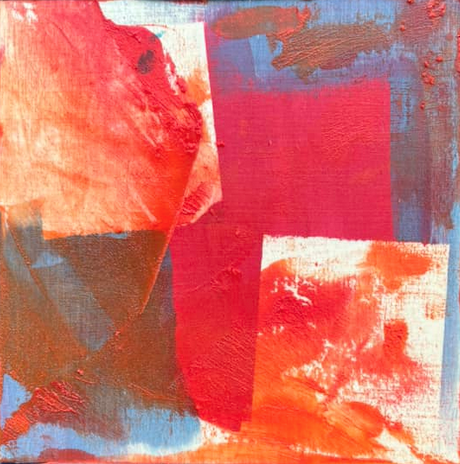
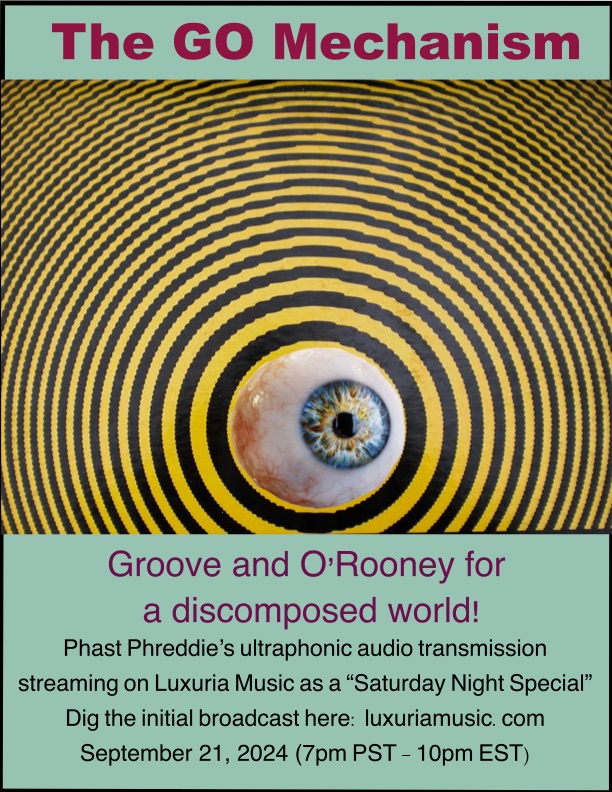
The artist who provided the graphic for our poster is Sunshine Dunham. The GO Mechanism producers first met her in the late eighties when she was employed at the Rhino Records Store in Westwood, CA. They have stayed in touch ever since. During the nineties she ran Fiasco Records that issued records by Congo Norvell, Kendra Smith, The Karl Hendricks Trio and several others. Since then, she’s gotten into other businesses, but she’s always had a toe in the art scene. Her work is unique and exquisite. This particular painting is titled Oil and Cold Wax #8. Dig her website for more information and to view—and perhaps purchase—her work.
The GO Mechanism is produced whenever we feel like it and it incorporates exclusive, copyrighted Vitaphonic, Ultra-sonic and Quasi-Tonal methods in order to provide a higher standard of standardness. Legacy GO Mechanisms may be found on the Mixclouds as well as here in the Boogaloo Bag.
The GO Mechanism originates on the Luxuria Music interweb streaming hustle as a Saturday Night Special. We thank the Luxuria Music powers-that-be for giving us the opportunity to present this program over their deluxe electronic audio delivery system for your edification. Please support Luxuria Music any way you can. We suggest you get as much money as you can—preferably unmarked tens and twenties—load it all into a shoe box and send it to Luxuria Music. Or just go to the Luxuria Music web site and buy something from the store.
Here is a complete list of all the songs played on GO Mechanism Number Twenty Six:
Earl Bostic—Lester Leaps In (King)
Charles Mingus—Gunslinging Bird (from LP Mingus Dynasty; Columbia)
Gentleman June Gardner—Mustard Greens (from LP Bustin’ Out; EmArCy)
Chuck Berry—Butterscotch (from LP Chuck Berry In London; Chess)
Junior Byles—Fade Away (from soundtrack to Rockers; Island)
Liquid Liquid—Bellhead (99)
Riccardo Chailly: Asko Ensemble—Déserts – 1st Interpolation Of Organized Sound (from album Varèse: Complete Works; London)
Patti Smith—Oath (February 10, 1971)
Hank Jacobs—Summertime (from EP So Far Away; Sue; UK)
Lee Fields—Steam Train (from album Let’s Get a Groove On; Desco)
Tito Puente—Take the “A” Train (from album The Complete RCA Recordings Volume 1; RCA)
Lord Buckley—The Train (edit) (from LP A Most Immaculately Hip Aristocrat; Straight)
Los Sirex—El Tren de la Costa (Vergara; Spain)
Jimmy Nicol and the Subdubs—Night Train (Mar-Mar)
Manfred Mann—Last Train to Clarksville (from album The Ascent of Mann; Fontana; UK)
Bo Diddley—Down Home Special (Checker)
Big Jay McNeely—Ice Water (from LP Big J in 3-D; King)
The Lollipops—Busy Signal (RCA Victor)
The Bar-Kays—A Hard Day’s Night (Volt)
Climaco Sarmiento y su Orquesta—La Cigarra (from album Cumbias y Gaitas Famosas; Discos Fuentes; Colombia)
Ernie K-Doe—A Certain Girl (Minit)
Sam & Dave—I Thank You (Stax)
Pee Wee Crayton—Do Onto Others (Imperial)
The Stoned Soul Picnic—Crosstown Traffic (Stoned Soul Picnic; UK)
The Zodiacs—Caravan (from EP The Primitive Instrumental Sounds of The Zodiacs; Norton)
Pierre Boulez: Ensemble InterContemporain—Varèse: Intégrales (from album Varèse: Arcana, Amériques, Ionisation, Etc.; Columbia Masterworks)
Jon Hendricks—No More (Verve; UK)
The Flaming Embers—Hey Mama (What You Got Good for Daddy) (Ric Tic)
Pat Lewis–Look at What I Almost Missed (Solid Hit)
Rose Williams, George Clinton and the Funkedelics–Whatever Makes My Baby Feel Good (Funkedelic)
Freek’s Garage—Meter Maid (unreleased)
Freedom Sounds featuring Wayne Henderson—Respect (from LP People Get Ready; Atlantic)
Wes Dakus—Hobo (Capitol; Canada)
Lawrence Beauregard—Density: 21.5 (from album Varèse: Arcana, Amériques, Ionisation, Etc.; Columbia Masterworks)
Nancy Wickwire—I Taste a Liquor Never Brewed (from LP The Poems of Emily Dickinson; Spoken Arts)
Iron Butterfly—In-A-Gadda-Da-Vida (edit) (from LP In-A-Gadda-Da-Vida; Atco)
The Drifters—If You Don’t Come Back (Atlantic)
Bobby Land with Ralph Sayho & His Calypso Singers—Knock the Bongos (Tico)
The Destroyers—Compass (Cotillion)
Andy Grifith—Mama Guitar (Capitol)
Ozz & His Sperlings—Somebody to Love (M.I.O.B.)
The Street Cleaners—Garbage City (Amy)
Marlowe Morris—Tropical Madness (Epic)
Lalo Schifrin—End Game (Paramount)
Les DeMerle—I Am the Walrus (United Artists)
Spirit of Atlanta—Freddie’s Alive and Well (Buddah)
Curtis Mayfield—Freddie’s Dead (Boogaloo edit, closing theme) (Curtom)
Dave Clark Five—I Need Love (Odeon; Japan)
This edition of The Go Mechanism will be available as a podcast on the Luxuria Music website after its initial air-date of January 18, 2025 as a Saturday Night Special. After a few weeks it will be posted on the Mixclouds and then it will magically appear below…
The GO Mechanism is an audio Odyssey scientifically engineered and programed in the secret laboratory of Boogaloo Omnibus Productions incorporating ultra-phonic techniques not available to other broadcast entities. The G stands for GROOVE, and there is always plenty of GROOVE in each GO Mechanism. The O stands for O’Roony, an intricate and complex attitude that is incomprehensible to those who possess standard-issue precepts. Listen and you will hear.
The GO Mechanism is first aired on the Luxuria Music web streaming hustle as a Saturday Night Special. It will then be available as a podcast on the Luxuria Music web site for a few weeks, then it will sit in that limbo called the Mixclouds. This one will first air on November 16, 2024.
In order to achieve total comprehension of this GO Mechanism, it is strongly suggested that the listener follow along with this blog post as he or she listens to the program. This blog will act as a guiding light, with a track listing and information regarding some of the songs featured in the show.
An hour into the GO there will be a Science Corner—a segment of the trip where we discuss a topic of musical importance. This Science Corner we will listen to three songs that feature Bo Diddley playing the violin.
Bo Diddley actually studied the violin when he was a boy. When he decided he wanted to play that instrument, the parishioners of Ebenezer Missionary Baptist Church took up a collection to buy him one. He took lessons, then he joined the Sunday school band. The teacher made him play hymns and classical pieces, but he wanted to see if he can play blues on it. He took violin lessons until he was 15. Around that time he was given a guitar as a Christmas present and that instrument took him places.
We have found three instances where he recorded with his first instrument. The sound he gets out of his violin is eerie, and not like any violin sound you’ve heard. This is clearly not Itzhak Pearlman!
“The Clock Strikes Twelve” starts like a typical Bo Diddley song, with the “I’m a Man” beat, but then soon morphs into a slow blues instrumental with the pianist Lafayette Leake and Willie Dixon on bass, and of course, Jerome Green on maracas. The song was first issued as the B-side to the 1959 novelty hit “Say Man,” then it appeared on his second album, Go Bo Diddley.
“To Each His Own,” was written for the movie of the same name in 1946. At one point that year, the song held five different spots on the Pop Top Ten chart by five different artists. Notably, one of the artists was The Ink Spots, whose version also placed high in what was then called the Most Played Juke Box Race Records chart. Bo Diddley’s violin playing is, again, very eerie, and half way through he plays it pizzicato. This track was recorded in 1959, but not issued—maybe it was deemed unworthy of release because of the plodding beat that the musicians lend to the song. But Bo’s violin playing is unique and may even be called avant-garde, especially for the time.
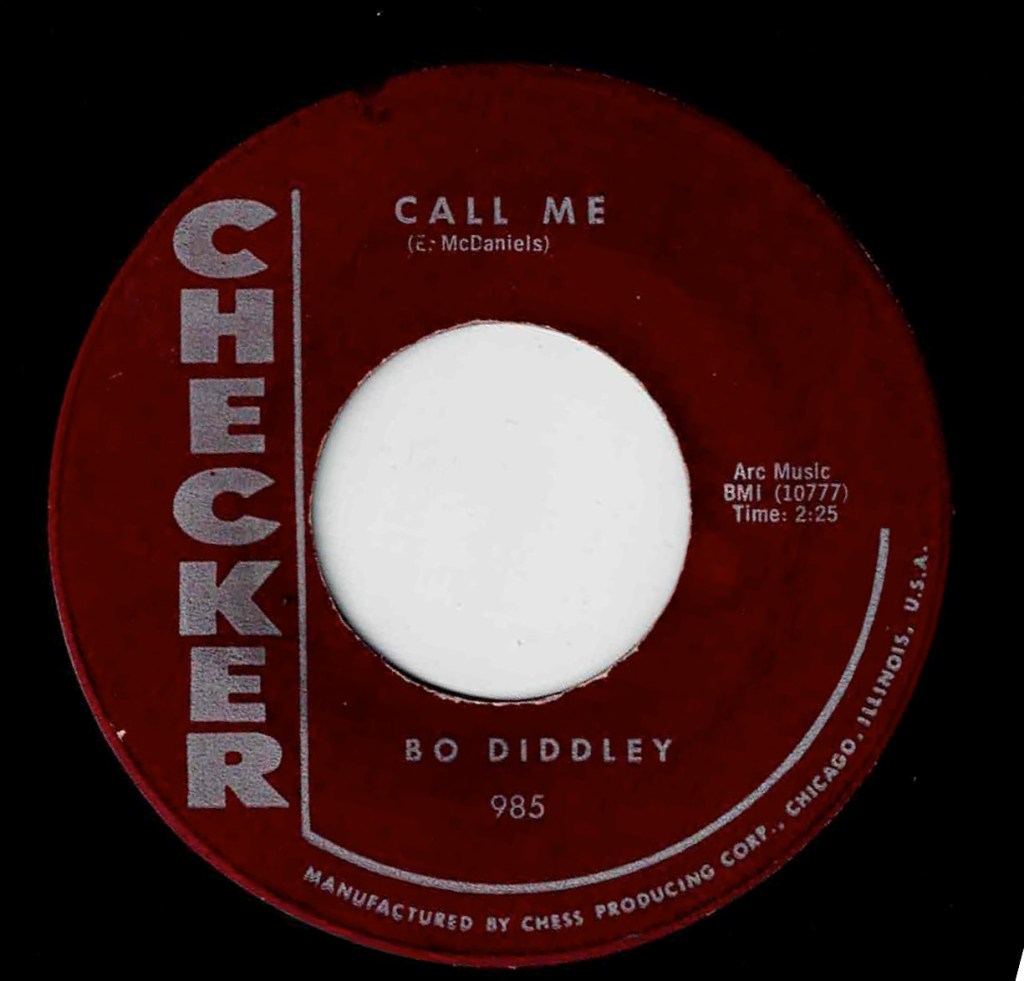
After that we will hear “Call Me.” It was recorded at Bo Diddley’s home studio in Washington, D.C. in February 1961 and it was issued as the flip-side to “Pills.” For some reason it was called “Bo’s Blues” on the album Bo Diddley Is a Lover. It’s another slow blues, with Bo singing, this time. On this track, Bo’s violin playing almost sounds like Little Walter’s harmonica playing! It really must be heard to be believed, and we will hear it in The GO Mechanism.
Along with B.B. King and Freddy King, Albert King is considered one of the “Three Kings of the Blues.” (People tend to forget the great Earl King, who made tremendous records in New Orleans—but that’s another story; perhaps even a Science Corner). Albert King was born in Mississippi and eventually moved to the Chicago area to further his career in music. He played drums in Jimmy Reed’s band, including on some of Reed’s earliest recordings. King cut a record for Parrot that did not sell well, then he moved to the St. Louis area. It is there that he became a popular draw in the thriving nightclub scene. He cut some records for Bobbin Records, a label partially owned by Little Milton. When his first single, “Don’t Throw Your Love on Me So Strong,” started to make some noise, it was picked up by King Records. The platter topped out at Number 14 on Billboard’s Hot R&B Sides chart in early 1962. In this GO Mechanism, we hear “This Morning,” an instrumental that was the flip side of “Don’t Throw…” The King Records marketing people added a little note on the white label promo copies that went out to radio stations that stated: “Attn: Disc Jocks, This instrumental will be liked by The Teenagers!” Most likely this inscription was placed there because of it’s uncanny resemblance to “Last Night” by The Mar-Keys, a smash hit during the summer of 1961. Interestingly, The Mar-Keys record was issued on Satellite Records—a Memphis company that soon renamed itself Stax Records. Five years later, Albert King was signed to Stax and it is there that his legacy was created.
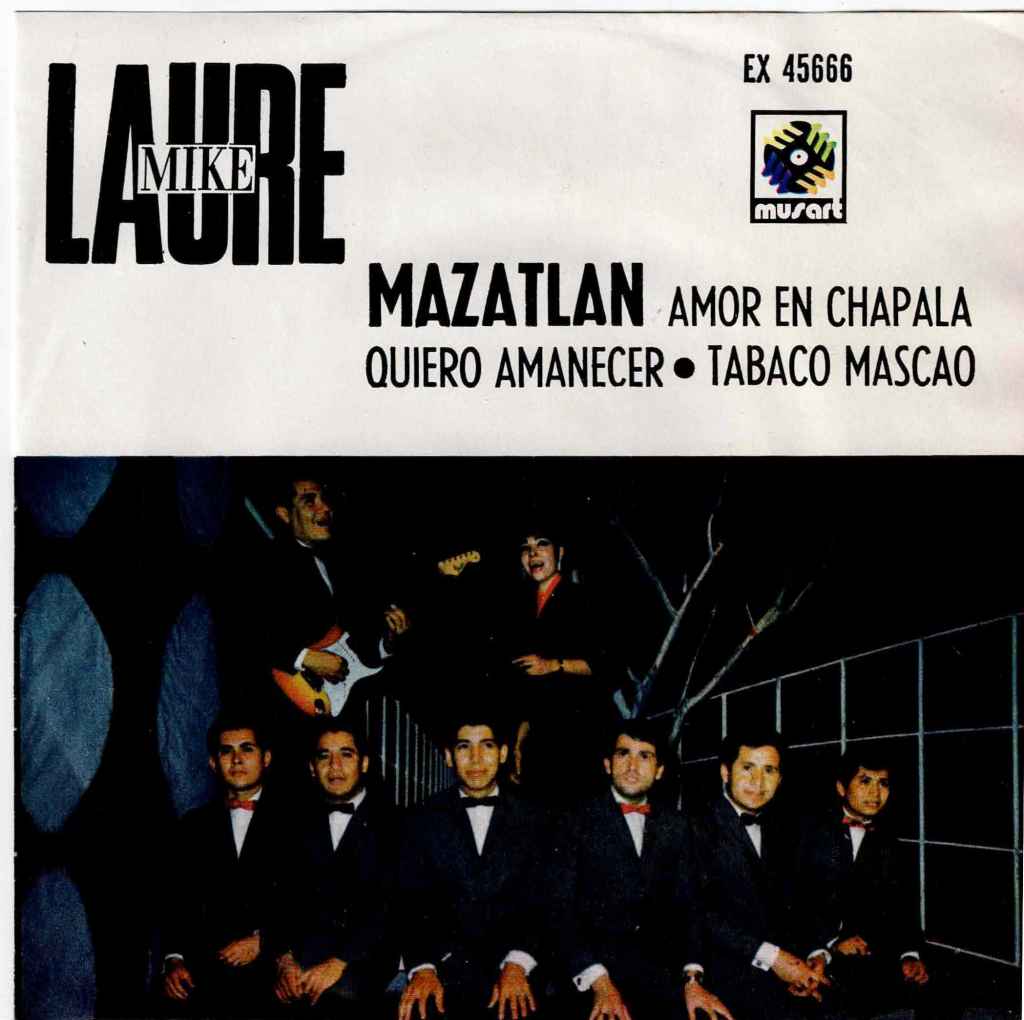
Mike Laure (pronounced mee-kay loo-ray) was one of the first Mexican musicians to perform cumbia music. In the late fifties, he formed a Rock’n’Roll group and named it “Los Cometas” after Bill Haley’s band. By 1960, he had added tropical rhythms and instruments that are more closely associated with cumbia of Colombia. Laure’s records have a more pronounced beat than most cumbia records, which employed several percussion instruments, but not a drum set. “Tabaco Mascao” is a traditional cumbia, first recorded by the Colombian group Combo Los Galleros in the late fifties. Mike Laure’s version is from 1965 and it swings with an accented beat.
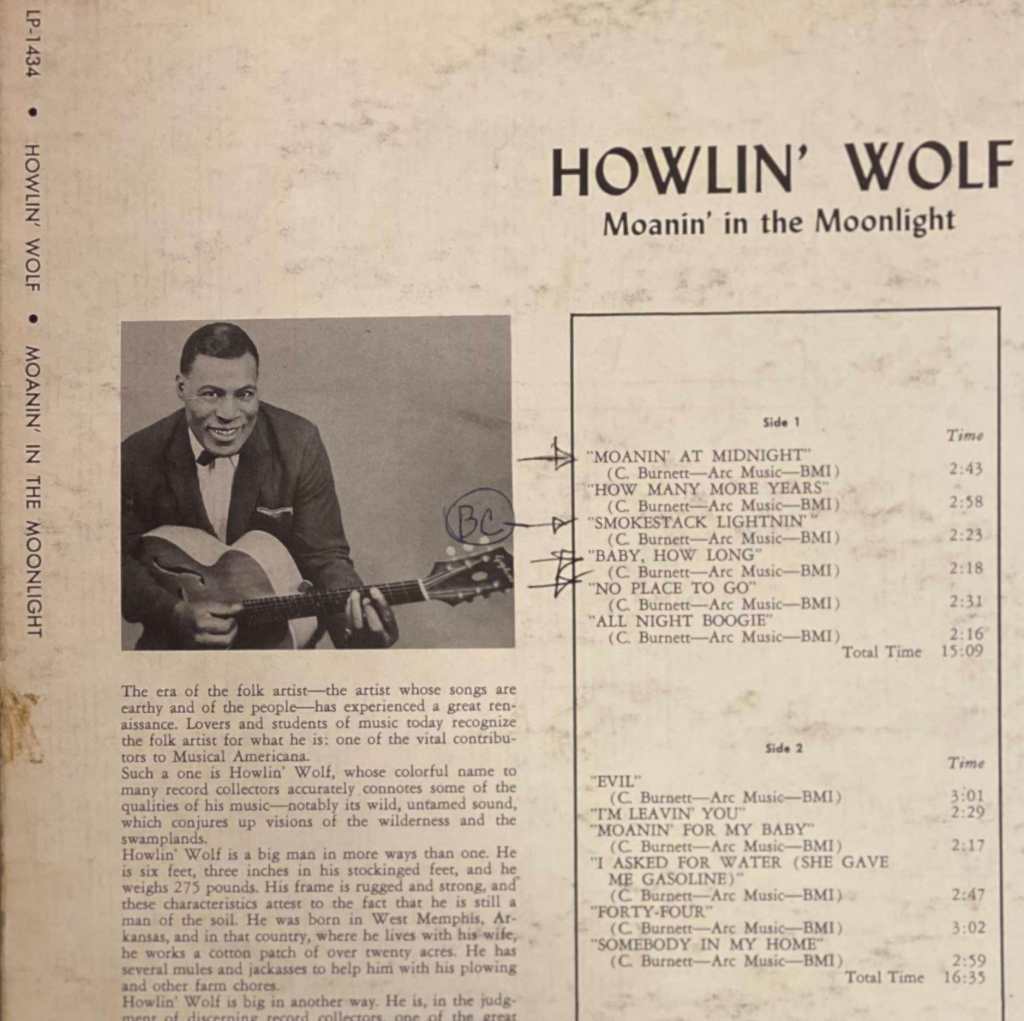
Howlin’ Wolf’s “No Place to Go” is often confused with “You Gonna Wreck My Life.” In fact, one is the alternate take of the other, but with different lyrics. On the original releases—“Place” in 1954 and “Wreck” in 1959—they showed different songwriters, too: Willie Dixon for the former and Chester Burnett (AKA Howlin’ Wolf) for the latter. Confusing matters more is the fact that they both were issued with the exact same matrix number—a number that is usually small on the label and also etched into the dead wax of the record in order that the right label is attached to the correct side when the records are assembled. Usually, a dash after the number will indicate which take is used, but no dash numbers were added to either release so, at this late date, it’s hard to tell which came first. Confusing things further is the fact that when “Place” was issued on 78 it listed Willie Dixon as the writer, but on the back cover of Howlin’ Wolf’s first album it lists the writer as C. Burnett. “Wreck” has always listed Burnett as the writer. In GO Mechanism Number 19, we played Guitar Ray’s version of “You’re Gonna Wreck My Life,” but he sings the “No Place to Go” lyric!
Are we confused yet? If not, consider also that the first line of both songs is “How many more years;” which is also the title of an earlier Howlin’ Wolf song that is only slightly related to these two! Whatever, Howlin’ Wolf is one of the all-time greats of music and we’ll be sure to hear more of his stuff in future GO Mechanisms.
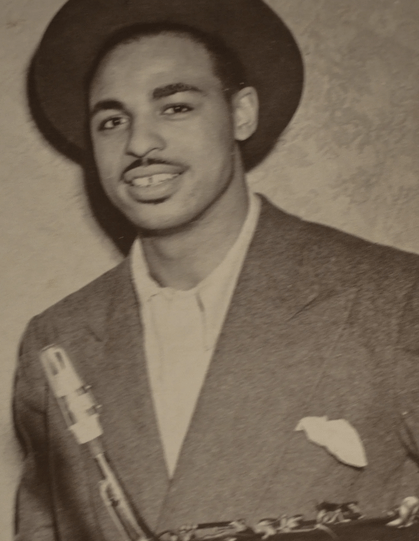
Preston Love, 1943
Preston Love was a saxophonist who came out of the big band tradition. He was born and raised in Omaha, Nebraska and he worked in several territory bands. These were orchestras that barnstormed through the South and the Midwest—many went unrecorded but all contained talented musicians that the name bands would lure to their own bands. One day, Count Basie came calling for Preston Love. During his career, Preston Love played with many of the great jazz and R&B stars of the late forties and fifties. During the sixties, Love hooked up with Motown Records and he led the bands for Motown acts when they played on the West Coast. He also made some great funk records.
Preston Love was close friends with the bandleader Johnny Otis whose long career is legendary. Otis helped Love whenever he could. During the mid fifties, when Love was unable to record, Otis issued a few records under Preston Love’s name just to keep it in the spotlight. “Ali Baba’s Boogie,” heard in this GO Mechanism, is one of those songs. The saxophonist on the record is Jackie Kelso.
Love would eventually move back to Omaha, where he became a local legend. The singer Laura Love is his daughter, his youngest son Richie Love continues the saxophone tradition and Preston Love, Jr. is a civil rights activist and recently ran for U.S. Senator in Nebraska.
Big Jay McNeely was one of our favorite saxophonists in the world. His big, honking sound was very powerful. Also, like Preston Love, he came to prominence with the help of Johnny Otis—McNeely’s first recording was with Otis in 1948. In December of that year, Big Jay recorded “Deacon’s Hop,” which topped out the R&B charts in 1949. Twenty years later, McNeely cut the record again and that’s the version heard on this installment of The GO Mechanism. As fabulous as the original version is, this is much more greasy, the beat is heavier and McNeely’s big fat tone is still in evidence—if not more so! The GO Mechanism producers were hesitant to pick up this record when it was initially offered to them, since it is on the Modern ‘Oldies Series’ label, thinking it was some sort of reissue—a Bozo no-no in the collectors’ world. However, our research shows that this is the only way it was ever available.
The Time Surfers, with Bella Bombora!
Time Surfers are a rockin’ surf-type instrumental trio based out of Newburgh, NY. The GO Mechanism producers recently witnessed one of the band’s shows at the Upper Depot Brewing Company in Hudson, NY and were able to capture its version of “The Peter Gunn Theme” on tape. Bella Bombora, one of the Go Go dancers for Pete Pop’s Do The 45 DJ night, is often seen shaking her tail feathers with the band. The Time Surfers are good and fun and deserve the attention of the GO Mechanism faithful.
Bobby Graham is considered the greatest British drummer nobody has ever heard of. During the sixties, he was the first-call session drummer in London and it is estimated that he played on about 15,000 recordings! Apparently, he’s the drummer on most, if not all, the Dave Clark Five records—not Dave Clark. He also played on records by such artists as Peter & Gordon, The Kinks, Tom Jones, Dusty Springfield, John Barry, Shirley Bassey, Joe Cocker, Rod Stewart, Petula Clark, Brenda Lee, Van Morrison and many more. In the London studios, he often played with Jimmy Page, who also worked as a session musician before he joined The Yardbirds. Here in the GO we present Graham’s super boss record “Zoom, Widge and Wag,” which was co-written with Page and the guitarist provides one of his best solos toward the end.
Freddy DeBoe is another contemporary musician worthy of consideration. He is a saxophonist from Milwaukee who made his way to New York City in order to further his career. He has worked with artists on the Daptone Records roster, including Sharon Jones, Lee Fields, Charles Bradley and James Hunter. His own band has a cool, mod jazz vibe, as heard in “Savage,” a song released on Fine Wine Records—a company owned by our friend Mr. Fine Wine, the popular WFMU disc jockey.
Once again, The GO Mechanism ends with one of the Greatest Records Of All Time: “The Ostrich” by The Primitives. Pickwick Records was a company that made its mark by selling cheesy budget albums to unsophisticated teens. Often, an album would consist of a few songs by a current popular artist, usually recorded before that artist was famous, then fill out the rest of the LP with an unknown singer from the Pickwick stable. Also, the company would issue albums of original material capitalizing on some teen fad, like hot rods or surfing. One of the musicians involved in this operation was Lou Reed. He worked for Pickwick for about a year, starting in September 1964. One of the tracks he worked on was “The Ostrich”—an amazing example of folks bangin’ on shit and screamin’ in a Rock’n’Roll context. One of the things that make this record so unique is that when Reed cut the track, he had all six of his strings tuned to the same note. By the summer of 1965, Lou Reed met John Cale at Pickwick and the two left the company to form The Velvet Underground. This story is best told in issue 60 of Ugly Things Magazine as well as in the Ugly Things podcast, where publisher Mike Stax interviews Velvet Underground expert Phil Milstein regarding this period of Lou Reed’s life. Also note that 25 tracks associated with Lou Reed during his Pickwick period have just been reissued by Light In The Attic Records on an album called Why Don’t You Smile Now: Lou Reed at Pickwick Records 1964 – 65 and it is highly recommended. There is no doubt in our mind that “this”The Ostrich” is the best record Lou Reed ever made!
A very special shout-out and ‘thank you’ goes to our friend Mike Minky, who gave a copy of “The Ostrich” to the Go Mechanism producers about 35 years ago!
Here is a complete track list of all the songs played in GO Mechanism Number 25:
Earl Bostic—Lester Leaps In (King)
Art Blakey’s Jazz Messengers with Thelonious Monk—In Walked Bud (from LP Art Blakey’s Jazz Messengers with Thelonious Monk; Atlantic)
Michael McClure—For Monk (spoken bit)
Albert King—This Morning (King)
Al Duncan—Bawana Jinde (Stacy)
Billy Larkin and the Delegates—Pigmy (Part 1) (Aura)
Ahmet Koç—Surf Rider (from album Paradoks; Doğan Müzik Dağıtım; Turkey)
Mike Laure y sus Cometas—Tabaco Mascao (Musart; Mexico)
The Ventures—Wack Wack (from LP Guitar Freakout; Dolton)
The Zodiacs—Caravan (from EP The Primitive Instrumental Sounds of The Zodiacs; Norton)
Tito Puente —Eléquana (from LP Top Percussion (RCA Victor)
Jackson Five—I Want You Back—backing track (Motown)
Howlin’ Wolf—No Place to Go (Chess)
Johnny Cale—Shock Hop (Mercury)
Preston Love & His Orchestra—Ali Baba’s Boogie (Ultra)
Jimmy Haskell—James Bond Theme (Capitol)
Susan Lynne—Don’t Drag No More (Capitol)
Beauregard and the Tuffs—Ramblin’ Rose (Decca)
Lee Fields—Let a Man Do What He Wanna Do (from LP Let’s Get a Groove On; Desco)
The Eloise Trio—Anna Ba Coha (from LP The Eloise Trio; Decca)
Big Jay McNeely—Deacon’s Hop (Modern Oldies)
Eddie Kirk—Them Bones (Volt)
Oquesta Monteria Swing—La Pua (Discos Fuentes)
King Kong Itself—The Mothers of Invention (from LP Uncle Meat; Bizarre)
Charles Mingus—Cumbia Jazz Fusion (edit from LP Cumbia Jazz Fusion; Atlantic)
Aaron Neville—Hercules (Mercury)
——Science Corner
Bo Diddley—Clock Strikes Twelve (Checker)
Bo Diddley—Diddling (Checker)
Bo Diddley—To Each His Own (from album Road Runner – The Chess Masters 1959-1960; Chess/Geffen)
Bo Diddley—Call Me (Bo’s Blues) (Checker)
Screamin’ Jay Hawkins—Africa Gone Funky (London)
The Time Surfers—Peter Gunn Theme (live recording)
Captain Beefheart & the Saxons—Golden Birdies Camel Walk (Boogaloo exclusive mash-up)
Bobby Graham—Zoom, Widge, Wag (Fontana; UK)
Symarip—These Boots Are Made for Stompin’ (Harlem Shuffle; UK)
Ornette Coleman—Free Jazz (edit) (from LP Free Jazz; Atlantic)
Dylan Thomas—Should Lanterns Shine (spoken bit)
Johnny Zorro—Bongo Guitar (Infinity)
Freddy DeBoe—Savage (Fine Wine)
Bo Jr.—Coffee Pot (Part 1) (Tail-Gate)
Perez Prado—Moliendo Cafe (RCA Victor)
Curtis Mayfield—Freddie’s Dead (closing theme/Boogaloo Edit) (Curtom)
The Primitives—The Ostrich (Pickwick City)
Peter Case’s important message (edit from Peter Case: A Million Miles Away documentary)
Once again we thank the groovy people at Luxuria Music for allowing us to present The GO Mechanism over their web-streaming hustle. Luxuria Music is a listener supported entity and can not exist without your help. Please visit the Luxuria Music website and figure out how you can send them some money.
This edition of The Go Mechanism will be available as a podcast on the Luxuria Music website after its initial air-date of November 16, 2024 as a Saturday Night Special. After a few weeks it will be posted on the Mixclouds and then it will magically appear below…
Hello, boys and girls. Welcome to another exciting adventure of The GO Mechanism with your host, Phast Phreddie. The GO Mechanism is an audio Odyssey scientifically engineered and programed in the secret laboratory of Boogaloo Omnibus Productions incorporating ultra-phonic techniques not available to other broadcast entities. The G stands for Groove, and there is always plenty of Groove in each GO Mechanism. The O stands for O’Roony, an intricate and complex attitude that is incomprehensible to those who possess standard-issue precepts. Listen and you will hear.
The GO Mechanism is first aired on the Luxuria Music web streaming hustle as a Saturday Night Special. It will then be available as a podcast on the Luxuria Music web site for a few weeks, then it will sit in that limbo called the Mixclouds. This one will first air on September 21, 2024.
In order to achieve total comprehension of this GO Mechanism, it is strongly suggested that the listener follow along with this blog post as he or she listens to the program. This blog will act as a guiding light, with a track listing and information regarding some of the songs featured in the show.
An hour into the GO there will be a Science Corner—a segment of the trip where we discuss a topic of musical importance. This Science Corner we will listen to three lesser known songs by Smokey Robinson & the Miracles for no other reason than, we can!
Smokey Robinson was a dynamic entity during the golden era of Motown Records: He wrote hit songs, he sang on hit songs and he produced hit records. The vocal group in which he commenced his career, The Miracles, was one of the finest during this period. It emerged from the ashes of the fifties R&B vocal group era into full-fledged soul music innovators during the sixties. Smokey was the guiding light; and, with his silky smooth, high tenor voice and his songwriting, The Miracles couldn’t miss. Even many of their records that were not big hits are worth listening to. In the Science Corner, we have spotlighted three songs that were hidden as LP tracks.
Smokey Robinson & the Miracles 1965 album Goin’ to A’ Go-Go (on the Tamla label, a subsidiary of Motown) was the group’s best selling album, reaching Number Eight on the charts. It was full of great songs and we have selected “Head to Toe” for your listening pleasure. Despite the excellence of its hummable melody it was never released as a single. However, a couple of years later, Smokey produced a version of it by a white female singer signed to Motown named Chris Clark. That version—also quite good, though the beat wasn’t as strong—was released as a single but it didn’t do much business.
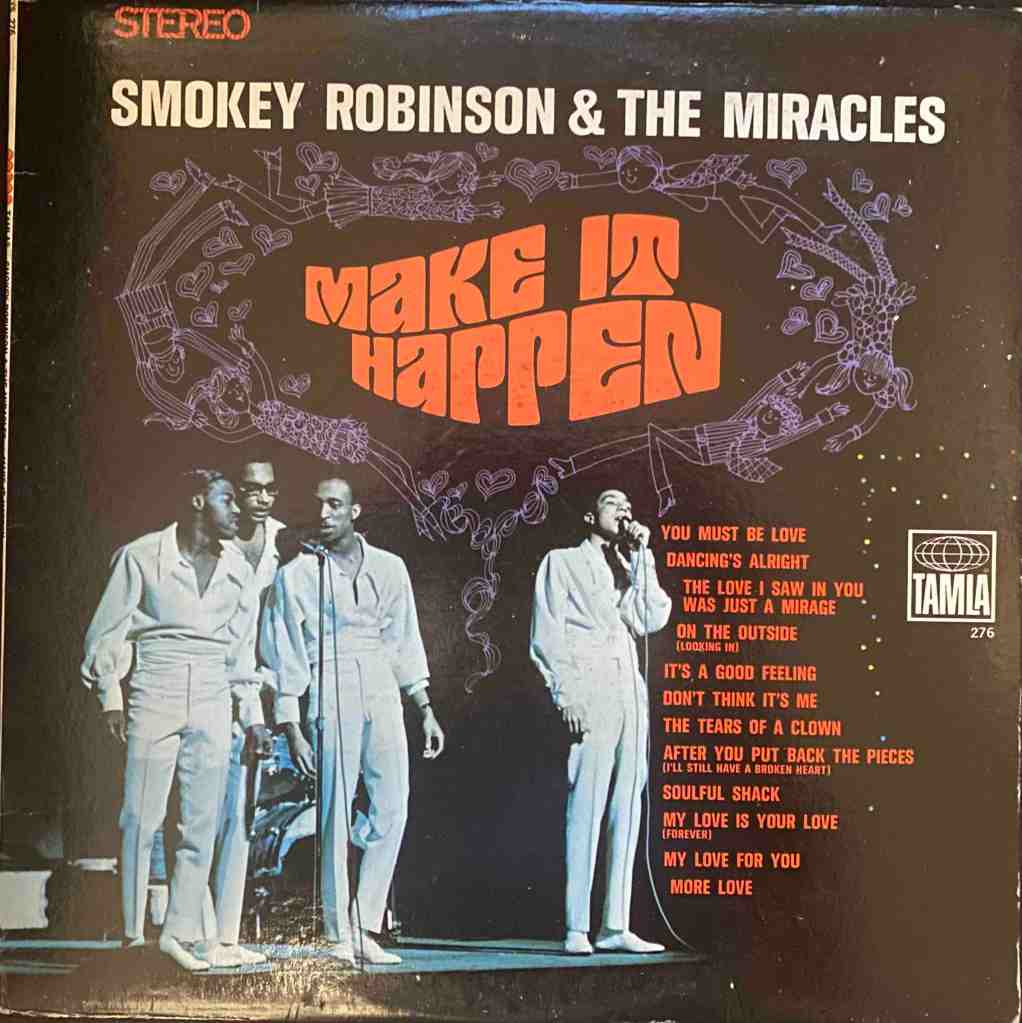
“Dancing’s Alight” is from the 1967 album Make It Happen, which was full of good songs, including the hits “The Love I Saw in You Was Just a Mirage” and “More Love.” It also had some good LP-only tracks such as “Soulful Shack,” It’s a Good Feeling” and “The Tears of a Clown.” About two years after the album was released, British Tamla/Motown issued “The Tears of a Clown” as a single and it did quite well. U.S. Motown got wise and subsequently issued it here, where it went to Number One in the Pop and R&B charts in 1970.
For a 1969 soul album, Four in Blue may have been unique as no singles were released from it. One of its songs, “Dreams Dreams” could have been a hit, so we’ll listen to it here in The GO Mechanism’s Science Corner in order to expose the outstanding work that Smokey Robinson & the Miracles were creating at the time.
GO Mechanism Number Twenty Four jumps right into the swing of things with two hot recordings that each feature a baritone saxophonist.
Leo Parker
The first is by Sir Charles Thompsonand his All Stars and it features Leo Parker. Parker started on the alto saxophone in the early forties, but took up the baritone when he joined Billy Eckstine’s big band of bebop musicians (Charlie Parker, Dizzy Gillespie, Miles Davis, Dexter Gordon, Gene Ammons and many others passed through this orchestra before Eckstine found his calling as a crooner.). When Leo Parker left the band he continued on the baritone, in part because he didn’t want to be playing alto saxophone in the shadow of Charlie Parker. It is on the baritone that he made a name for himself, especially in bebop circles. He played the big horn with groups lead by Dizzy Gillespie, Illinois Jacquet and Fats Navaro. In 1947 he cut “Mad Lad” with pianist Sir Charles Thompson for Apollo Records and it became his signature tune. He was often called “The Mad Lad” and he composed several songs incorporating it in the titles in order to recapture the magic of the Thompson recording: “Mad Lad Boogie,” “Mad Lad Returns.” Due to health issues, his recording output was limited. He cut two albums for Blue Note in the early sixties, but one wasn’t released until 1980. Parker died in 1962 at the age of 36.
Paul “Hucklebuck” Williams
The next baritone saxophonist was much more prolific than Leo Parker, but sows confusion as he shares the name of several other well known musicians: Paul Williams. Our Paul Williams is often called Paul “Hucklebuck” Williams after his biggest hit; it was Number One R&B for 14 weeks! Williams cut records for the Savoy label for about five years, starting in 1947. Some of them did quite well. Several R&B stars got their start in Williams’ band, including singer Little Willie John and saxophonists Noble “Thin Man” Watts and “Wild” Bill Moore (who would later play on Marvin Gaye’s What’s Goin’ On LP). The song heard here in The GO is “Hoppin’ John,” named after a favorite food. Williams died in 2002 at the age of 87.
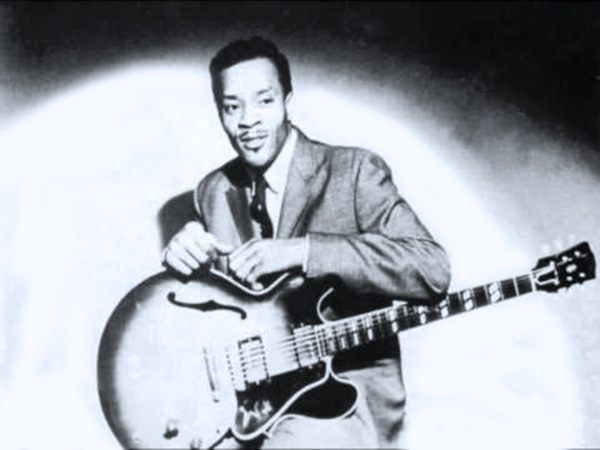
Earl Hooker
Next up is the legendary blues guitarist Earl Hooker with his take on Paul Williams’ big hit record! Hooker’s track was recorded in Memphis 1953 but not released until the seventies when some genius British people raided the vaults at Sun Records. This Hooker isn’t nearly as well know, nor was he as successful as, the other Hooker, John Lee. Although both were born in Mississippi, they are not related. However, folks who really know their blues records are aware of his awesomeness. This version of “The Huckelbuck” will give you an idea.
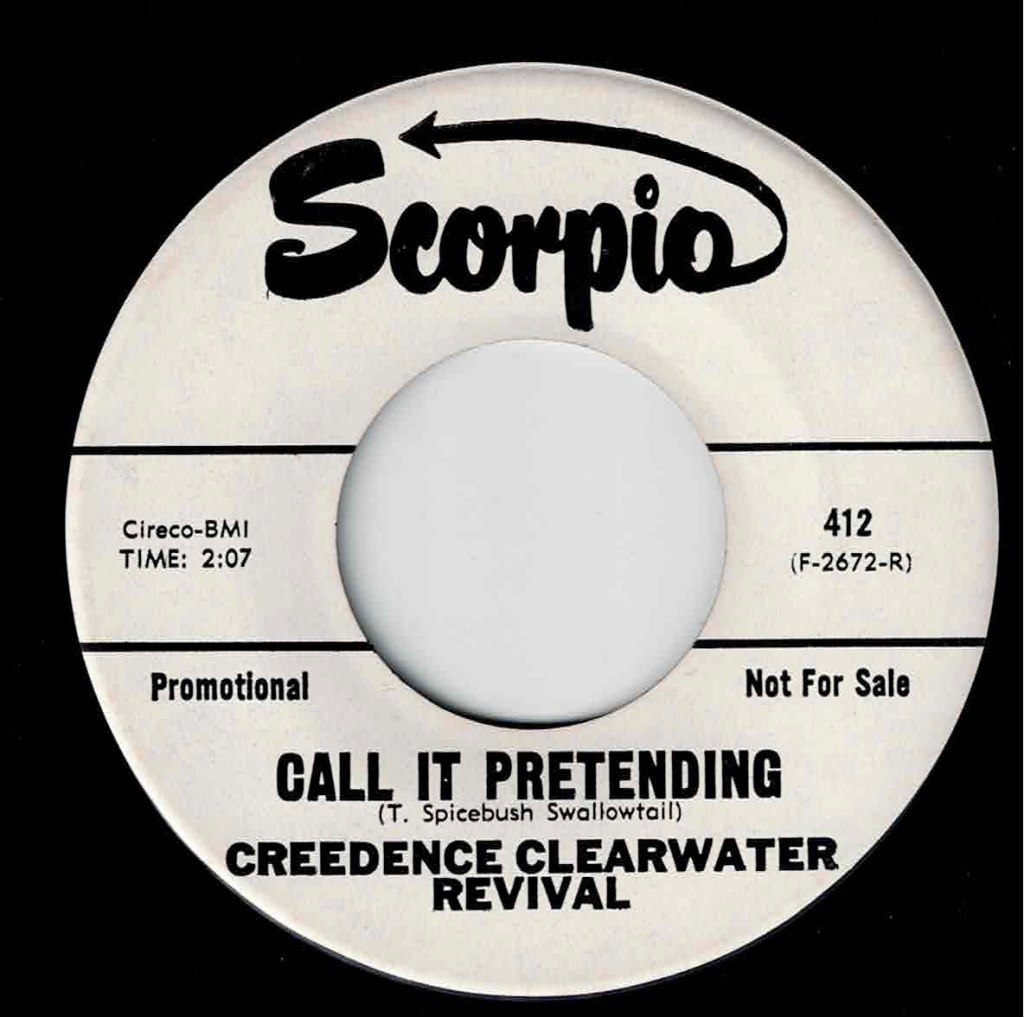
Note John Fogerty’s clever songwriting credit!
“Call It Pretending” is the B-side of the first single released by Creedence Clearwater Revival. The group made some records previous to this, but under different names, such as The Golliwogs, a name that was forced upon the group. In fact, this record was first released as by The Golliwogs, then changed to Creedence Clearwater Revival when the band started to assert control over its own direction. The A-side was an early version of “Porterville,” which made it onto the first Creedence LP. “Call It Pretending” never made it onto a proper Creedence album even though it is the group’s best song.
The weird noises you hear on Melvin Jackson’s “Funk Skull” is Jackson playing his stand-up bass hooked up to some electrical effects devices that were meant for guitars. He plucks his bass in some parts and plays it with a bow in others. Perhaps he got this idea from Eddie Harris, who Jackson often worked with. Harris played his saxophone hooked up to a similar device.
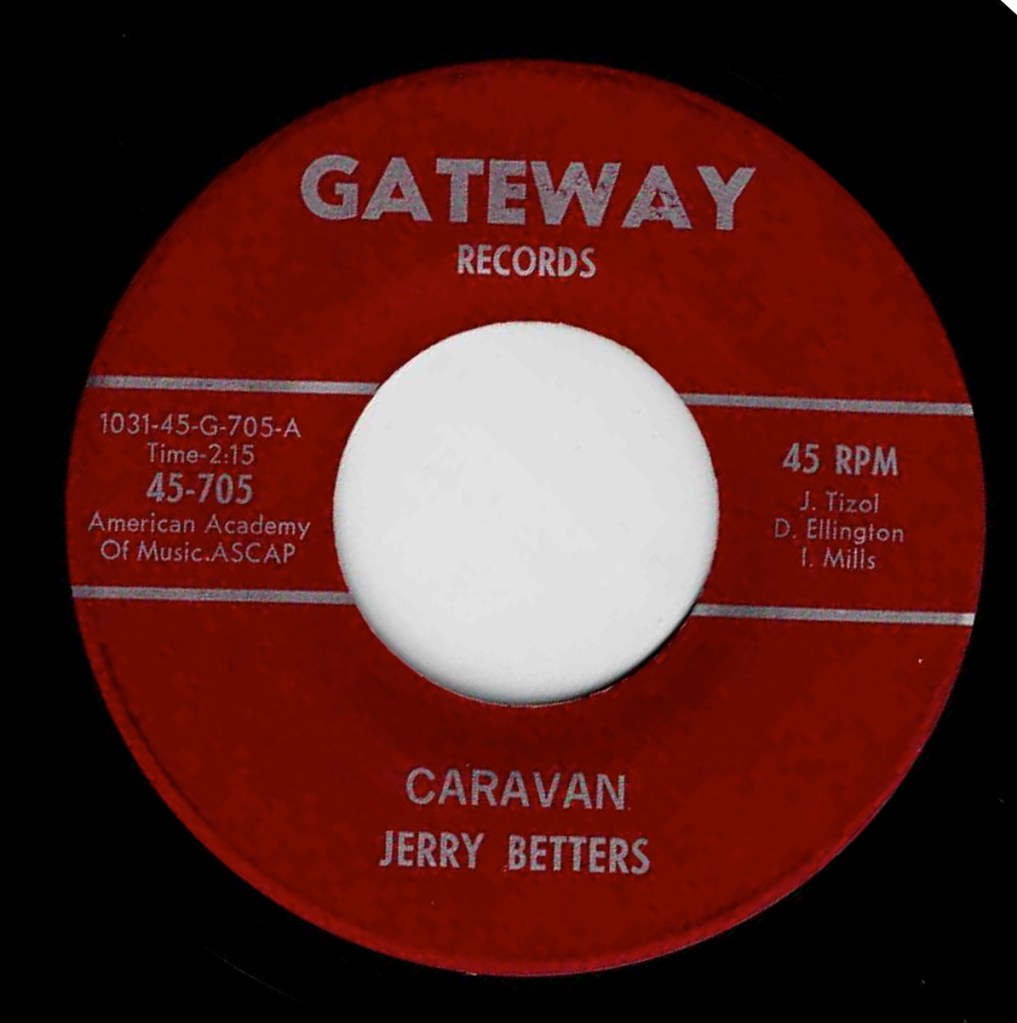
It would not be a GO Mechanism if there were not a version of “Caravan” included. For this installment of The GO, we have included a rendition by Jerry Betters; a drummer who was the younger brother of Harold Betters, a trombone player who had a minor hit with “Do Anything You Wanna” in 1964. Jerry played on some of Harold‘s recordings, but was also a singer who appeared in the Pittsburgh area. He died in Connellsville, PA, where he grew up, when a truck hit him as he was crossing the street in 2007.
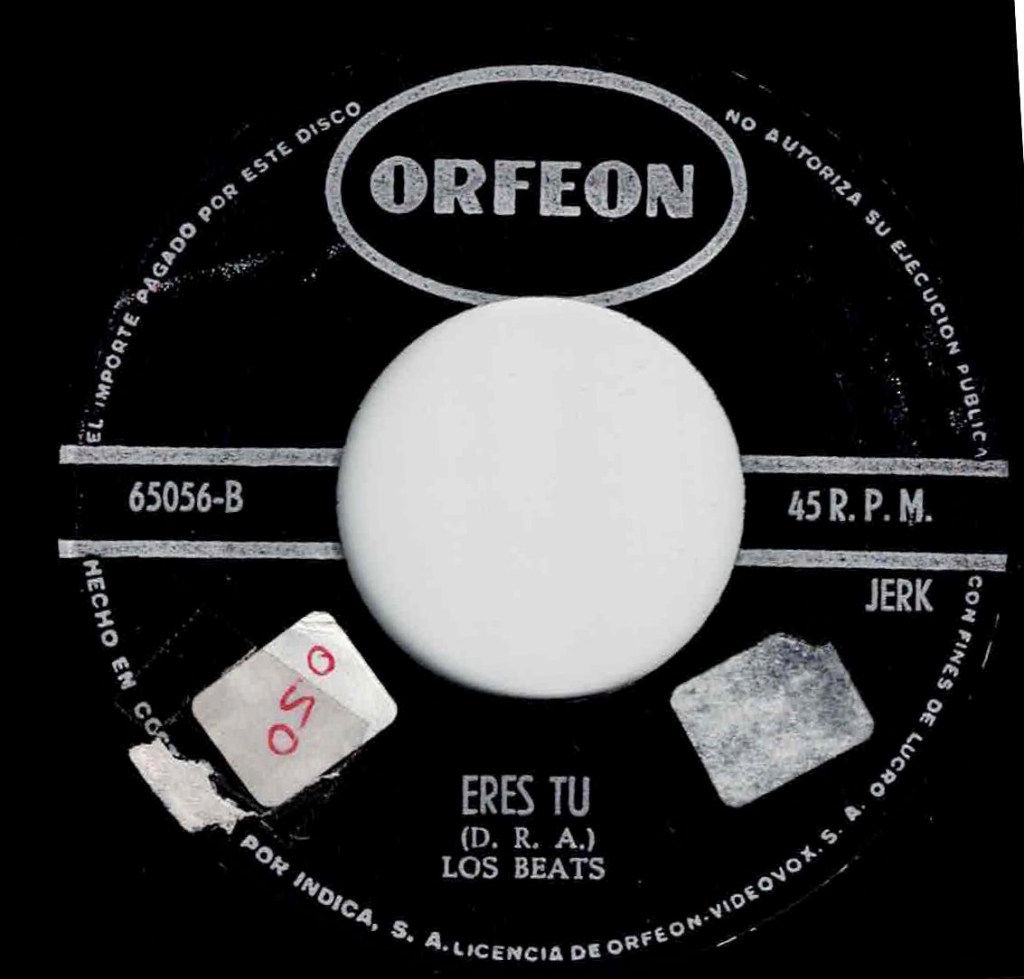
Los Beats were a band from El Salvador that would often take songs by The Beatles and other English-speaking acts and translate them into Spanish for their market. “Eres Tu” is the group’s version of a song found on the first Grateful Dead album called “Cold Rain and Snow.” Although The Dead took songwriting credit on their album, it was actually an old folk song that they most likely heard from a 1961 album by the banjo player Obray Ramsey.
“Kanfera (Return to Fisher) is by Mor Thiam, a percussionist who was born in Senegal. In 1973 he moved to St. Louis, and soon after, recorded an album consisting of a fusion of modern jazz and African beats—the kind of music the kids today call Spiritual Jazz. The record, called Dini Safarrar, benefited from the talents of several musicians from the area, including the producer Oliver Sain, trumpet player Lester Bowie, saxophonist Oliver Lake and guitarist Phillip Westmoreland (listed here as Wesdmoread!). Also in 1973 in St. Louis, Thiam’s son was born: Aliaune Damala Bouga Time Puru Nacka Lu Lu Lu Badara Akon Thiam—better known as the successful contemporary R&B singer/rapper Akon.
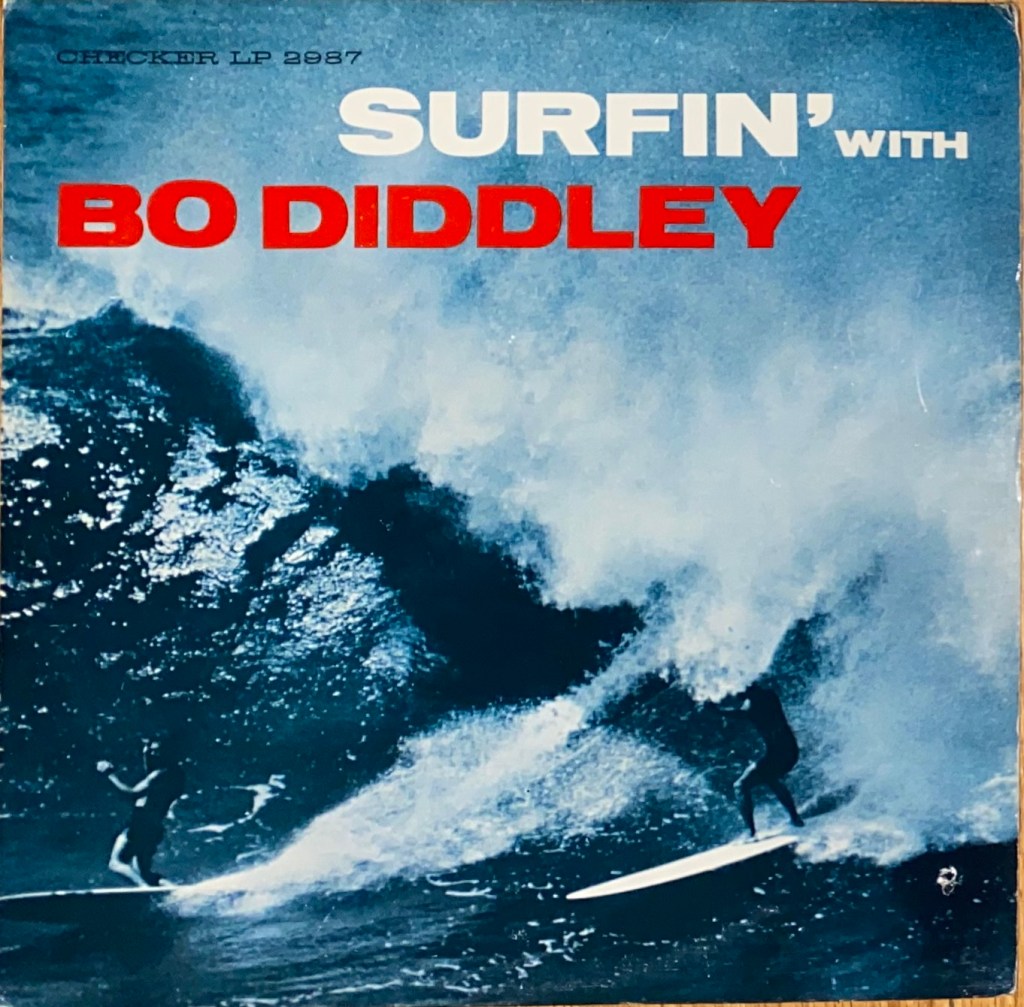
Bo Diddley’s version of “Old Man River” is almost unrecognizable from the song sung by Paul Robeson in the film Showboat. Bo’s version is close to surf music—maybe because it was included on the album Surfin’ With Bo Diddley. This is a controversial LP in itself, since only four of the dozen songs on the album were actually by Bo Diddley. For some reason, the album was filled out with eight tracks by The Megatons, a group that featured rockabilly singer Billy Lee Riley. Some of this is addressed in the Science Corner of GO Mechanism Number Eight.
in 1963, Bobby Fuller, his brother Randy and a couple other Texas musicians traveled to Los Angeles to make a name for themselves. They had already released some singles on their own and were a big deal in their home town of El Paso. In California, the boys studied the local surf bands and tried to get signed to a record company. The only one who paid attention to them was Bob Keane at Del-Fi Records—the label that had issued records by Ritchie Valens. Keane thought the group was interesting, but told them to return to El Paso and work on their music for a year then come back. About a year later, the Fuller brothers with new musicians, now called The Fanatics, came back and knocked on Keane’s door again. Keane had them record a cheesy teen ballad, but the flip side was “Our Favorite Martian,” a super boss, reverb-drenched surf instrumental that clearly wipes out just about every other surf instrumental you can name. Soon after, the group would change its name to The Bobby Fuller Four and cut a series of fantastic records for Keane’s other label, Mustang Records; this included “I Fought the Law,” “Let Her Dance” and “The Magic Touch.” Right as Bobby Fuller was poised to become a big Rock’n’Roll star, he died a mysterious death. Suggested reading: I Fought the Law: The Life and Strange Death of Bobby Fuller by Miriam Linna and Randall Fuller.
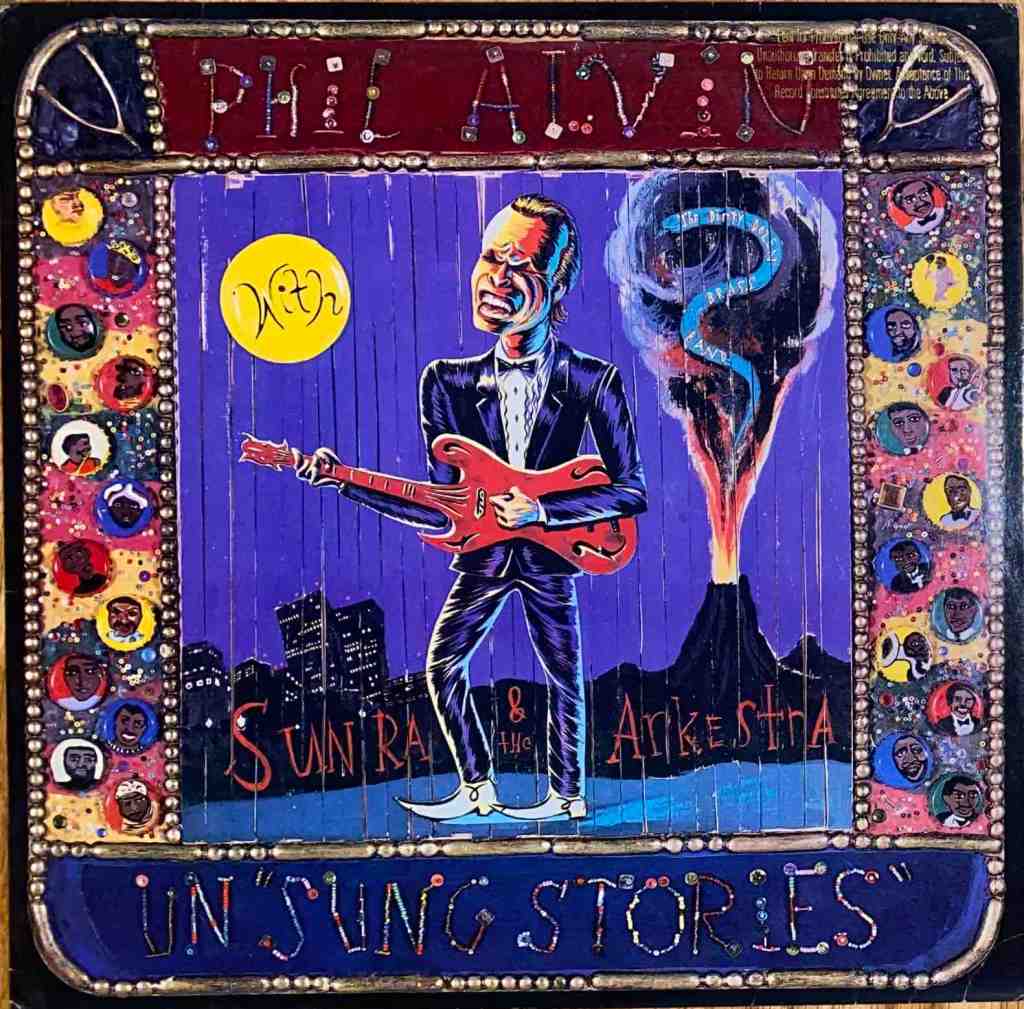
Phil Alvin is quite simply one of the greatest singers of our time. He came to prominence as the singer of The Blasters—one of the greatest Rock’n’Roll bands this planet has ever produced. Phil has made a couple of solo albums and “Daddy Rolling Stone” comes to us from his first one, Un Sung Stories (which has been recently reissued on CD by Liberation Hall Records with liner notes by our pal Chris Morris.)
Marvin Gaye, Anna Gordy, Gwen Gordy, Harvey Fuqua
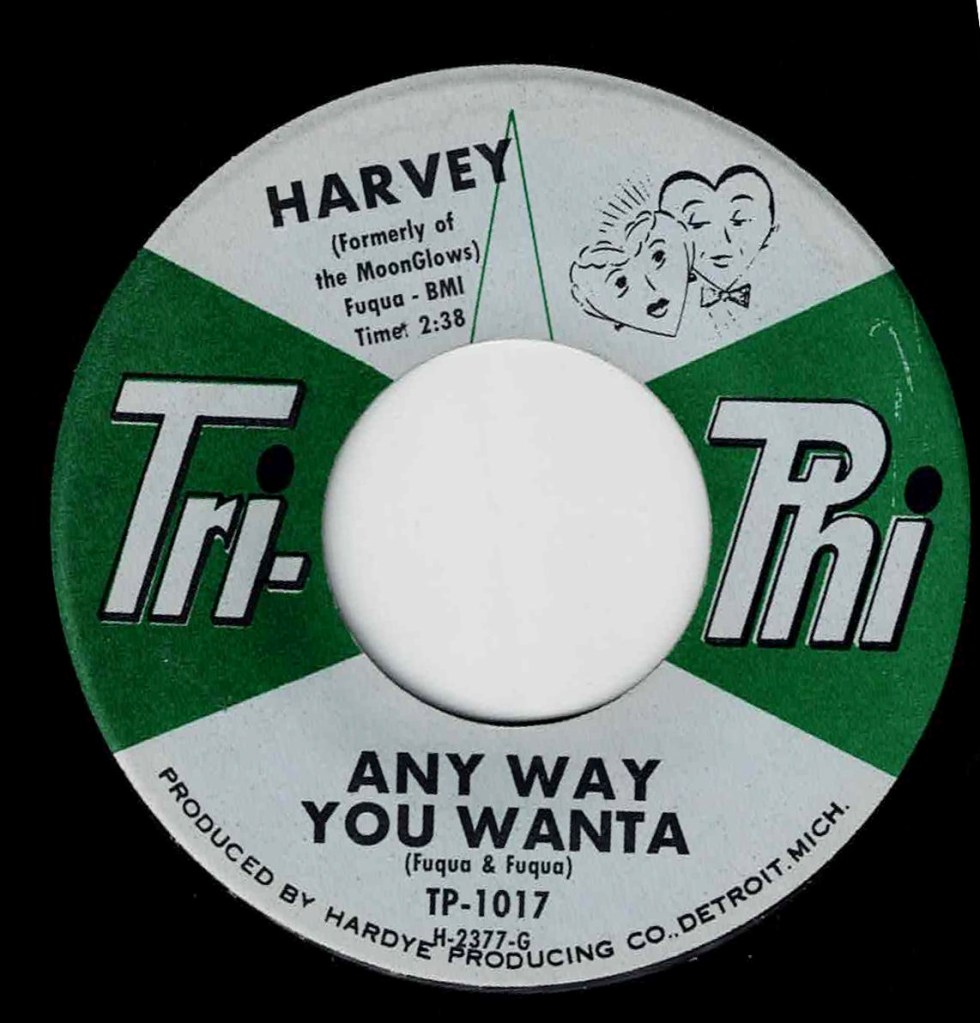
This GO Mechanism, like many of the recent ones, closes out with one of the greatest records of all time: “Anyway Ya Wannta” by Harvey. This is Harvey Fuqua, who began his career as the leader of the great R&B vocal group The Moonglows in the fifties; “Sincerely” was a Number One R&B hit in January 1955. That group disintegrated in Washington D.C. around 1959, and Bo Diddley, then a D.C. resident, suggested to Fuqua that he enlist a local group called The Marquees to be the new Moonglows. Once this was done, Fugua eventually took these Moonglows, which included a fellow named Marvin Gaye, to Chicago to cut a few records for their record company, Chess. When The Moonglows broke up, Fuqua took Gaye to Detroit. There they became entangled professionally and personally with Barry Gordy and his family. Fuqua would form record companies (Anna, Tri-Phi, Harvey) with Gordy’s sisters Anna and/or Gwen and married the latter. Gaye worked as a session musician—he played drums, some piano, and of course he could sing—for the labels and he married the former. When Barry Gordy’s label Tamla first released Barrett Strong’s “Money (That’s What I Want)” it couldn’t handle it and the record was shifted to Anna and Gwen’s Anna Records where, with the help of Chess distribution, it became a Number Two R&B hit in 1960. Brother Barry learned his lesson and the next year he had a smash Number One hit with The Miracles’ “Shop Around.” Soon after, he formed Motown and a few subsidiaries and eventually absorbed his sisters’ labels—including the talent which included Junior Walker & the All Stars, The Spinners, David Ruffin and Marvin Gaye—who hadn’t recorded as a solo act yet but was part of the family.
Harvey’s 1962 record on Tri-Phi, “Anyway Ya Wanta,” is one of our most favorite of records, what with it’s wild yelps, calling out of popular dances and its bump-bump-bumpity bump rhythm. The first time we heard it (probably when Mr. Fine Wine played it at an Empire State Soul Club event during the nineties) we thought it was some Billy Stewart record that we somehow missed; it really captured us with “Do the hitchhike!” Man, we went crazy for it—we bought a cheap bootleg and, after several years, tracked down an affordable original in good shape. It is presented in The GO Mechanism as one of the Greatest Records Of All Time.
Once again we thank the groovy people at Luxuria Music for allowing us to present The GO Mechanism over their web-streaming hustle. Luxuria Music is a listener supported entity and can not exist without your help. Please visit the Luxuria Music website and figure out how you can send them some money.
Earl Bostic—Lester Leaps In (King)
Sir Charles Thompson and his All Stars—Mad Lad (Apollo)
Paul Williams—Hoppin’ John (Savoy)
Earl Hooker—The Hucklebuck (from LP Sun: The Roots of Rock: Volume 11: Memphis Blues Sounds; Charly; UK)
James Booker—Cool Turkey (Peacock)
Creedence Clearwater Revival—Call It Pretending (Scorpio)
Los Mirlos—El Sonido de Los MIrlos (Infopesa; Peru)
The Maytals—Do the Boogaloo (Trojan; UK)
Timmie Thomas—Have Some Boogaloo (Goldwax)
Bobby Rush—Sock Boo Ga Loo (Checker)
Melvin Jackson—Funky Skull Part 1 (Limelight)
Cal Tjader—A Night in Tunisia (Fantasy)
Gregory Corso—The Fleeting Hand of Time
Jerry Betters—Caravan (Gateway)
Los Beats—Eres Tu (Orfeon; Costa Rica)
The Green Slime—The Green Slime (M-G-M)
Dick Hyman & His Orchestra—Agent Double-O Soul (Command)
Grupo Miramar—El Cameron (Accion; Mexico)
Marvin Gaye—Walk on the Wild Side (Tamla)
The Quik—Bert’s Apple Crumple (Klook’s Kleek; UK)
Mor Thiam—Kanfera (Return to Fisher) (from LP Dini Safarrar – Drums of Fire; Rite Record Production)
Los Lobos—A Matter of Time (from LP How Will the Wolf Survive?; Slash)
Smokey Robinson & the Miracles—From Head to Toe (from LP Goin’ to A Go-Go; Tamla)
The Funk Brothers—The One Who Really Loves You (bed music—from soundtrack Standing in the Shadows of Motown – Deluxe Edition; Hip-O/Motown)
Smokey Robinson & the Miracles—Dancing’s All Right (from LP Make It Happen; Tamla)
Smokey Robinson & the Miracles—Dreams Dreams (from LP Four in Blue; Tamla)
Grupo Sta. Cecilia—1, 2, 3, Hustle (Orfeon; Mexico)
Gene Redd & the Globe Trotters—Zeen Beat (King)
The T-K-O’s—The Charge (Ten Star)
Bo Diddley—Old Man River (from LP Surfin’ With Bo Diddley; Checker)
Wanderlea—Vou Lhe Contar (Pushin’ Too Hard) (CBS; Brazil)
Roland Kirk—Safari (from LP Slightly Latin; Limelight)
W.H. Auden—As I Walked Out One Evening
Dyke & the Blazers—The Broadway Combination (from LP The Funky Broadway; Original Sound)
The Ventures—Diamond Head (Dolton)
Booker T & the M.G.’s—Chicken Pox (from LP Melting Pot; Stax)
Slim Harpo—I’m a King Bee (Excello)
Aaron Neville—Space Man (Par Lo)
Bobby Fuller and the Fanatics—Our Favorite Martian (Donna)
Phil Alvin—Daddy Rollin’ Stone (from LP Un “Sung” Songs; Slash)
Pete Terrace—The Basic Cha Cha (Tico)
Curtis Mayfield—Freddie’s Dead (Boogaloo edit, closing theme; Curtom)
Harvey—Anyway Ya Wannta (Tri-Phi)
OKeh Laughing Record
This edition of The Go Mechanism will be available as a podcast on the Luxuria Music website after its initial air-date of September 21, 2024 as a Saturday Night Special. After a few weeks it will be posted on the Mixclouds and it will appear below…
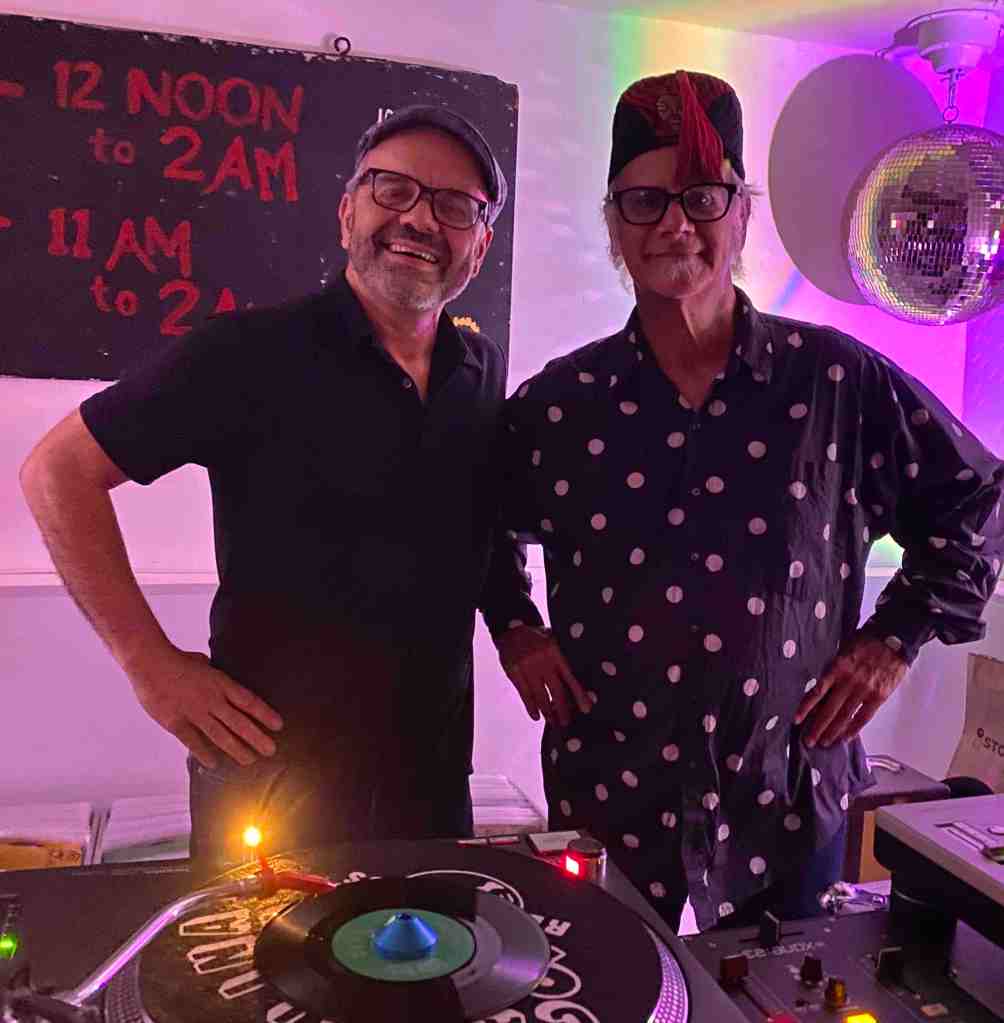
DJs Pete Pop and Phast Phreddie the Boogaloo Omnibus swing at The Shim Sham Shimmy!
Our pal Pete Pop has a new DJ night in Kingston: It’s The Shim Sham Shimmy and it will take place on the first Saturday of the month. For his very first one, which took place on August 3, he asked Phast Phreddie the Boogaloo Omnibus to be his guest DJ.
We dig The Salt Box. It’s a groovy new bar located in a very old building right in the heart of Kingston, NY. The folks who run the joint are friendly and the bartenders sure know how to pour a drink. It is always comfortable and the clientele are always seen boppin’ their respective heads to the boss sounds that Pete Pop and The Boog lay down. From now on, Pete Pop will be swingin’ his exceptionally fantastic records monthly at The Box. Come on down and get gone!
For this event, Pete Pop thought up a new concept in record selecting: Instead of each DJ spinning for 30 minutes in rotation all night, this time each DJ alternated in playing three records. So, Pete Pop played three 45s, Phast Man played three 45s, Pete Pop played three 45s, then El Rapido followed with three more 45s… and that’s how it went all night. Sometimes the records followed the vibe of the previous three records; very often it did not. Either way, it was a gas and it kept the record selectors on their toes all night.
Here’s a list of all the records played by Phast Phreddie the Boogaloo Omnibus at the very first Shim Sham Shimmy:
Danny Fields is an unsung, non-musician, heroes of modern rock ‘n’ roll. He is the kind of guy who seems to have been at the right place at the right time and smart enough to know what he was doing. During the mid-late sixties, he was involved with the Andy Warhol scene, which then included Nico and The Velvet Underground; he had a radio show on WFMU during its early days pioneering the free-form format; he was involved with getting rock musicians on the covers of teen magazines; he worked at folk-oriented Elektra Records when it was becoming more involved with rock music; at Elektra, he helped publicize Judy Collins and The Doors (according to legend, it was Mr. Fieldswho suggested to Elektra that an edit of the seven-minute song “Light My Fire” would be a hit), and he got The Stooges and theMC5 signed to the label; he worked with The Modern Lovers; and he discovered The Ramones, even managed them during their early years.
That’s not all. He was a friend of Linda Eastman before she married Paul McCartney. He managed a young folk singer from Mississippi named Steve Forbert. He is an author and a photographer. And now he is the subject of a documentary called Danny Says—titled after a Ramones song that name-checks him. The film was recently completed and had its New York premier on Tuesday September 22 at the Players Theater in the West Village. Check here for more information on the movie.
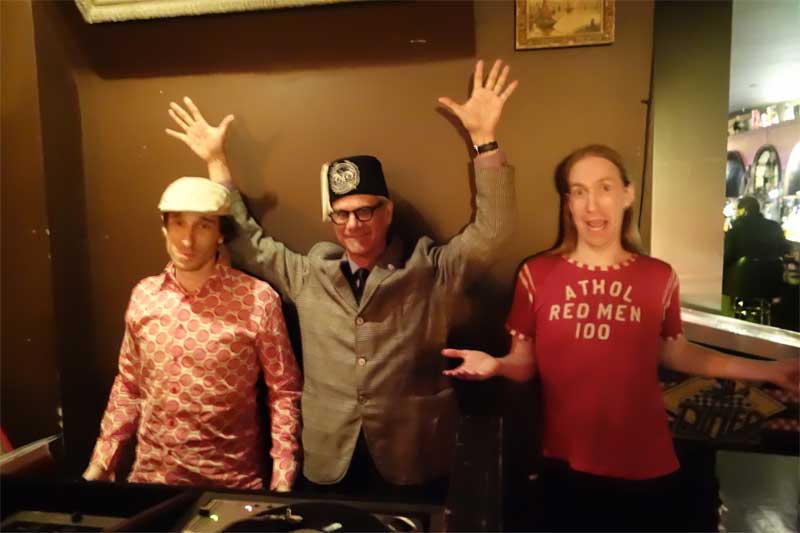
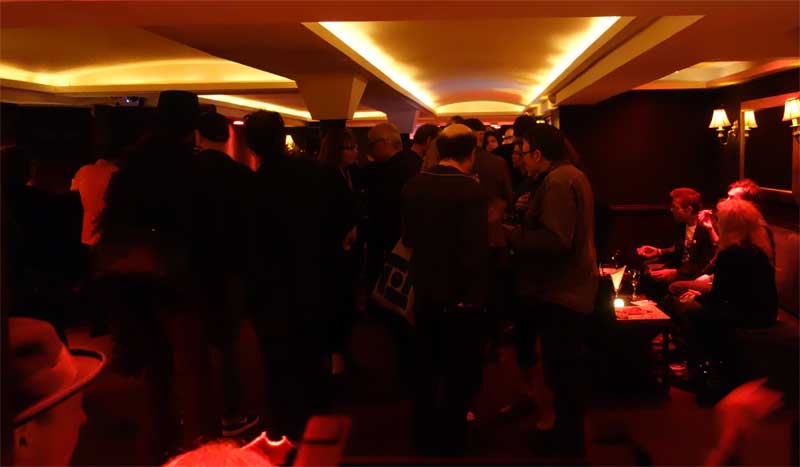
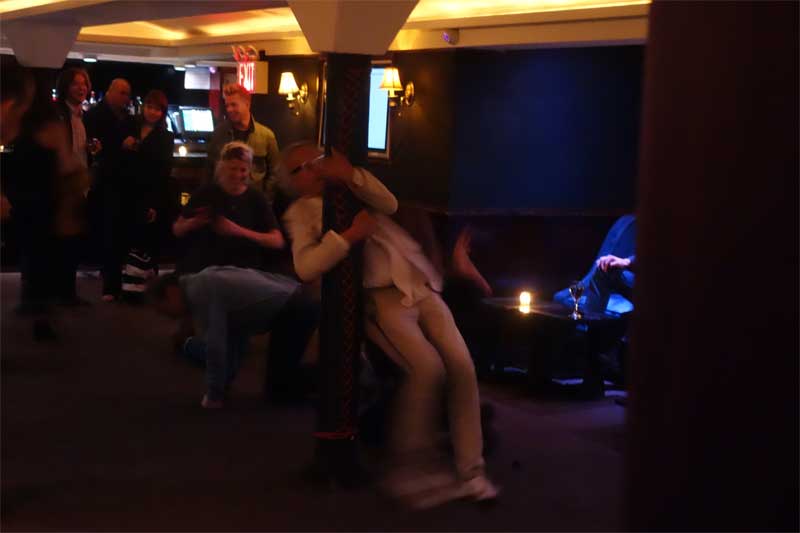
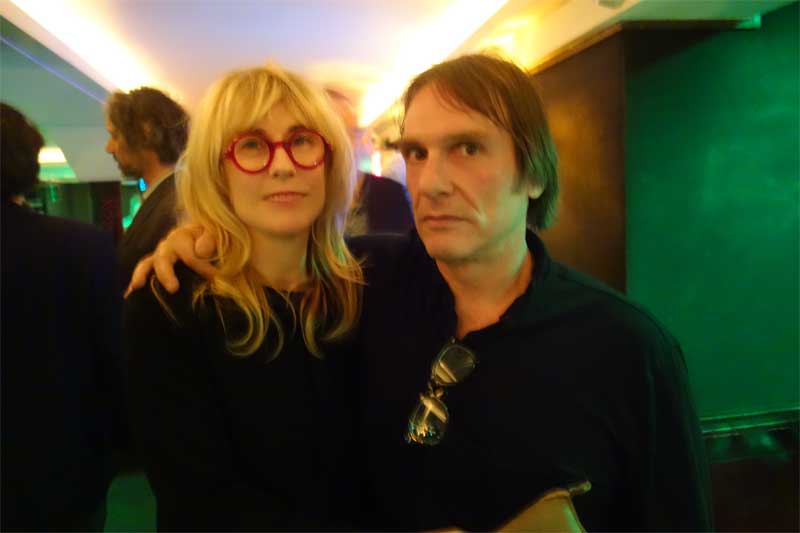
After the premier, a reception for the movie was held at 49 Grove—an elegant, dimly lit, exclusive nightclub just a few blocks away from the theater. Hosted by the authors of the New York Punk Rock Bible Please Kill MeGillian McCain and Legs McNeil. Asked to DJ the party was none other than Phast Phreddie the Boogaloo Omnibus, who was honored to do so.
Unfortunately, due to the location of the DJ booth in the club—literally a hole in the wall that could easily be overlooked—The Boog was unable to identify most of the luminaries in attendance—except the tall Mr. Thurston Moore, who towered over everyone in the room. Other notable attendees were a whole bunch of folks who currently DJ at free-form radio station WFMU, including Todd-O-Phonic Todd, Miss Shiela B, Joe Belock and Dave the Spazz, as well as the Boog’s old pal and ex-WFMU DJ The Hound. Danny Fields, of course, was too hip to be at his own movie premier and/or reception! The photos appearing in this post were mostly taken from inside the DJ booth (click on the photos and they will big-o-fi).
For his part, Phast Phreddie played all sorts of records that were appropriate for the evening, which started when he played The Ramones’ “Danny Says”—which was played about three or four more times during the evening, as the occasion necessitated. Here’s a list of all the songs played by Phast Phreddie the Boogaloo Omnibus at the reception for the film Danny Says:
On September 17, Phast Phreddie the Boogaloo Omnibus returned to the Beauty Barin Manhattan to swing at Out of Sight—the goovy soul dance party hosted by our pal DJ Xerox every Thursday night. This time his co-guest DJ was Moses Funk.
Mr. Funk is from Boston, where he hosted two fabulous dance nights: Cheap Thrills a’ Go-Go—a montly sex-a-dellic Go-Go party that the Boog once guest DJed at—and the Mambo Beat Club—a bi-weekly soul music event. He now lives in Brooklyn where a few years ago he started the Brooklyn Soul Club, which is currently on hiatus while Moses Funk develops some sort of scientific turntablist project. For Out of Sight, Moses Funk came armed with a box of old soul 45s and he played the hell out of them, too!!
Here’s a list of all the songs played by Phast Phreddie the Boogaloo Omnibus:
Pieces of Eight–Who’s Afraid of Virginia Woolf (A&M)
Hank Jacobs–Monkey Hips & Rice (Sue)
The Cooperettes–Don’t Trust Him (Brunswick)
Naomi Davis Shelton & the Knights of Forty First Street–Forty First Street Breakdowne (Desco/Daptone)
Martha Reeves & the Vandellas–I Gotta Let You Go (Gordy)
Phast Phreddie the Boogaloo Omnibus and Ursa Major swing at Boogaloo Movement!
As all regular readers of the Boogaloo Bag know, the fourth Friday of every other month is the time when Phast Phreddie the Boogaloo Omnibus brings a fantabulous DJ night to The Commodore in Williamsburg, Brooklyn. Over the last few years, there has been some really boss nights. This most recent event, held on July 24, was certainly one of them. Called Boogaloo Movement, it featured the most excellent 45 rpm record-spinning of Ursa Major—a swingin’ hepcat with an amazing record collection.
When it comes to DJing, Mister Major has been around the block a few times. He used to guest DJ at the Subway Soul Club, plus he often hosts a night of his own, at the Banter Bar, the Grand Victory and other swell joints around town. Ursa Major is part of a DJ collective known as Legio SPQR, and as such, has traveled internationally playing his records. Also, Ursa Major is the drummer for a hot Oi! punk band called The Templars, a group that has made records and toured Europe.
Ursa Major and some of his mates enjoy a night of wompin’ good music at Boogaloo Movement!
Mostly, when Mister Major swings it is with his ska, rocksteady, reggae and soul records—of which he has thousands. He also has some of the finest freakbeat records you’ll ever hear—plus some cool French stuff. At Boogaloo Movement, he delighted the crowd with all that and more. Place was jumpin’ all night long. In fact, before the end of the night, drinks were spilled and glass was broken: another exciting Wang Dang Doodle event took place!!!
For his part, host Phast Phreddie the Boogaloo Omnibus also went with an international flavor, playing records from such countries as Japan and Jamaica, Canada and Germany, Spain and France, England, Holland and Italy! It was a groovy night, to say the least. Make sure you, dear Boogaloo Bag reader, are able to make it to the next Commodore night—September 25—because it, too, will be boss. Make your plans now.
Here’s a list of all the records played by Phast Phreddie the Boogaloo Omnibus at Boogaloo Movement:
























 boogaloobag